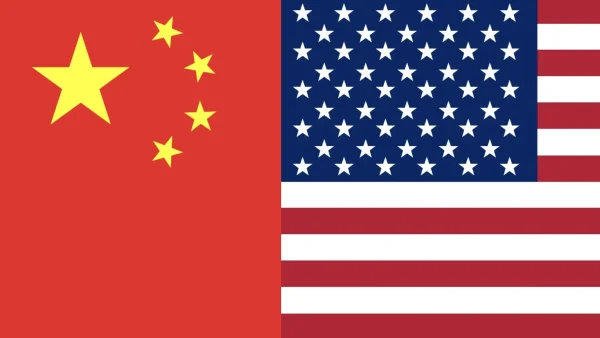
China’s exports have come across a hurdle, with October bearing the brunt of the set-back to outbound shipments, the worst performance since February. The tricky falter after months of frontloading under the watch of tension with U. S. tariffs in the Trump administration has rekindled worry among investors about the more expansive implications for China-U. S. trade relations.
In October, Chinese exports fell by 1.1%, sharply contrasting with 8.3% rise in September, and below a forecast of 3% growth based on a Reuters poll. The fall was largely a comparative one: last October, exports sped northward with the fastest pace in over two years. Back then, Chinese factories were frantically emptying their inventories in key markets, bracing for Trump possibly coming back into power and continuing his tariff policy.
The Standing of Trade Relations
Data shows Chinese exports to the United States took a whopping 25.17% hit from late 2017 to mid-2018. On the contrary, the exports to other while important partners see slight increases: namely, the EU, with 0.9%, and Southeast Asian nations, with 8.9%. These numbers really show how China has been adjusting trade partnerships in response to the mutual escalation in tariff tensions with Washington.
Economists estimate a shrinkage in export growth of around 2 percentage points due to the U. S. market being lost, which translates into roughly a 0.3% loss in GDP. Woei Chen Ho, an economist at UOB Singapore, mentioned this export slump happens as a result of both geopolitical uncertainties and technicalities, such as a prolonged holiday break in China this year versus last.
Economic Indicators and Trade Truce
With the recent economic indicators, it appears that the Chinese economy is slowing down. The official purchasing managers’ index had descended to its lowest point in six months, indicating that the global markets have temporarily emptied the demand for Chinese goods. Factory managers had stated that new export orders are on a precipitous decline.
Tensions between China and the United States had hit new highs in early October after Trump threatened steep tariffs following Beijing’s expansion of export control on rare earth metals. The situation slightly calmed down after the U. S. President met the Chinese President in South Korea and agreed to extend the trade truce for another one year from November 10, when it was to expire.
Meanwhile, the shipments will continue to be met with an average ad valorem tariff rate of about 45%, which is well above the 35% barrier that many economists consider to be eliminating profit margins along the manufacturing lines in China.
China’s Strategy for Diversification
To get through the situation, China has been trying to diversify export markets throughout this year to lessen the impact of U. S. tariffs. Still, many exporters say that in selling to other regions they have been compelled to settle for lower margins so as not to lose market shares. This strategy parallels a general attempt by China in lessening dependence on the United States and searching for a new lift for its economy.
Fast increasing trade surplus with other countries has added pressure on manufacturers as it has caused protectionist feelings elsewhere out of concern about cheap Chinese goods flooding international markets.
To tackle these types of issues, China recently announced new initiatives on the import front “to make China ‘the best export destination’ for more win-win cooperation.” Premier Li Qiang stated during the China International Import Expo in Shanghai that in 2030, China’s GDP was estimated to surpass 170 trillion yuan ($23.87 trillion) from 140 trillion yuan in 2025.
Domestic Demand Bottlenecks
Increasing international trade definitely, though, stands hindered by domestic demand in not growing further inside China. The import data proves it: imports increased by 1% in October, the slowest pace in the last five months, veering away from a strong 7.4% hike in September and forecasts for the number to rise by 3.2%.
On the heels of this reaction, Chinese policymakers have drafted a plan to substantially elevate household consumption as a percentage of GDP over the next five years. This policy direction was indicated during a recently concluded session of the Central Committee of the Communist Party of China, wherein economic and policy targets for the years 2026-2030 were laid out.
As a slight dip occurred from September’s surplus of $90.45 billion, China recorded a trade surplus of $90.07 billion for the month of October, below expectations pegged at $95.6 billion.
Future Outlook
With these headwinds, China continues to diversify its trade relationships with enhancement of domestic consumption as its anchors for future economic stability and growth. Although challenges persist in the interim amid geopolitical tensions and the shifting of global supply chains, in the longer run, China’s strategic alterations could lay a path towards a more resilient economic road.
Essentially, China's exports face limitations thanks to tariffs imposed by the United States and changing global dynamics, while the diversification of markets and promotion of domestic consumption towers as strategic efforts toward long-run economic growth in uncertain times.