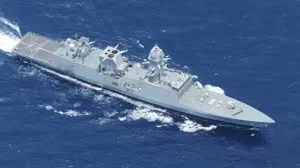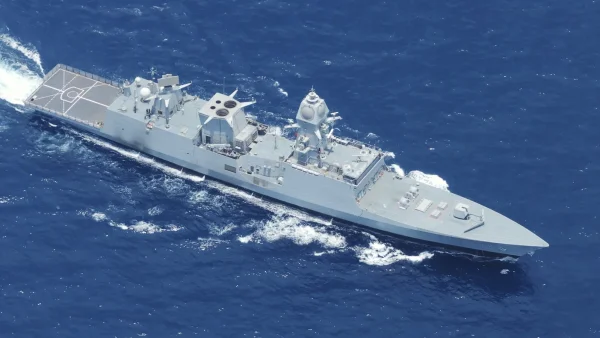
The INS Taragiri (F41) will be added to the Navy on April 3rd, a significant advancement in modernizing the naval forces. This Project 17A stealth frigate demonstrates India’s own shipbuilding and advanced combat capabilities. The ceremony where the ship is officially accepted into service is expected to emphasize India’s drive to have its own defense systems, and to be a stronger force at sea.
Commissioning and Strategic Context
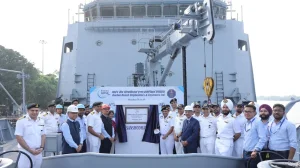
Defense Minister Rajnath Singh is likely to be at the commissioning ceremony. The Taragiri will improve the Navy’s ability to act as a group on the surface of the water, and it will work with the ships already being used for missions in coastal areas and in the deep ocean. The ship joining the fleet shows India continuing to invest in protecting the sea, especially with tensions in the area changing.
This new frigate is taking the place of an older Taragiri from the Leander class, which was in service from 1980 until 2013. Mazagon Dock Shipbuilders Limited delivered the ship on November 28th, 2025. This version is a modern version of the first, but is much more difficult to detect on radar and its systems all work together much better.
Design, Construction and Indigenous Content
The Taragiri is a 6,670-tonne Project 17A frigate that was built at MDL in Mumbai; over 75% of its parts were made in India. The hull and the above-water structure have features that reduce how easily it’s picked up on radar, and that helps it survive in dangerous situations. The ship’s design uses a lot of automation and is intended to help the crew work as efficiently as possible.
The building of the ship involved a large number of suppliers within the country, over 200 small and medium sized businesses in fact. This project proves how valuable the ‘Make in India’ program is for defense: it has created thousands of jobs and a strong support system for future warship projects.
Weapons, Sensors and Combat Systems
The frigate has a modern and multi-layered set of weapons, including the very fast BrahMos ship-to-ship missile system. For defending against planes, the ship carries Medium Range Surface-to-Air Missiles (MRSAM) which work with a high-tech MFSTAR radar, and a modern system to manage combat for quickly responding to threats.
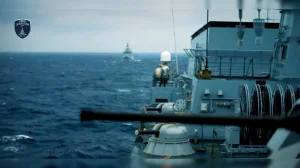
For very close-range defense, there are 30 mm and 12.7 mm guns, and for fighting surface ships, a 76 mm Super Rapid Gun. To fight submarines, it uses torpedoes and rockets designed to destroy submarines, along with sonar and a combined combat system to respond to threats from any area.
Propulsion, Automation and Performance
The Taragiri uses a Combined Diesel or Gas (CODOG) system for power, which means it uses both diesel engines and a gas turbine to turn propellers that can be adjusted. This allows it to go very fast when needed, yet also travel efficiently on diesel for longer distances.
All the ship’s machinery and damage control are managed from a central Integrated Platform Management System. The automation makes the work for the crew less demanding and increases its chances of surviving, so it can remain in operation for a long time on patrol or while on a long mission.
Operational Role and Regional Impact
The Taragiri is built to do many different kinds of things: it can be used in intense naval battles, attacks at sea, and providing help during humanitarian disasters. Its ability to avoid detection, its sensors, and its BrahMos missiles all make India’s ability to deter threats at sea stronger and give it more options for responding to a crisis in the Indian Ocean.
Beyond fighting, the ship will also be used for diplomacy and to provide help after a disaster, showing India’s presence and offering assistance when it’s needed. Being a warship ‘Made in India’, the Taragiri demonstrates the country’s own advanced technology and supports the wider effort to create a Navy that can be relied on and is self-sufficient.