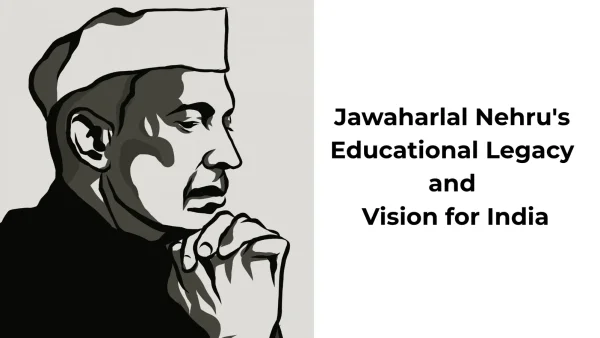
Pandit Jawaharlal Nehru, the first Prime Minister of India, Pandit Jawaharlal Nehru, India’s first Prime Minister, had a very strong faith in the restorative effect of education on a person’s life. In his opinion, education was the fundamental factor that led to the development and progress of a country. He was not merely interested in the academic aspect of education; he was also very much interested in the overall growth of an individual, his/her creativity, and the sense of being responsible for the improvement of society and the environment.
Nurturing Imagination and Creativity
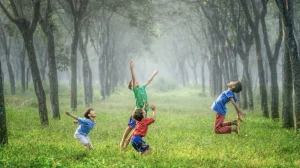
Nehru foresaw the requirement of creating a conducive environment for children so that imagination and creativity could be harnessed. His theory was that when children are made to think up new ideas and act upon them, they will become that innovative and grow as the next-generation. Nehru succeeded in his effort to lock the minds of the kids to the world of opportunities and let them empathize with the need for a positive change through their dreams and the investigation of the unknown. By being a dreamer and a visionary, he saw a new India characterized by progress and innovation.
Embracing Hard Work and Dedication
The prime focus of Nehru’s lessons was hard work and passion. He preached that success could not be a product of ingenious but of hard and diligent work. Nehru’s relentless pursuit of India’s freedom and development was the most fitting illustration of the harnessing of industriousness and endurance in problems handling. Nehru was looking for nothing short of excellence in whatever the areas by cultivating strong work ethics in kids.
Respect for Nature and Environment
One of the modes that Nehru’s deep feeling of awe in nature manifested itself was his advocating for its preservation. He was of the opinion that children must have a relationship with nature, were to see its beauty, and were to take the responsibility of protecting it. The environment that Nehru was conscious of calls for sustainable practices to save a planet healthy for the coming generations. Nature won the respect of people through Nehru’s teaching and he ensured the same by revealing the profoundness of the unity of human beings and the environment.
Developing Scientific Thinking
The creation of knowledge became vital by means of science and technology in Nehru’s dreams of the upward progress of India. He was an advocate for scientific temper in young minds, by stressing on the very aspects of questioning, observing, and reasoning. For Nehru, inquisitiveness and reasoning were the two major attributes of man that could solve the problems of the society, and at the same time lead to economic development. His favorable attitude to science thinking was the origin of many research institutes which up to now continue to influence the educational system of India.
Ensuring Equality and Solidarity
Nehru was a die-hard advocate for the equality and solidarity of people irrespective of their diverse cultural backgrounds. He was of the opinion that every child should have the same rights of acquiring education, honor, and opportunities as the children of the elite. Nehru’s advocacy for the assimilation of different ethnic and social groups as well as the promotion of the unity was a way of showing that the society can only be really, peace-loving, and of one accord if there is understanding and unity amongst the people. His voice still is heard today, thus making the students remember that the values of love, justice, and cooperation are lessons that are to prevail above all.
All things considered, Jawaharlal Nehru will always remain a key figure in the cause of education, dreams, work, eco-friendliness, scientific mindset, equality, harmony, veracity, reading, self-control, and future-belief for generations that are yet to come . Let us review and observe the same lessons as Nehru’s on Children’ s Day and then put in our best to raise the young with love, respect, and provisions, which are necessary for growth. If we follow Nehru’s lead, then we will have the power to make children as the ones who will be the compassionate leaders of a better tomorrow for all.