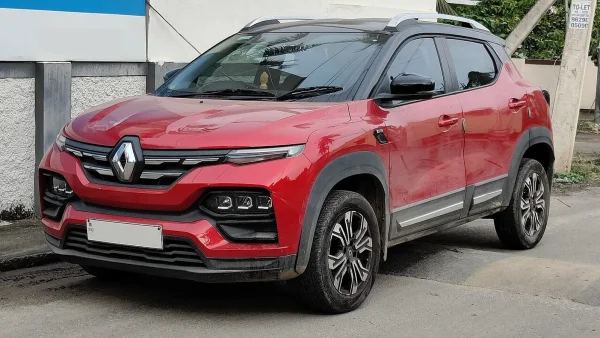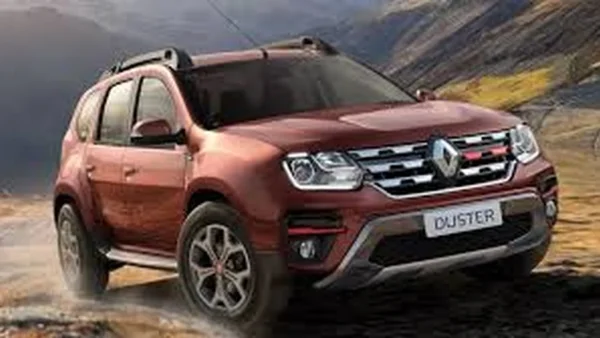
The new Duster, with the 1.3-liter turbo engine, has impressive fuel economy for a midsize SUV that’s designed to be fun to drive. The dual-clutch automatic manages 18.45 kpl, and the 6-speed manual gets 17.75 kpl. These numbers mean the turbo Duster is one of the more efficient options in its category.
ARAI-certified figures for the 1.3-liter turbo
The ARAI testing shows the Duster 1.3-liter turbo with its wet-clutch DCT gets 18.45 kpl. The same engine, when used with a 6-speed manual, gets 17.75 kpl. Compared to other midsize SUVs, these numbers are good and show the turbocharged Duster is a good balance of power and fuel use.
Right now, Renault has only shared the fuel economy for the 1.3-liter turbo engine. They haven’t said what the fuel economy is for the cheaper 1.0-liter turbo with a manual transmission. We’ll find out more as more versions of the car become available in different versions and cities.
Turbocharged performance with real-world efficiency
The Duster’s 1.3-liter Turbo TCe 160 engine makes 163 horsepower and 280 Nm of torque – making this the most powerful Duster ever. You can get this engine with a 6-speed manual or a 6-speed wet-clutch DCT (DCTs change gears quickly and smoothly, and are better for driving in slow traffic).
Renault has adjusted the Duster specifically for Indian roads. They’ve focused on a comfortable ride, keeping it stable at high speeds and making the handling predictable. This attention to how the car’s base structure (the chassis) behaves should allow you to use all of the engine’s power over a wide range of speeds and get consistent fuel economy on all sorts of roads.
Like all gasoline engines with a turbocharger, how much fuel the Duster actually uses will depend on how you drive, how fast you go and how heavy a load you’re carrying. If you press the accelerator gently, shift up gears at the right time and drive at a steady speed, you’ll get closer to the ARAI figures. If you accelerate quickly, you’ll use more fuel.
Petrol-only strategy and an upcoming strong-hybrid
From the moment it goes on sale in India, the new Duster will only be available with gasoline engines; there won’t be a diesel or all-wheel-drive option. You’ll be able to choose between a 1.0-liter turbo gasoline engine (100 hp and 160 Nm of torque) with a 6-speed manual, and the 1.3-liter turbo with either a manual or a DCT.
The most interesting thing coming later is the Duster Strong Hybrid E-Tech, which should be available around Diwali in 2026. This hybrid combines a 1.8-liter gasoline engine with an electric motor, a hybrid starter generator and a 1.4 kWh battery, and uses a special transmission designed for hybrids.
Renault says that the hybrid system should be able to run only on electricity for up to 80% of the time when you’re driving in a city. If this happens in reality, it could greatly improve fuel economy and running costs in towns and cities, and also reduce pollution when you are starting and stopping in traffic.
How the Duster’s mileage compares with rivals
With the DCT, the Duster’s 18.45 kpl ARAI fuel economy rating is very close to the best fuel economy figures for turbo-gasoline engines in this type of SUV. It’s a little better than the Hyundai Creta 1.5 turbo DCT (18.4 kpl) and a little behind the Skoda Kushaq 1.5 TSI DCT (18.72 kpl).
The Volkswagen Taigun 1.5 TSI DCT is said to get 19.01 kpl, which is the highest of these popular turbo-DCT competitors. The differences in the gear ratios of the transmissions, how they’re programmed, the shape of the car and whether it has a feature that shuts off some cylinders to save fuel explain why the figures are different.
Even though the Duster uses a smaller engine (1.3 liters) than some of its competitors (1.5 liters), the 1.3-liter turbo actually produces more power than some of them. Therefore, its 18.45 kpl fuel economy with the DCT is particularly good, especially as it has 163 hp and a strong 280 Nm of torque.
Platform, tuning, and safety targets
All versions of the Duster are built on the Renault Group Modular Platform. This platform has been designed to deal with Indian road conditions, extreme weather and to last a long time. It’s designed to be very safe, and Renault are aiming for a high safety score when the car is crash tested.
The Duster has always been known for being comfortable to ride in, and the latest model aims to be even better. The suspension soaks up bumps well, the steering is predictable, and the car is controlled when going around corners and on the highway. These things will help both comfort and fuel economy on longer journeys.
Pricing, availability, and what to watch next
The 1.3-liter turbo Duster costs between Rs t12.99 lakh and Rs 18.49 lakh (ex-showroom). You can get this engine in the Evolution trim and above, and you can choose between the 6-speed manual and the 6-speed wet-clutch DCT.
If you do a lot of driving in the city with occasional trips on the highway, the DCT’s 18.45 kpl figure is a good reason to choose it. If you like to be more in control of the car and want a cheaper option, the 17.75 kpl manual gives almost the same fuel economy with a traditional gearbox.
Two things will be interesting to follow in the near future. First, tests of the 1.3-liter turbo in different cities will give a more realistic idea of the fuel economy on real roads. Second, we are waiting to hear what the fuel economy will be for the 1.0-liter turbo with a manual transmission – this will give people who want good value for money all the information they need.
For people who want a powerful and efficient turbo-gasoline SUV, the official ARAI numbers give the Duster 1.3-liter turbo a good advantage. When you add in that the car’s base structure has been tuned for Indian roads and the promise of a hybrid in t2026, this is a plan for the car that is appealing now and will be in the future.
Renault Duster fuel efficiency, ARAI-certified mileage, 1.3-liter turbo petrol, Duster DCT mileage, Duster manual mileage, midsize SUV India, Renault Duster hybrid, Turbo TCe 160, RGMP platform, Renault Duster price.