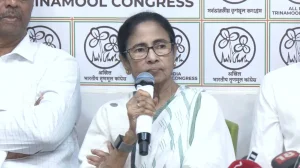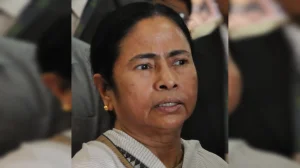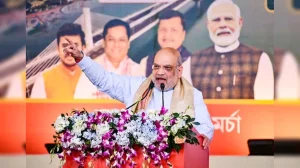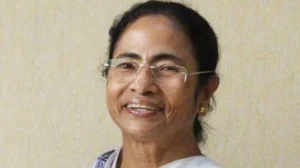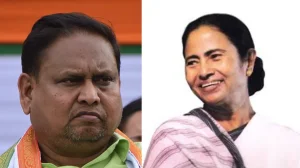
On Tuesday, Banerjee specifically said that the BJP put ‘carefully chosen’ officials at the airport to intentionally delay her plane. She said it was left on the runway for half an hour, and this fits with a more general pattern of obstruction during the election.
When speaking to supporters in Khardaha, Banerjee insisted that these particular airport officials were deliberately chosen to slow her down. She believes the delay was on purpose and meant to throw her campaign schedule off track during this busy election in West Bengal.
She also mentioned what happened with Hemant Soren, the Chief Minister of Jharkhand, and his wife Kalpana Soren, who is a member of the Legislative Assembly. They had to go back to Ranchi because they weren’ and allowed to land their helicopter in Jhargram, and Banerjee connected this to the Prime Minister making a sudden stop somewhere else in the state.
Banerjee didn’t show any official papers to support what she’s saying, and the BJP didn’t make a statement right away. The airport and the Election Commission haven’t publicly responded to her specific accusations.
Dispute over rally permissions and local administration
The Chief Minister says her party, the All India Trinamool Congress (AITC), has had unusually difficult times getting permission for Tuesday’s meeting. She claims a high-ranking BJP official who is working on the election is affecting local choices, and this is bad for her party.
Banerjee says the person in charge is requiring political approval before giving normal permissions. She told public employees to be fair, and reminded her supporters to respond to anything that happens in a democratic and peaceful way.
She presented the problem as a test of whether government workers will be impartial during the election. She argues that delays and rejections of permission damage fair competition and make people lose faith in the election.
Concerns over security forces and election conduct
Banerjee criticized the armored vehicles and increased number of troops in West Bengal during the election. She questions what the army is doing in an election, and asks why, as she sees it, government agencies are being used in ways that are more than normal.
The Election Commission in India regularly sends in central paramilitary forces to keep the peace while people are voting. The Army isn’t usually directly involved in election work. But Banerjee used the word ‘military’ to challenge how many troops have been sent and what that represents.
She is asking for a peaceful election and is warning against overly aggressive strategies. More broadly, she’s trying to show a difference between West Bengal’s attempts to be calm, and what she thinks is the central government overstepping its boundaries.
Campaign messaging on jobs, governance, and reservations
Turning to problems with the whole country, Banerjee asked about the BJP’s success at creating jobs. She brought up their often-repeated promise of 20 million jobs a year, and said the actual number of people getting jobs shows that promise hasn’t been kept. She also spoke about the 15 lakh (1.5 million) rupees pledge, and said the economic situation has left a lot of voters disappointed.
Campaign messaging on jobs, governance, and reservations
Regarding women in politics, Banerjee said that the Women’s Reservation Bill, which Parliament passed in 2023 with a lot of support, still hasn’t been put into action. She believes the government has been slow to make the official announcement and has linked it to a future redrawing of voting districts, which would lessen its effect right now.
She also says that the attempts to tie the reservation of seats for women to the redrawing of districts are politically motivated. She thinks the goal is to change the map of seats in Parliament and increase the number of members of the Lok Sabha, which she feels is about getting an advantage in Parliament instead of quickly giving women more power.
Identity and citizenship: NRC and CAA in focus
Banerjee says that if the BJP wins in West Bengal, they will create a National Register of Citizens for the state. She said doing something like that would put the rights of people who have lived in an area for a long time in danger, and said that groups like Bengalis and Sikhs are being treated unfairly as a result. She also criticized the Citizenship Amendment Act, saying it has allowed certain groups in while people who have been living in the area for a long time are being looked at with suspicion. Mamata Banerjee pointed out that the government in Delhi controls borders, aviation and customs, and that state leaders are being blamed for rules they don’t actually have power over.
These statements are part of a much bigger argument in politics. The NRC (National Register of Citizens) has only been used in the state of Assam, and the country as a whole has not gone forward with it. The CAA (Citizenship Amendment Act) gives a way to become citizens to specific religious minorities from countries next to India, and people who disagree with it say it leaves people out.
Local appeal in Khardaha and call for EVM vigilance
Back in Khardaha, Banerjee told people to vote for Devdeep Purohit, the AITC candidate. She emphasized that people need to be careful during both the voting and the counting of votes, and asked party workers to make sure the electronic voting machines are tested and can’t be changed.
India’s voting system uses EVMs (electronic voting machines) with VVPAT slips (paper records of the vote), and the Election Commission has procedures for replacing machines that don’t work. Even so, Banerjee asked her supporters to take any problems seriously and stay at the counting centers to ensure the results are accurate. This is in line with her general view that elections need to be open and fair, and all the rules should be followed.
West Bengal will be voting on April and April 29, and the results will be announced on May 4. Elections in the state have always been very active with a lot of people voting and this election is expected to be the same.
Political temperature rises ahead of voting
Banerjee’s accusations are making things even more tense. During Indian elections, people frequently claim that the government administration is favoring one side, that security forces are going too far, and that it’s hard to get permission for campaign events. These claims usually get a lot of attention from the Election Commission and the courts.
As of now, the BJP hasn’t officially responded to the accusation that Banerjee was delayed at the airport. A statement from the Election Commission, airport authorities or security personnel could help show whether the delay on Tuesday was normal or unusual.
What the allegations could mean for the campaign
Banerjee’s criticisms will probably encourage her supporters because they present the election as a struggle between the power of the state government and pressure from the central government. This also allows her to make local complaints into national issues, connecting things like how planes are run, permission for rallies, and the number of security forces to a single story.
The BJP’s immediate problem is to respond to the claims without turning off voters who haven’t decided yet and who want a peaceful election. The party will likely say that strong security is necessary, that permissions are given in the usual way, and that the government did not interfere with the flights.
People who aren’t supporting either party will look for proof that either supports or disproves Banerjee’s claims. Flight records, information about air traffic, and official written permission for events could become important if this argument continues.
Key issues likely to shape voter decisions
Aside from the airport issue, the things that affect people in their everyday lives are important. Finding jobs is a major worry. Voters will also be thinking about rising prices, roads and public services, whether benefits are being delivered, and maintaining peace and order, especially in closely contested races.
People will likely think about how much they are represented and the balance of power between the state and the central government. The discussion about reserving seats for women, redrawing voting districts, and using central forces gets at wider concerns about how power is divided and used throughout India’s government.
Finally, questions of who people are and what it means to be a citizen could motivate both supporters and opponents. How people in West Bengal think about the NRC and CAA arguments could affect how many people vote and by how much the candidates win in important districts.
As the campaigning becomes more intense, the fairness of the voting process, security and granting of permissions will be carefully examined. With accusations being made and so much at stake, being open and providing explanations quickly could affect not only what is in the news, but also the outcome of the election.