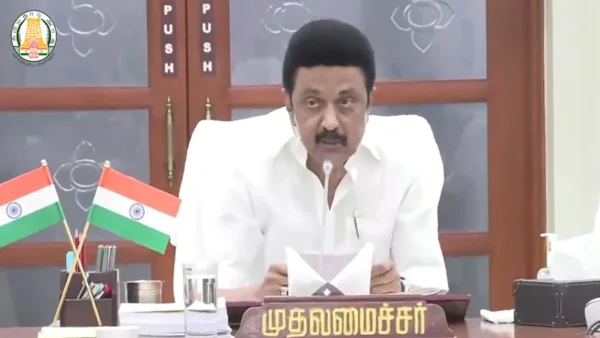
Tamil Nadu’s Chief Minister, M.K. Stalin, has said the next election for the state assembly is a battle of who people are and what they believe in, and he says it is Tamil culture against the BJP’s idea of “fascism.” It’s a really important election that mixes providing for people with being much more insistent on the state’s rights.
Stalin’s framing of the 2026 race
Stalin has now presented the election as Tamil Nadu against Delhi, saying the national government’s policies are endangering the state’s rights and the fact that so many different kinds of people live there. He uses things like the phrases “One Nation, One Religion” and “One Nation, One Language” as examples of the central government trying to make India all the same, which would upset the balance of power between the states and the country.
In this view, the Chief Minister warns that Tamil Nadu’s independence in areas like money, language, schools, culture, and politics is being threatened. He says the state will fight this and will win. For the DMK, this statement is both what they are saying and how they are getting people to participate.
Dravidian Model 2.0 and welfare delivery
A key part of Stalin’s campaign is what he calls “Dravidian Model and a half” (Dravidian Model 2.0), a way of running the government that focuses on fairness for all in society and making sure benefits get to the people who need them. He lists programs like free bus rides for women, training for jobs, breakfast at school, and more social services.
The most important of these is Magalir Urimai Thogai, a direct payment of money to women who are in charge of their households. This is presented as recognizing the unpaid work of taking care of people, and currently around 13.1 million women get this money. Stalin says he will increase the monthly payment to 2,000 Rupees if he’s re-elected.
He also talks about the breakfast program for kids in school, calling it something that will really change things, even though it doesn’t cost a lot. Government officials say it means kids are less hungry in class, more kids come to school, and kids learn better. The idea is simple: doing small things well can lead to much bigger improvements in society.
Economic claims and administrative pitch
Besides these benefits, Stalin is also talking about a plan for the economy to grow, and to grow in areas of Tamil Nadu outside of Chennai. His government says they have given priority to factories and investment in all the districts to spread opportunity around. He points to the state’s economic growth of 11.19 percent as proof that the economy is going well again.
To deal with the possibility that people are tired of the current government, the DMK is saying they have a record of being honest and predictable in how they run things. The Chief Minister emphasizes the direct benefits to families, retirement payments for government workers, and free electricity connections for many thousands of farmers. They are offering both a feeling of things being steady and continuous, real help.
Alliances and opposition landscape
The political opposition isn’t stable. The AIADMK (the main opposition party) and the group they are leading show cracks, with inconsistent messages about who is in it and who is leading. Stalin says this confusion shows a lack of a clear plan, and will become obvious as the campaign gets more active in all areas of the state.
The BJP’s influence is present but isn’t strong across the whole state. The people they could team up with might collect votes in some specific areas, but could cause anger in others. Making a calculation of how many votes different combinations of parties will get is a risk, and both the AIADMK and BJP have to be careful to respect how people in the region feel while also aiming for national goals.
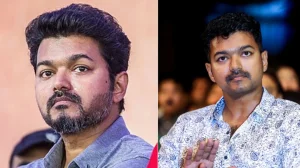
Actor Vijay’s Tamilaga Vettri Kazhagam is a new and unpredictable factor. They aren’t expected to win in a huge way, but they could get younger and city voters, making close elections even more complicated. Because the voting is split in many ways, even a little change in how many votes each party gets could unexpectedly change who wins.
Leadership style and political civility
Stalin has worked to appear as someone who tries to get everyone to agree. He went to say goodbye to a governor he’d argued with a lot, welcomed a former political opponent into his group, and went to the hospital to see someone who had criticized him. He calls this 'politics of embracing‘, and says it is different than what he calls getting people moving by making them hate something.
When it comes to the constitution, he shares the typical Dravidian distrust of the governor’s power. He quotes C.N. Annadurai’s famous line, “What’s the point of a beard on a goat, or a governor for a country?” However, he says his government does respect the governor’s office while still questioning if the governor is unfairly using their power because of their political party.
Polls, projections, and uncertainties
Most polls before the election generally show the Secular Progressive Alliance, led by the DMK, doing well. Several predictions say they will get more than half the 234 seats in the House, many putting the DMK and its allies at 150 seats or more and around 40% of the vote, or even higher.
However, we’re getting conflicting information. At least one important poll suggests the AIADMK-led group could do very well, possibly getting between 114 and 127 seats. These different numbers emphasize the most important thing about this election: it will be close and the difference in votes could get smaller as we get closer to election day.
What people are saying from the areas where the votes are happening shows that the situation at the local level is more complicated than simple stories. How good the local roads and services are, and how much people trust the people running for office, still matter a lot, even in areas that usually strongly support one party. The fact that there isn’t one really strong leader of the opposing parties right now is helpful to the DMK, but things could change quickly.
What to watch as Tamil Nadu votes
First, how well the government gets benefits to people will be a key test. How easily households receive the benefits, what women think of the Magalir Urimai Thogai, and how families feel about the breakfast program at school will determine voters who haven’t decided. If people receiving help are happy and the payments are on time, that could be the deciding factor in very close races.
Second, the argument about identity might become more important. Stalin’s way of talking about Tamil Nadu versus Delhi runs into a national argument that emphasizes everyone being the same. Voters will consider the rights of the state and pride in the Tamil language alongside demands for the same standards everywhere. Criticism of “One Nation, One Language” could get more people to vote, particularly younger people.
Third, how well the parties within each alliance work together, and how fairly they divide the seats they will compete for, is important. The AIADMK and BJP will need to appeal to both their most loyal voters and a wider range of people, and the smaller parties in the region could use their position to gain power. Any sudden changes at the last minute could affect the number of votes in each area in ways polls can’t predict.
Fourth, jobs and training continue to be important. The government is advertising the Naan Mudhalvan program, which is meant to make sure training prepares people for the jobs available in industry. Whether this actually leads to people getting jobs in their communities will affect voters in and around cities. People will also be watching how much investment is happening outside of Chennai.
Finally, the way candidates speak and their methods could determine the outcome. If Stalin runs a polite campaign that focuses on how the government is doing things, he might lessen people’s dissatisfaction. On the other hand, if attacks from the opposition focus on the government’s specific failures, voters who are undecided could switch sides. Getting the message out on the internet and through local organizers will strengthen whichever message gets to people first.
In general, the chief minister is starting the 2026 election with advantages: a history of giving a lot of benefits, organized allies, and his own popularity which is often higher than how people feel about his party. But the different polls, the unsettled opposition, and changing voting patterns in each area mean the result isn’t certain. Whether people are happy with the benefits they receive and if Stalin’s focus on Tamil identity can overcome people being dissatisfied with the current government and problems within the alliance will decide the election.