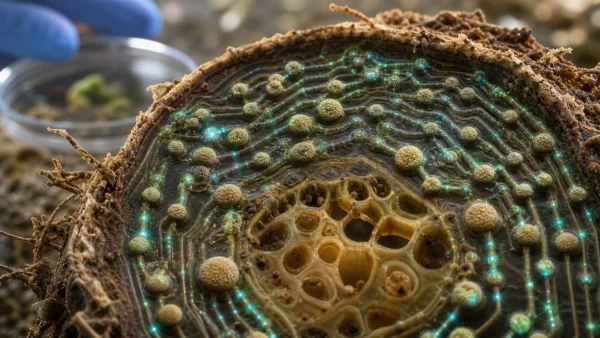
The first application for these bacterial circuit boards is not to be found in a data centre but on the roots of a plant. The chemical system is capable of running computer-like calculations within a microbial community, meaning a crop could detect stress and act on it with no need for human input.
Why turning bacteria into circuit boards matters
You will find speed in electronics, but biology operates on a different clock. A pathogen or a drought takes days to make its mark, not microseconds. For agriculture, a circuit that has done its thinking overnight is perfectly timely as long as it is put where it counts: on the soil, the leaves or the roots.
New work out of the Massachusetts Institute of Technology is built on that premise. Rather than having one cell do all the heavy lifting, the team has apportioned the work among various microbial strains. This minimises molecular crosstalk and makes the colony map something you can programme for logic.
From microbes to switches: the core idea
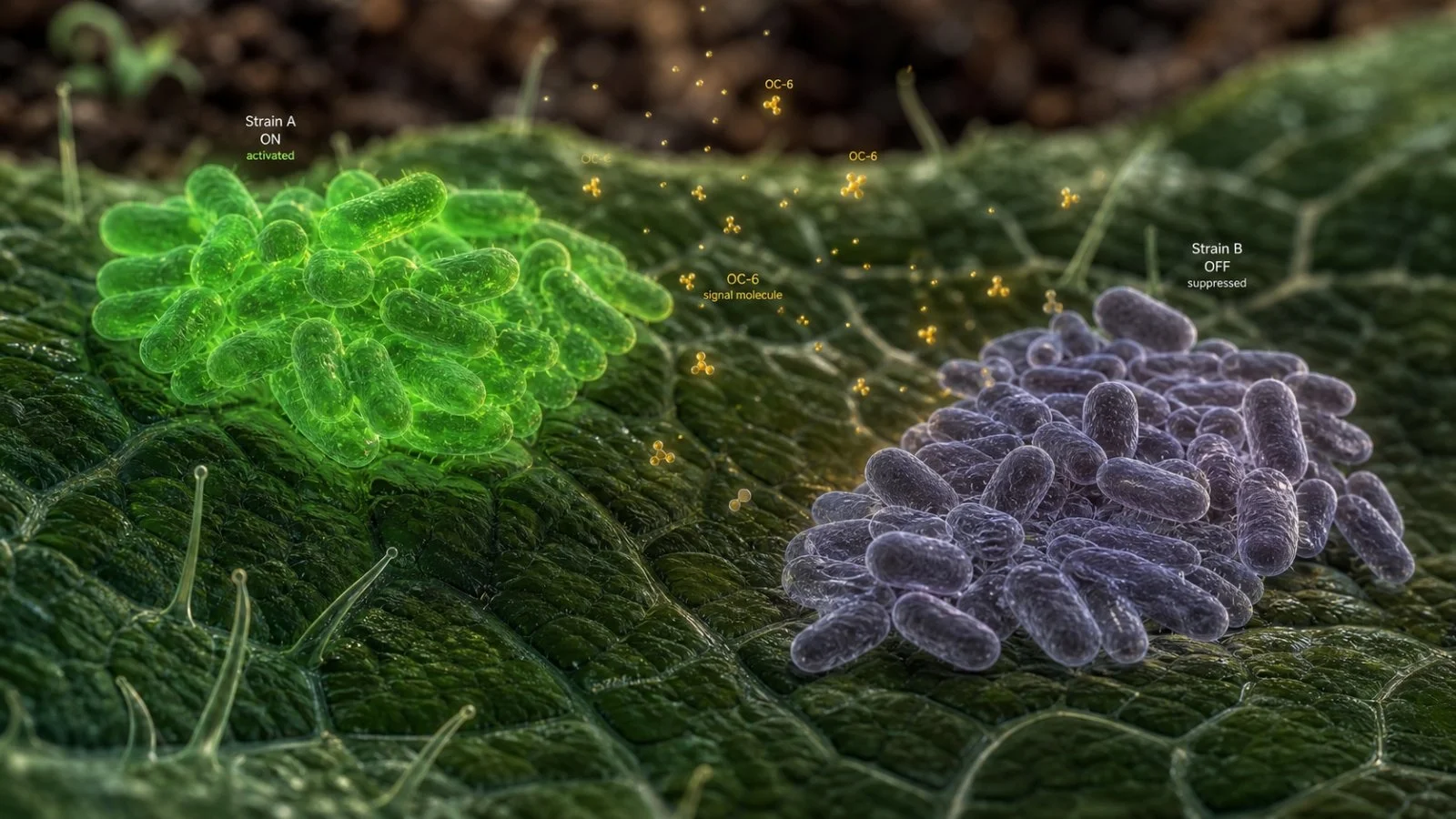
In the hands of the researchers, bacteria are made to do what transistors do, only with chemical signals in place of electrons. They have retooled Pantoea agglomerans, a surface bacterium one would expect to see on a root or leaf, to function as connectors and on-off switches.
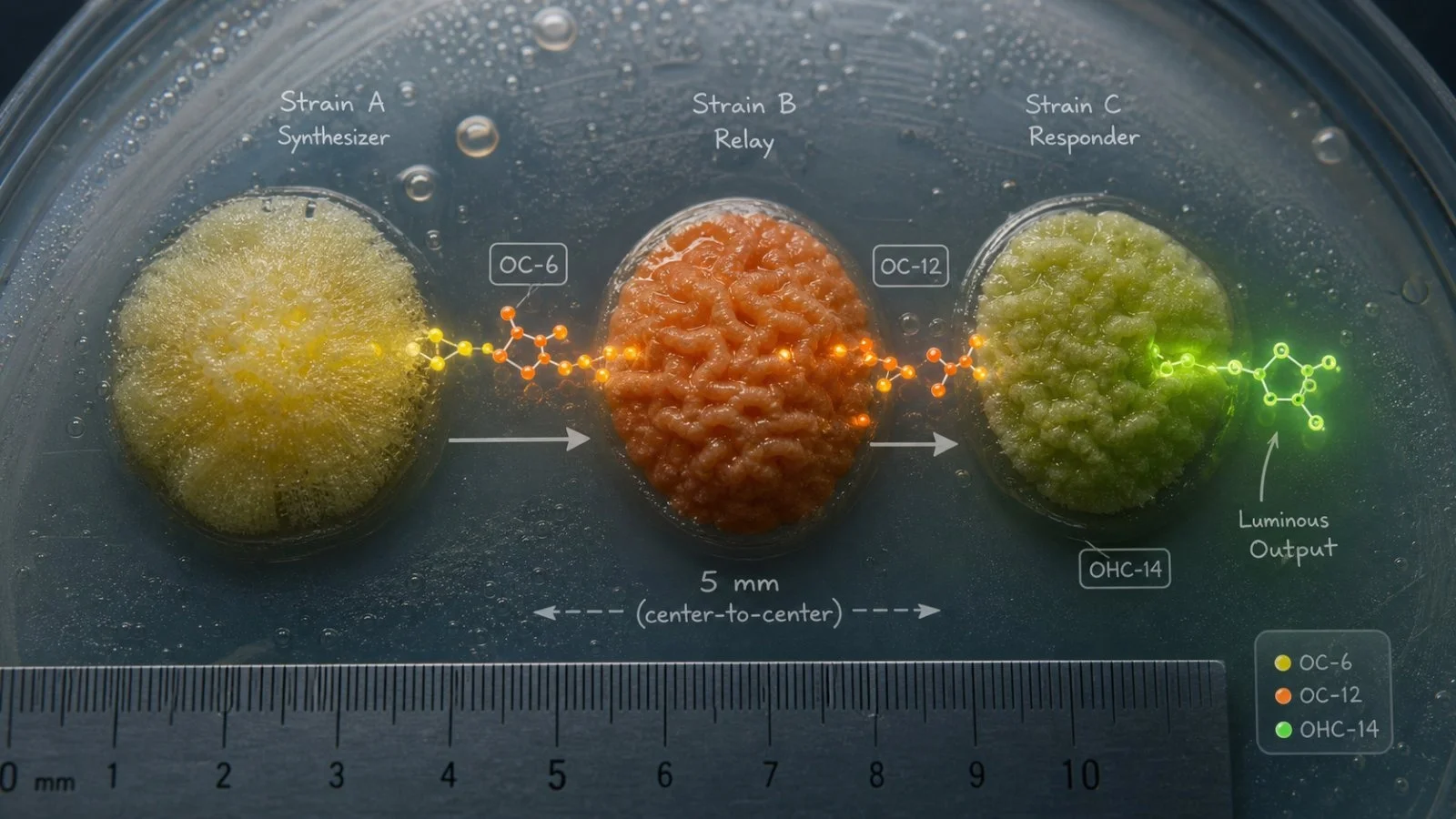
There are two strains that act as the switching elements. Both are keyed to a control molecule, OC-6, but in reverse; one will activate in its presence while the other is shut down. Then each switch takes in a second molecule, OC-12, and puts out an OHC-14 chemical.
How signals travel through living layouts
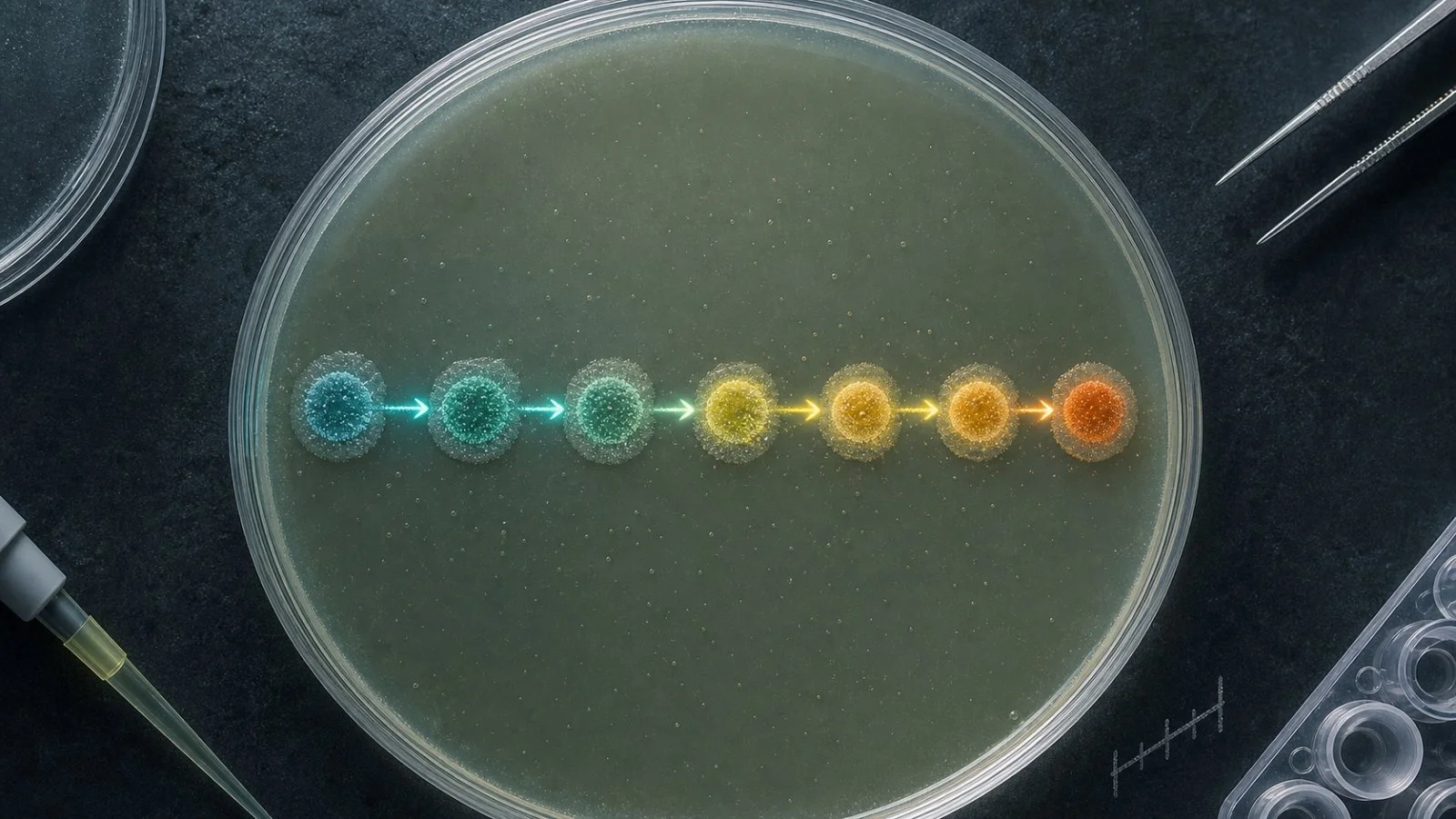
Left to itself, that output molecule does not get very far. So Christopher Voigt and his team, including study lead author Hamid Doosthosseini, have put in place three more strains to serve as relays. They take the OHC-14 and put it in a form the next colony can understand, wiring the logic in process.
Communication is kept local by printing the colonies some 5 millimetres apart. The information goes in one direction from colony to colony. With a combination of two transistor and three relay strains, the researchers say one can put together a wide array of circuits.
What the living circuits can already compute
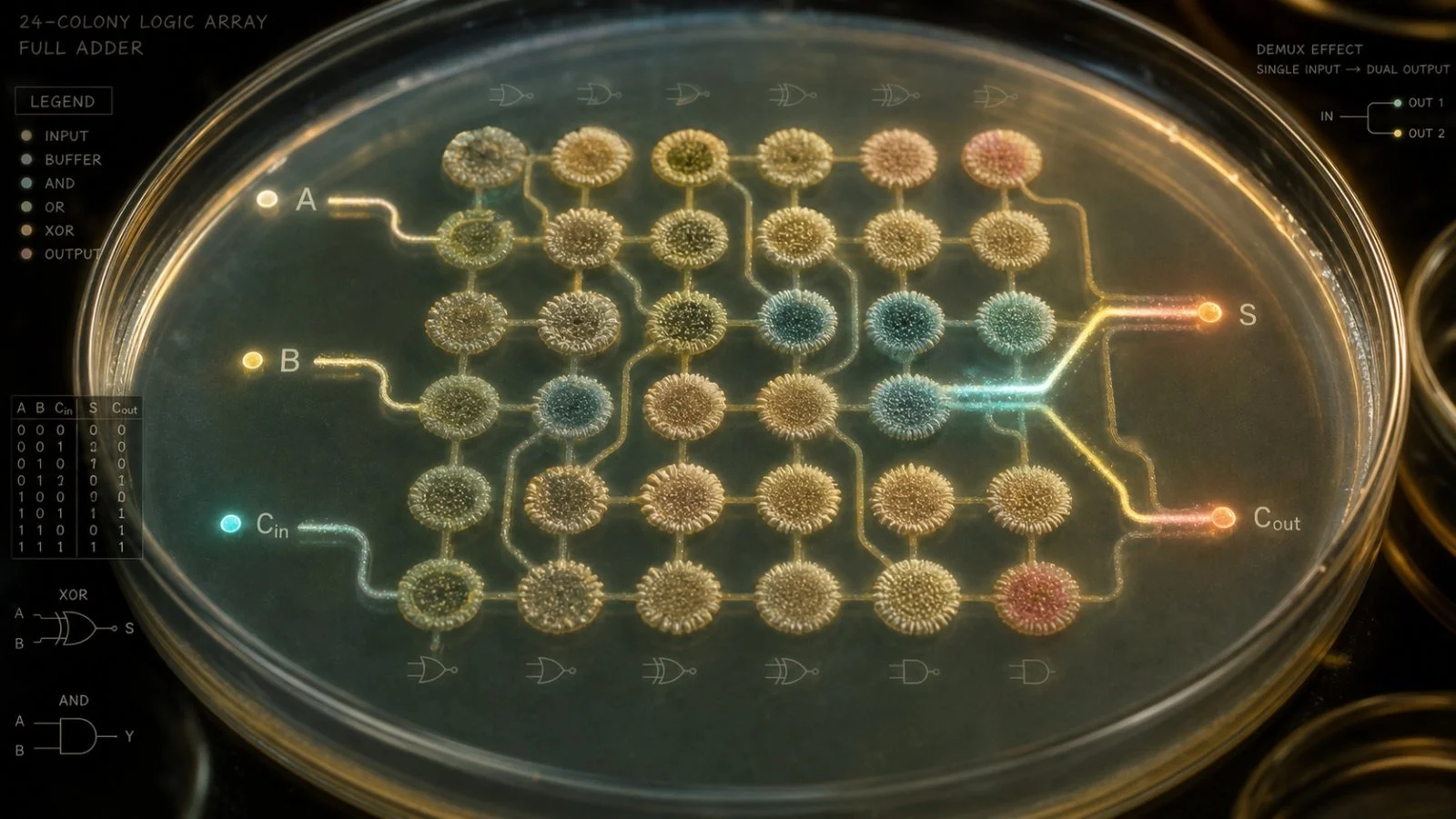
The group has used this five-strain set to put in place working logic, or and imply functions for instance. More involved behaviour is also possible by combining parts, such as using a demultiplexer to direct a single signal to several places or to add in multiple inputs.
It is no small scale either. In one case they linked 24 colonies to add two inputs. These are initial building blocks of computer architecture, they say, and any operation could be put together from the five strains if the arrangement is right.
Then there is the matter of tempo. An eight-hour window is what it takes for a calculation in this medium. But the researchers would have it known that it is about the capability, not the speed.
There is a certain haste to conventional chips. A leaf that has to make up its mind by tomorrow morning whether to put up a defence does not share that urgency.
Designed for fields, not phones
The environment in which this is meant to operate is alive and messy, the antithesis of the sterile electronic world. The researchers have their sights on coating plant roots or leaves with living circuits. Should the system detect something like a drought, it can initiate a protective measure such as synthesising a fungicide of its own accord, no external sensors required.
By handing off computing duties to microbial specialists they sidestep the synthetic biology bottleneck. In a single cell one can only cram so much logic and sensing before the protein machinery is overwhelmed and unwanted interactions ensue. With their approach each strain does its part and puts out a clean signal. It is a study in Nature Chemical Biology that points to a wider appetite for biological computation, and with some of its funding from the US Defense Advanced Research Projects Agency and the Intelligence Advanced Research Projects Activity, there are clearly applications being considered beyond the farm.
Inside the toolkit: switches, relays, and safe handoffs
These are living boards that move molecules rather than electrons. OC-6 is the master toggle for every switch strain while OC-12 serves as the data input at any given stage. Only when the inputs and switch are in agreement will the output OHC-14 be made, in much the same way an electronic transistor will let current flow under the right circumstances.
Relays are essential since OHC-14 does not diffuse far. They take that output and put out a compatible signal for whatever comes next, keeping cross-talk with far off colonies to a minimum. The 5 millimetres between them is a matter of discipline; it is what makes a printed pattern on a Petri dish a circuit with direction.
Given enough steps the chain yields solid logic. The group can split or combine signals with the kind of control one would use to route traces on a board to link up chips, except these traces are bacterial neighbourhoods put in place by command.
Key points at a glance
From the MIT team’s chemical computing system the salient facts are:
– Bacteria put to work as transistors
– The signals are chemical in nature
– Colonies are set 5 millimetres apart
– Five strains are needed (two switches and three relays)
– The most extensive demo involved 24 colonies
– An eight hour window for a calculation
– Smart plant responses are among the aims

Why it matters now
With climate variability on the rise, there is a pressing need for crops capable of localised response. A living circuit can do its computations overnight and still get ahead of a water deficit or fungus on the prowl. Since the microbes are already suited to plant surfaces, the researchers contend that once the work is proven outside the lab, integration should be simple.
They make the case for an architecture that can be scaled into complex functions by joining simple components, eschewing the redesign headaches of trying to make one cell do everything. The goal is adaptive biology run by computation, not silicon.
What follows is a pragmatic agenda: to see which plant stresses stand to gain from on-site logic and to convert the showings on a Petri dish into something more lasting for the root and leaf. Backed by the defence and security establishments, expect this sort of living hardware to draw interest as it moves on from the incubator.