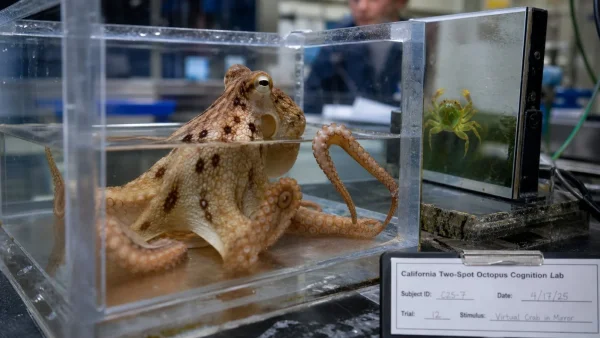
You could call it a mind-bender. A skill we once thought was the province of higher-order animals has now been seen in octopuses. Put a California two-spot in front of a mirror at Dartmouth and it will figure out where its meal is, even if it can’t see it head on. They made the right call 73% of the time in these trials. The study, which has been peer-reviewed for Current Biology, puts a new spin on invertebrate smarts.
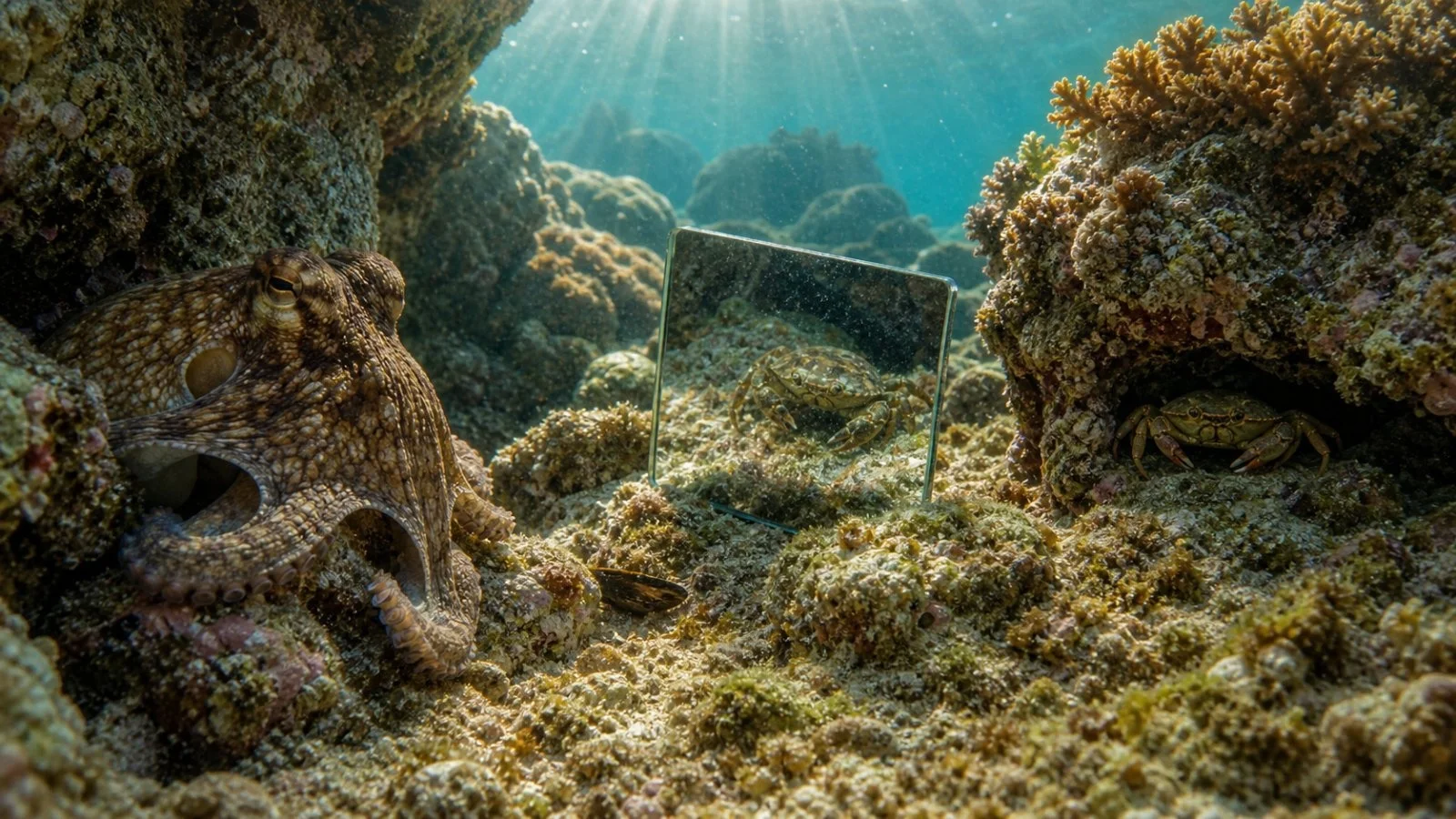
Why a mirror matters for an octopus
If you make your living in a tangle of reef and rock, you have to be able to piece together what you can’t quite see. The folks at Dartmouth have put to the test that an octopus can take a reflection and make something of it in the real world, without lashing out at the image itself but by going to where the prize is.
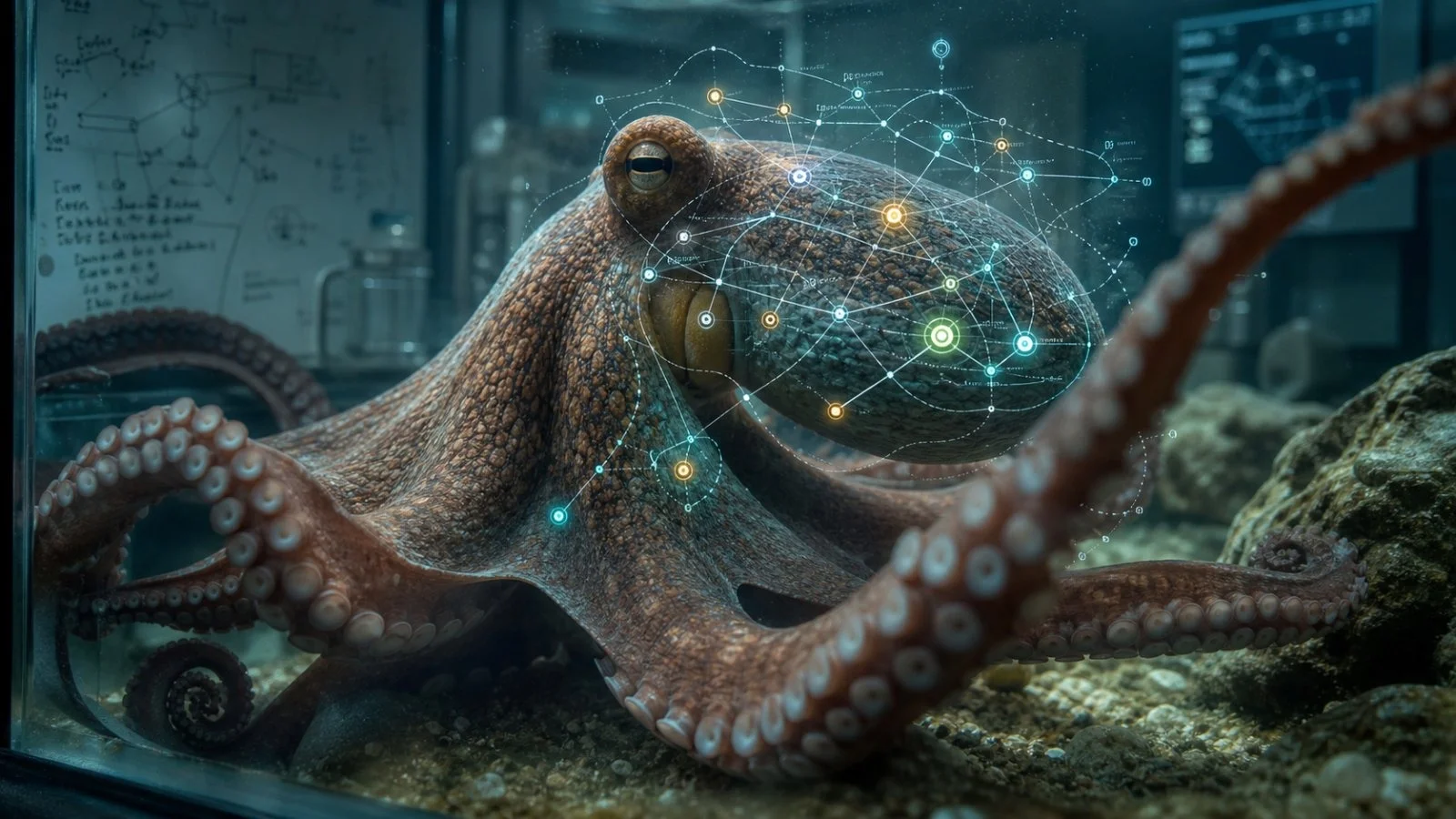
There’s an important line there. To see a reflection as a source of information and not some other creature or a red herring is a big step. It means the animal has a kind of internal map it can use to make a move. The researchers say this is the first hard proof of an invertebrate pulling that off to get at its prey.
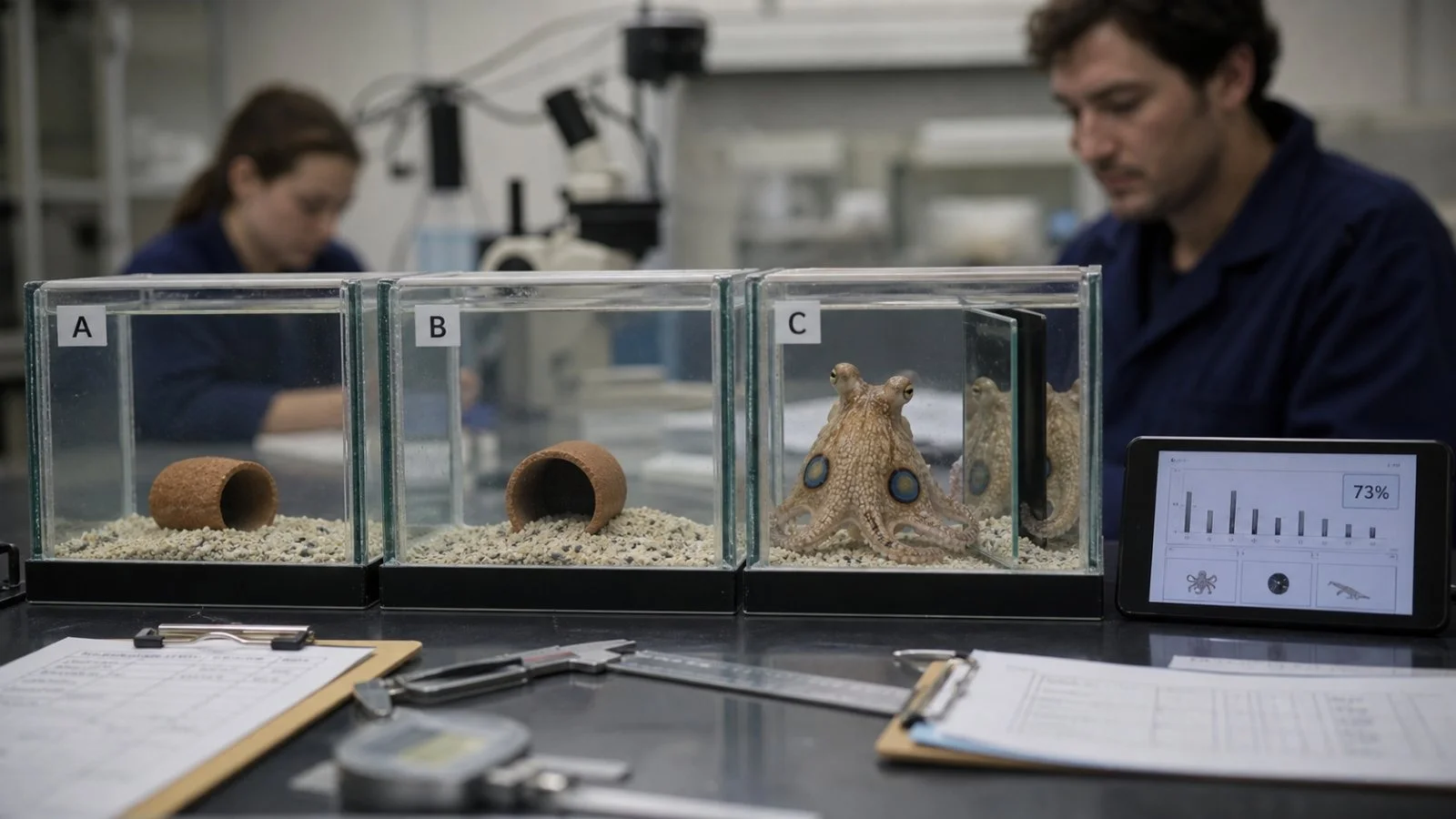
Key findings at a glance
Here are the numbers, per the authors:
– Three California two-spots put through their paces
– 73% accuracy in picking the right spot
– The mirror did the talking, not some other sense
– You can read up on it in Current Biology
– All done at Dartmouth College
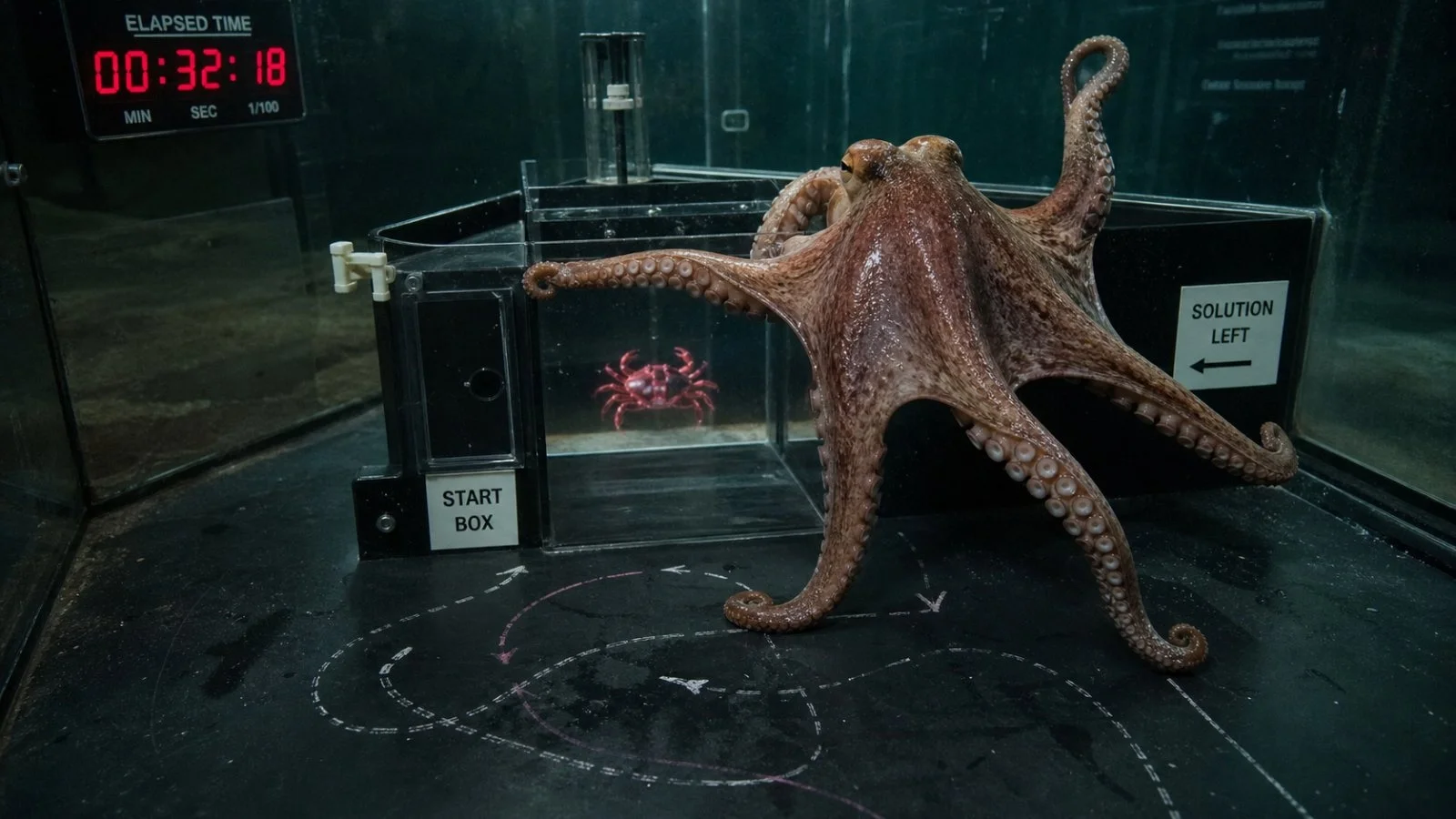
Inside the unusual experiment
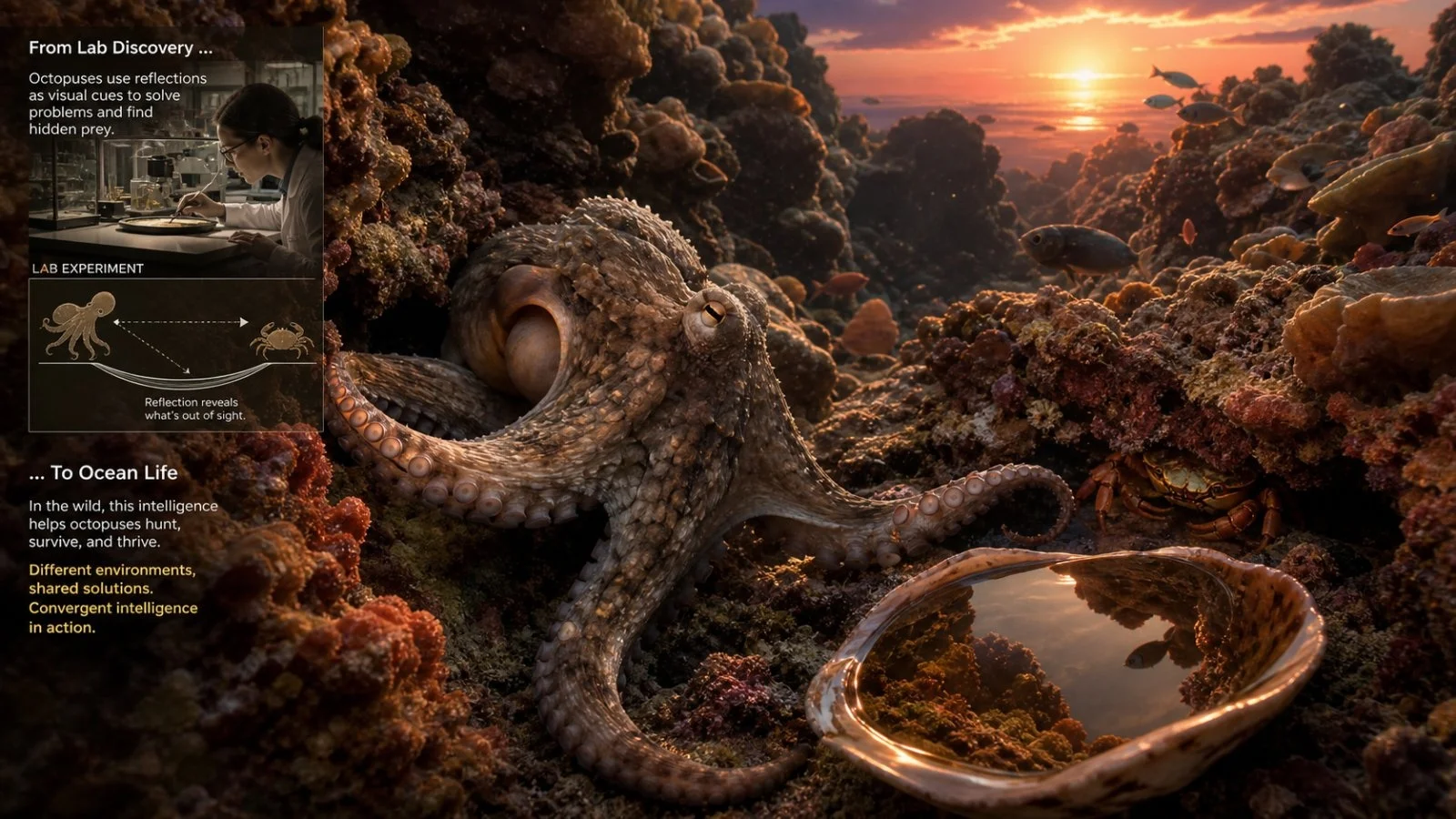
To start, an octopus would be in a box with a mirror before it. Then a digital crab would be put in view behind it, left or right, visible only in the glass. Want a live one? You had to deduce where the phantom was and go to that side.
We wanted to rule out any scents or tastes getting in the way. Since they can pick up on chemicals with a touch, we didn’t have any real prey around when they were making up their minds. A correct answer was the only way to get a crab. That way we knew the mirror was what was driving them.
They didn’t just make a beeline for the mirror. They’d turn and go around the set-up to the side the virtual crab occupied. One or two even went over the top of the box instead of swimming round it – a bit of on-the-fly problem solving.
Training the animals to read reflections
We let them get used to having mirrors in their tank before we started. Then we put in a training phase: a jar with a live crab in it, placed so you could only see it in the mirror. To get to it, they had to do some maneuvering.
It’s much like we do in our own lives. “We don’t come into the world knowing how to use a mirror; you have to be taught,” says Peter Tse, the senior author on the paper. Then there were the octopuses. They, too, came to see the reflection for what it was: a way of knowing where something is, not an object to be put down.
What the results tell us about their minds
You could see the animals pick up speed as the trials went on in zeroing in on the right side, even if they didn’t always go the most direct route. It’s a sign of learning from one session to the next, not some hard-wired routine. The researchers followed their every move and put down how their tactics changed.
It makes you wonder: do these creatures have some kind of internal map? The authors think the data may be pointing in that direction, though they are careful to say we need more proof before we can be sure. But then again, a hunter has to know where its hiding places and escape hatches are.
Why this matters outside the lab
We’ve been in for a few surprises with octopuses over the years. Take Inky, who made headlines in 2016 for his escape from a New Zealand tank via a drainpipe; he put their ingenuity on display. This latest work with the mirror goes a step further. It’s not just about being handy or inquisitive; it’s about some pretty advanced spatial reasoning.
There’s an evolutionary angle to it, too. You don’t have to look far to see the chasm between us and an octopus. Our last common forebear was around 350 to 500 million years ago. And yet here we are, both making use of a reflection to get around, for all our different parts and brains.
Mary Kieseler, the study’s lead, puts it like this: this is the first time we’ve seen an invertebrate use a mirror to make sense of its world and track down a meal. We’ve seen it in a few mammals and birds, but not before in an invertebrate. It seems you can arrive at the same kind of cognitive fix down very different roads.
The reason for it is probably in their day-to-day. An octopus is an ambush predator in a world of obstacles. If you can read a room and plan your move, you’re the one with the advantage.
*
In the wild, the mirror is a proxy for the kind of visual noise an octopus has to deal with. If it can figure out that a reversed image means something in front of it, you have an animal that can change its point of view. That’s what you need to make your way through a coral maze or to make a strike from cover.
Hunters with a good head for their territory tend to do well, and the octopuses’ numbers back that up. We’ll have to test for the internal maps, but what you can see in their behaviour is a certain efficiency and planning.
Looking ahead**
The folks at Dartmouth have given us a new vantage point on invertebrate thought. Down the line, they might try moving the mirrors around, putting in some delays, or throwing up some hurdles to see how solid this is. Or they could see if other cephalopods are up to the same thing.
But for the moment, the message is plain. Octopuses will use a reflection as a means to an end. They can find what’s out of sight and hone in on it. For a creature with no spine, that’s no small feat.
It also gives you pause when it comes to defining intelligence. When an animal so far removed from us in evolution comes up with the same kind of solutions, maybe it’s not the brain itself but the demands of a complicated life that count. Octopuses are made for it.