You will find generative AI has been making its mark on an email or a speech without the user so much as a word of it. And while it can be misleading, the right thing to do is not always plain to see. Whether you are just putting some sheen on an office document or in a moment that says something about your character, the question of whether to come clean is part and parcel of modern life.
Why the pressure to hide AI help is growing
It is not enough for people to tinker with AI; they have to consider the effect it has on their image. There is even research to suggest that folks have good reason to keep quiet about it, for fear of putting a strain on a relationship.
It comes down to how you are viewed. For the most part, there is a sense that AI work is worth less, and the person behind it is not as capable or real. If you feel like you are on thin ice, not mentioning the AI can seem like a way to put up a shield.

What counts as deception? A useful way to sort it
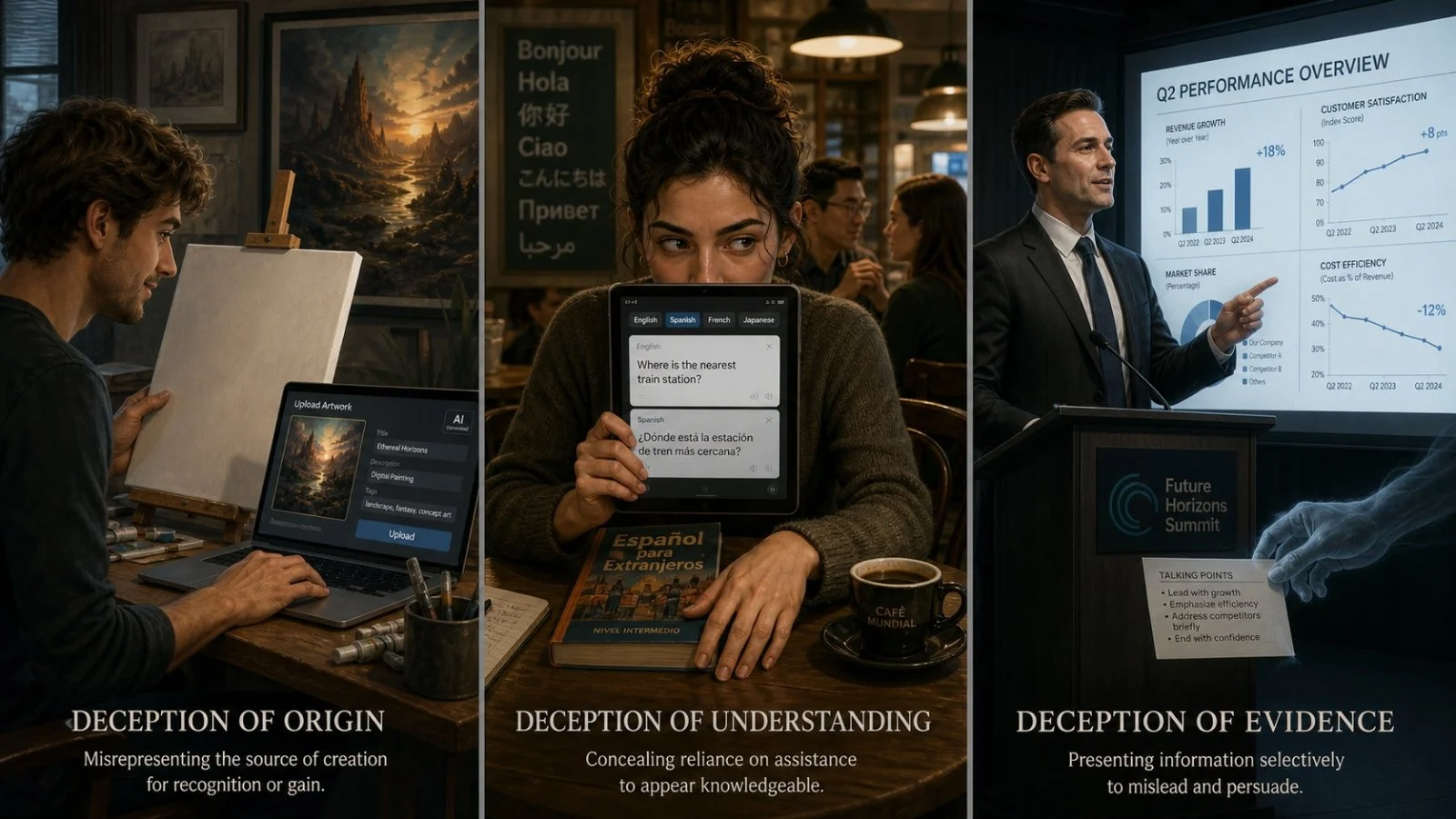
There are different flavours of being untruthful. Philosopher John Danaher has put forward a way of thinking about the deceptions AI and robots can bring about, and it is a handy lens for looking at how we use these new tools.
Then you have the type that is about the person. Put out a piece of art made by a machine as if it were your handiwork and you have what Danaher would term a superficial state deception. You are making a claim about your abilities that does not hold water.
Or you might be concealing what you are truly capable of. Say you put on an act of not knowing a language you in fact do, to get ahead. That is a hidden state deception; you are covering up a skill or a feeling that is there.
The third type has to do with the world around you. You say you put in the work when in reality the AI did, in order to make a point about your skills. An external state deception is a misrepresentation of what transpired and why, not just of who you are.
The moral weight shifts with context
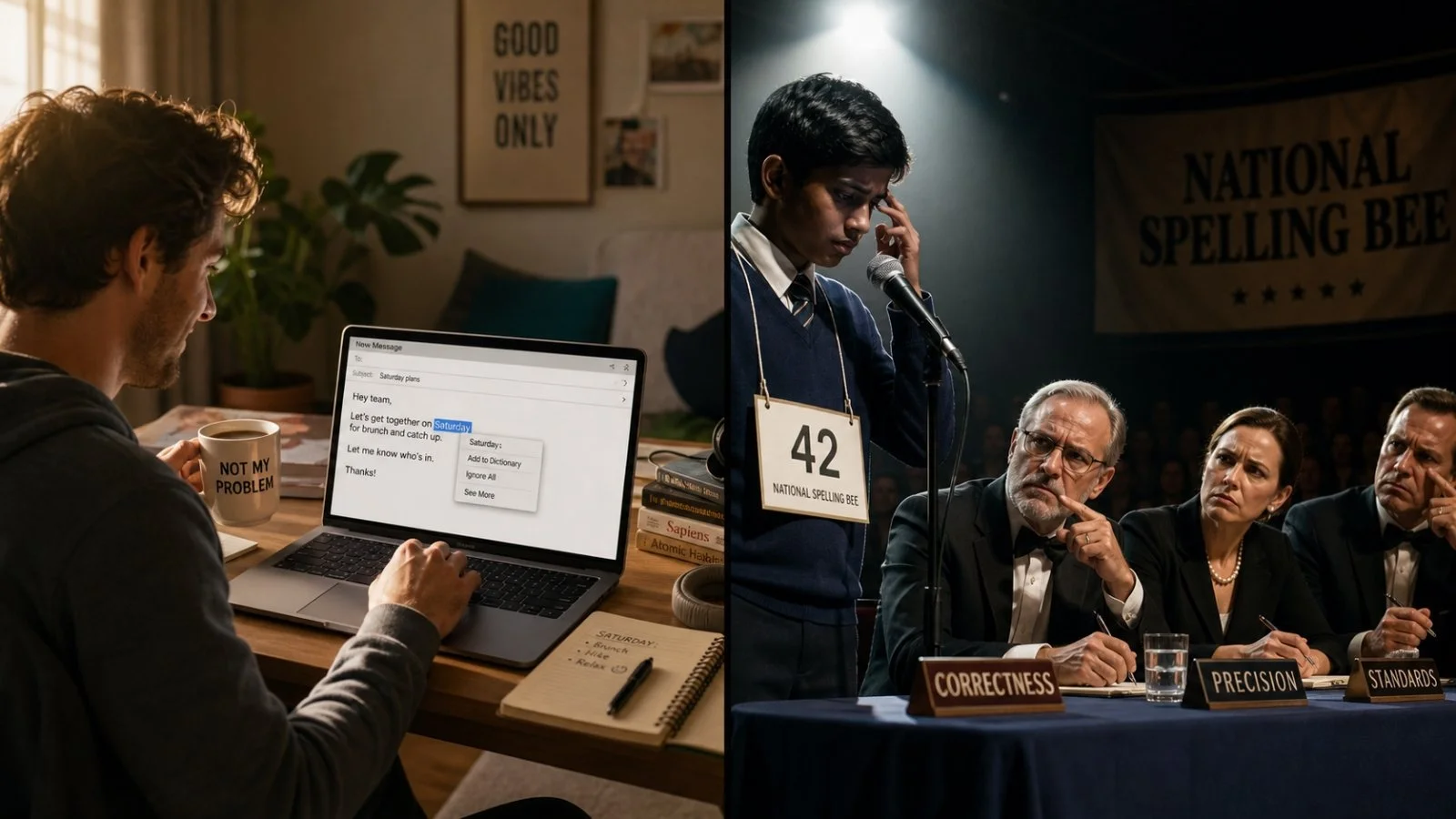
Being deceptive is not always off the table. Some of the small things we do in a day are hardly worth a second thought. I don’t go around announcing my use of spell-check with every message I send; in most cases, it is no big deal.
But change the setting and you change the rules. Let’s say a rival in a spelling bee is using software to check his words. Most would have a problem with that. When the whole point is to show you have the skill, the line between minor and major is crossed.
Two common dilemmas, very different stakes
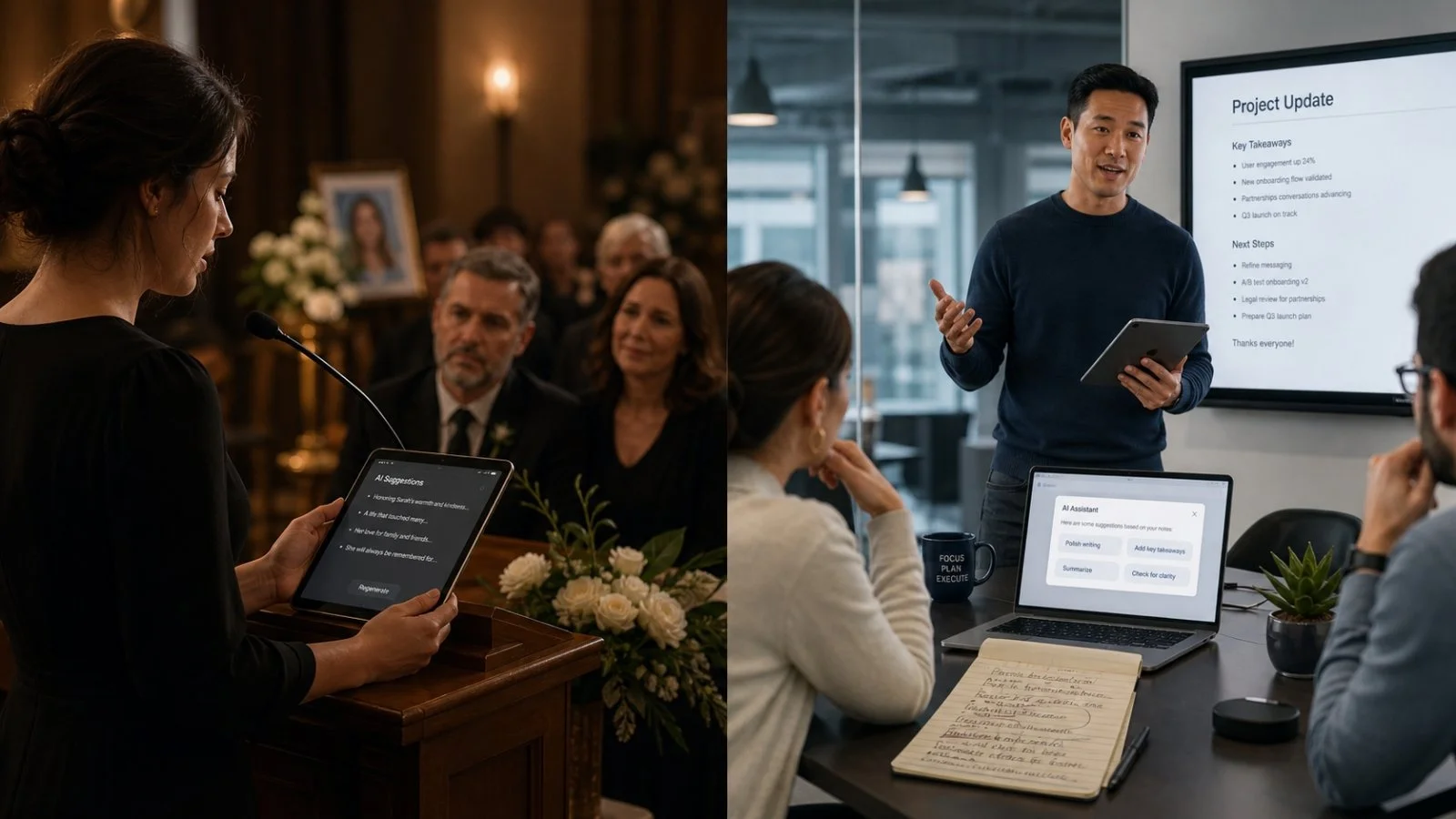
Take something as personal as a eulogy. The family is moved by the words and takes them to be from the heart of the one speaking. But if the speaker let an AI write the whole thing and didn’t let on, you have a case of non-trivial misrepresentation.
And it is more than a matter of being correct. A eulogy is supposed to be a window into someone. To put your name to an AI's output is to vouch for it. By not telling, you are in a way robbing others of the chance to know you for who you are.
Still, it is not so simple in practice. When you’re too in the grip of grief to put pen to paper, an AI can be the only means to get your point across. You may still stand by what it says. There’s a moral taint to not being up-front about it, but then again, there are times when other considerations take precedence.
Take the office for example. You put some rough notes from a meeting into an AI and put out something much more polished. A coworker will commend you for it. You let them think you have that kind of clarity, even if the software did most of the work. It is a form of external deception.
And yet, we tend to shrug at it. After all, you put in the effort to guide and review it. We don’t make a habit of announcing every little tool we use to be productive. In a lot of day-to-day work, where a sentence comes from is hardly the issue.
How to be open without making a scene
The boundary between something that’s no big deal and something that is isn’t hard and fast. It has to do with the stakes and the unspoken rules of the room. When it comes to matters of identity or how well you can do your job, you have more reason to be transparent.
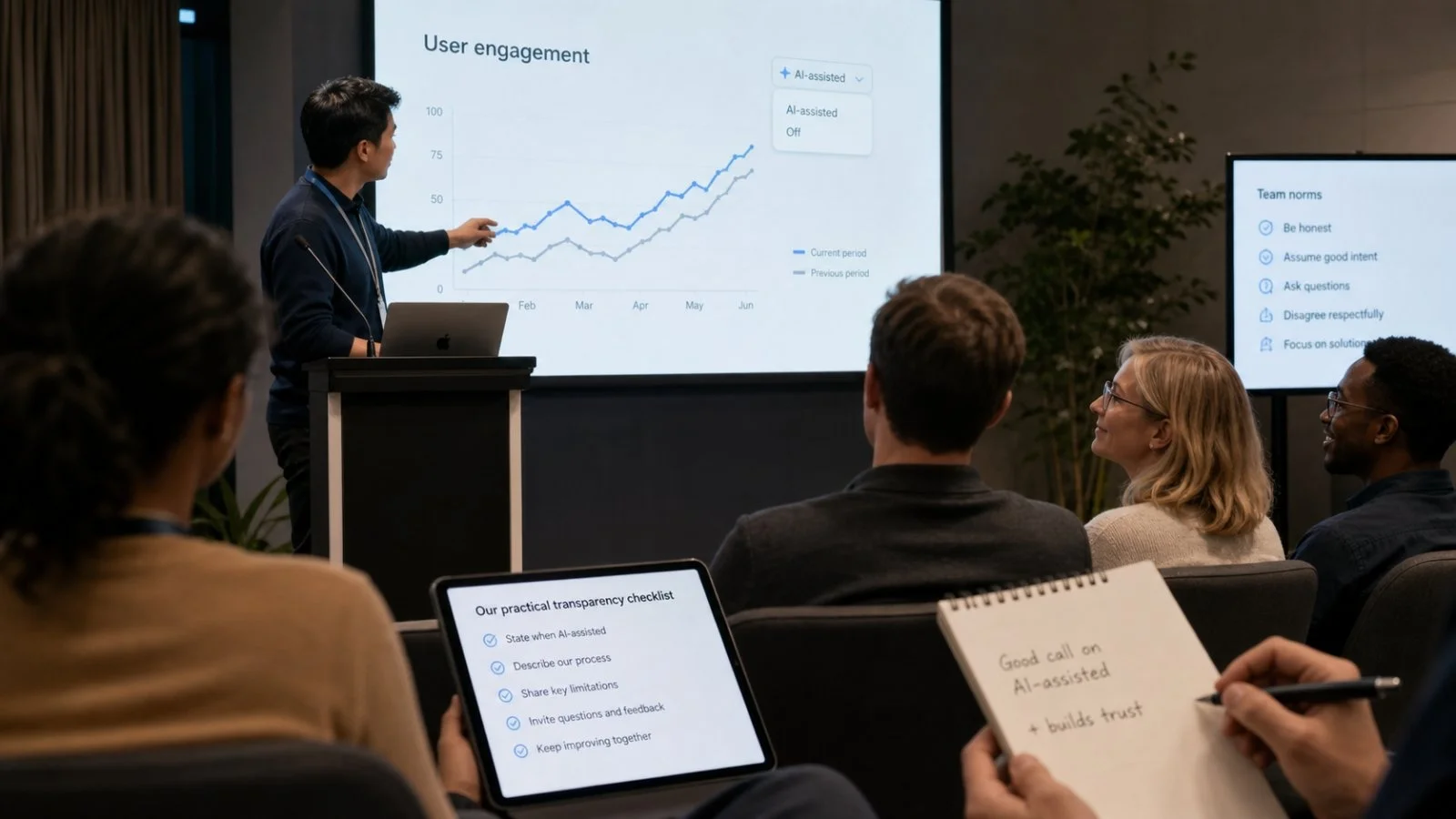
Telling people you used AI lets them read the room correctly-what the piece is and what it isn’t. It keeps your endorsement of the work from being mistaken for having written it word for word.
You don’t have to make a production of it to be trusted. A small nudge in the right direction is usually enough:
– If authorship is on the table, say so in passing.
– Where your effort is being measured, give credit for the help in drafting.
– If the tone is very much yours, let it be known you made the final call on the edits.
– Don’t over-explain for something of no consequence.
– Read the room.
It’s not a matter of confessing every time you let a program do its thing. It’s about not misleading people on your abilities or what went into the work.
A rule of thumb
Wondering if you should have said something? Ask yourself what others are due to know in the given situation. In anything with an element of competition or evaluation, they are due to know more. In some of the more mundane admin side of things, less so.
Before you let AI do the talking, run through this:
– Is this a case for genuine, personal voice?
– Is my competence on the line here?
– Will I be creating a false impression of who wrote this?
– Do they need to know in order to be fair?
– Would a word or two clear up any confusion?
These aren’t meant to be a substitute for good sense. They just put the spotlight on what’s really at stake: helping others come to a true understanding.
What’s at play
We’ve got generative AI in the mix now, for everything from the personal to the professional. The question is: what’s the story here, and who gets the credit? There’s no single answer to that.
As we figure out the new normal, you can count on the bar for disclosure to be raised in any arena where you are putting your skill or self on display. For now, the best policy is to be open when it counts, and not let the path of least convenience cloud the truth.