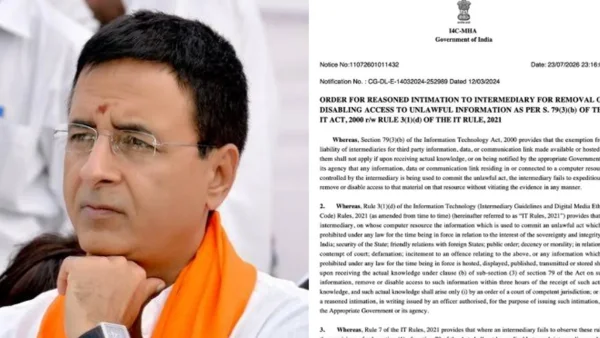
A controversy has erupted over the offline messaging application BitChat after claims circulated online that Indian authorities sought the removal of the app’s source code from GitHub, triggering a wider debate on digital rights, protest communication, and the regulation of emerging technologies.
The discussion gained international attention after Jack Dorsey, co-founder of Twitter (now X), publicly referred to the reported GitHub notice, prompting renewed scrutiny of how offline communication technologies are treated during periods of public protest.
The controversy comes amid ongoing demonstrations by students at Delhi’s Jantar Mantar, where protesters have been demanding action against alleged examination paper leaks and recruitment irregularities.
The claims regarding the reported notice, its legal basis, and the reasons behind it have not been independently verified at the time of publication. What Is BitChat? BitChat is an open-source messaging application designed to operate without conventional internet or mobile networks.
Instead, it uses Bluetooth mesh technology, allowing nearby devices to relay messages from one user to another without requiring cellular connectivity.
Such technology has attracted interest for use during natural disasters, remote expeditions, and situations where internet connectivity is unavailable.
Its reported use during public demonstrations has now placed the technology at the center of a broader policy discussion.
Claims of a GitHub Notice Draw Global Attention
According to claims circulating online, the Indian Cyber Crime Coordination Centre (I4C) under the Ministry of Home Affairs reportedly issued a notice requesting the removal of BitChat’s source code from GitHub.
Supporters of the app argue that it enables communication during internet disruptions and is a legitimate technological tool.
Others contend that governments may seek to regulate technologies that could complicate law enforcement or public safety operations.
At the time of publication, there has been no independently verified public record establishing the full circumstances surrounding the reported notice.
Digital Tools Are Changing Public Demonstrations
Modern protests increasingly rely on digital technologies beyond traditional social media.
Encrypted messaging applications, digital payments, live-streaming platforms, and offline communication tools have become part of how participants organize, coordinate, and communicate.
The reported use of Bluetooth mesh technology by protesters illustrates how technological innovation is reshaping civic participation.
Public Opinion Remains Sharply Divided
The controversy has generated extensive discussion online.
Among the reactions:
“Offline communication tools are useful not only during protests but also during disasters and emergencies.”
“If restrictions are imposed, authorities should clearly explain the legal basis for doing so.”
“Governments have legitimate security responsibilities, but technological regulation should remain transparent and proportionate.”
“The full facts behind the reported GitHub notice should be established before conclusions are drawn.”
“The debate is no longer only about one app—it’s about how technology and civil liberties intersect.”
These comments reflect public opinion circulating online and should not be interpreted as verified facts.
Can Democracies Balance Security and Digital Freedom?
As communication technologies evolve, governments worldwide are increasingly confronted with difficult questions.
How should authorities respond to tools that enable communication beyond conventional networks?
How can security concerns be addressed without unnecessarily restricting legitimate technological innovation or lawful civic activity?
These questions are not unique to India and are likely to become more prominent as offline communication technologies become more widely available.
The Debate Is About More Than One App
Whether the reported actions concerning BitChat are ultimately confirmed, clarified, or disputed, the controversy has highlighted a broader issue facing digital democracies.
Technology is evolving faster than regulation, and governments, courts, developers, and citizens are all grappling with where to draw the line between public safety, innovation, and civil liberties.