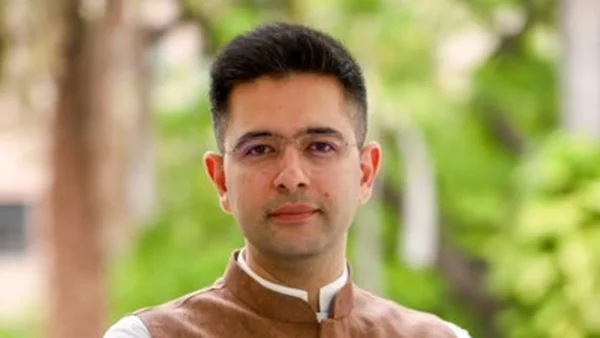
Rajya Sabha MP Raghav Chadha recently defended the government’s approach to tackling examination paper leaks by saying:
“I understand students’ pain. I was a CA student. When I was in the opposition, it was my job to raise questions. But now I’m on the treasury bench, and my responsibility is to provide solutions. Students’ protests cannot become a platform for a failed party (AAP) to stage a comeback. Paper leaks cannot be addressed through media soundbites but require an institutional solution.”
While the statement attempts to present a shift from opposition politics to governance, it has also drawn criticism from those who believe it reflects a change in political priorities rather than a commitment to student concerns.
From Asking Questions to Defending the Government
One of the most discussed parts of Chadha’s speech was his acknowledgment that his role has changed.
Does Changing Sides Change the Standard?
Critics argue that governments should welcome difficult questions instead of dismissing them as politics. When in opposition, leaders often demand accountability and transparency. Once in power, citizens expect those same standards to be upheld—not lowered.
The criticism is not that governments should not propose solutions, but that solutions and accountability should go hand in hand.
Students’ Protests or Political Opportunism?
Raghav Chadha suggested that student protests should not become a platform for a political comeback by the Aam Aadmi Party.
Should the Focus Be on Protesters or the Problem?
Many observers argue that the central issue is not which political party benefits from a protest but why students are protesting in the first place.
Candidates invest years preparing for competitive examinations. When papers are leaked or exams are cancelled, their frustration is genuine. Reducing protests to political strategy, critics say, risks overlooking the grievances of those directly affected.
Institutional Solutions Must Deliver Results
The MP argued that paper leaks require institutional solutions rather than media soundbites.
On this point, many would agree in principle. Long-term reforms, stronger examination security, stricter enforcement, and accountability mechanisms are essential.
But Are Laws Enough?
Critics point out that passing legislation is only one step. The real test is implementation.
Students are likely to judge success not by speeches in Parliament but by whether examinations are conducted fairly, securely, and without repeated controversies.
Public Reaction
The remarks generated mixed reactions online.
Supporters argued that governing requires practical solutions rather than endless criticism and that institutional reforms are the correct approach.
Critics, however, accused Chadha of adopting the same defensive posture that he once challenged while in opposition. Some social media users remarked that leaders often champion accountability when out of power but become less receptive to criticism after joining the government.
Others argued that students are less interested in political blame games and more interested in transparent investigations, timely examinations, and credible safeguards against future paper leaks.
Conclusion
Raghav Chadha’s statement highlights the difference between opposition politics and governing. While acknowledging that responsibility changes with office, critics contend that accountability should remain constant regardless of which side of the House a politician occupies.
Ultimately, students are unlikely to judge leaders by speeches alone. They will judge them by results—whether paper leaks decline, examinations remain secure, and deserving candidates can compete without fear that their hard work will be undermined by systemic failures.
For any government, the strongest response to criticism is not rhetoric but measurable improvement.