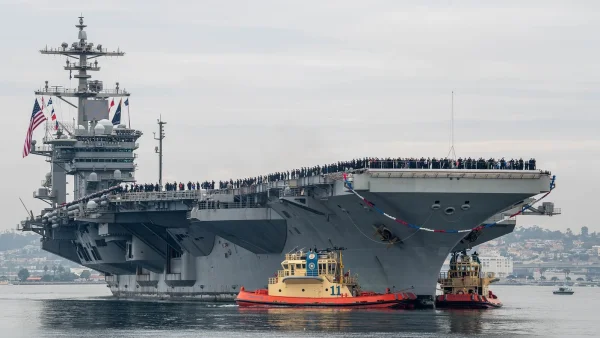
As the 50,000-ton Tripoli travels across the Indian Ocean to meet up with the Abraham Lincoln, the Pentagon is concentrating more power in the Gulf. It will be in the northern Arabian Sea in a few days, and it has over 2,000 Marines from the 31st Marine Expeditionary Unit on board, which will put more pressure on Iran.
Why USS Tripoli Matters in the Gulf
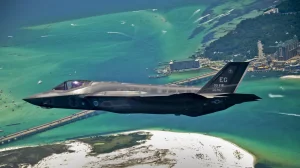
The Tripoli isn’t just for carrying things. At 844 feet long, it’s made to project power from the sea and onto land. It can use F-35B stealth fighter planes, MV-22 Osprey planes that can both take off and land like helicopters, MH-60S Seahawks, and boats to take Marines from the ship to the shore even while they are being attacked.
The 31st MEU is a well-rounded team of air and ground forces with the supplies they need, and they are trained for quick attacks, coming onto land from the sea, and responding to emergencies. With a carrier strike group, the Tripoli gives those in charge a mobile base for controlling the air, attacking, and quickly sending in troops all over the Gulf of Oman and other areas.
This combination is meant for areas where control is being fought over. It can remove mines, find and destroy drones, and protect groups of ships while Marines take control of important land areas along the shipping routes. Simply put, the Tripoli is specifically designed to deal with the problems of the Strait of Hormuz.
What Securing the Strait of Hormuz Would Take
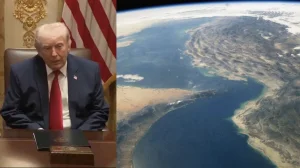
The Strait of Hormuz is about 33 kilometers (20.5 miles) wide at its narrowest point. Because roughly one-fifth of the world’s oil and gas is transported through this point, it’s the most important shipping route on the planet.
Reports say Iran has bothered ships and threatened ships with Western flags, which has caused oil prices and insurance costs to go up. Even a partial stop to the flow of goods could quickly affect energy markets.
To reopen and protect the Strait of Hormuz requires multiple layers of security: aircraft to stop missiles and drones, ways to deal with mines, escorts for groups of ships, and a place for quick reaction forces to start from. A group of countries working together under a neutral flag could share the responsibility and show that the world is determined.
Strategic Options on the Table
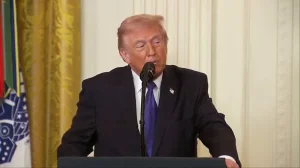
Washington is purposely not being specific about what happens next. President Trump said he isn’t sending troops anywhere, and if he were, he wouldn’ and tell us. But military leaders have planned for different situations to keep oil moving and stop things from getting worse.
One idea is a safe route for ships with escorts. Navy and Marine aircraft would create a protective area over specific routes, while destroyers and patrol boats would protect tankers from smaller, faster boats and groups of drones.
Another possibility is to briefly take over or occupy small islands off the southern coast of Iran to prevent them from being used as places to launch attacks. Kharg Island, which is crucial to Iran’s energy industry, is approximately 25 kilometers (15.5 miles) from the shore. While attacking oil facilities could cause a big jump in global oil prices, taking control of land to ensure ships can pass safely is a different consideration.
Officials have also discussed what to do with dangerous nuclear materials if Iranian facilities are attacked and scatter them. If highly enriched uranium has to be made safe and moved, it would almost certainly require troops on the ground and very strict control procedures.
Amphibious Playbook and Air Cover
The Tripoli can launch F-35Bs to control the air and make precise attacks, and Ospreys can quickly move Marines to places on the coast. Navy Seahawks can detect submarines, watch the surface of the water, and search for and rescue people.
By working together, the boats and aircraft can establish positions on the beach, attack missile or drone locations, and strengthen key areas that protect groups of ships. The defense system from the carrier group extends the protection across the shipping route.
Energy Markets on Edge
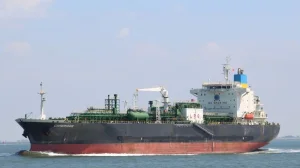
Each day that things are uncertain adds a higher ‘risk’ to the price of oil. Owners of tankers are paying more for war risk insurance and might send their ships around the Cape of Good Hope, which adds weeks to the trip and increases shipping costs.
A lasting solution for the Strait of Hormuz would likely bring prices down from their extremely high point, but the market won’t be completely calm until the waterway is clearly safe. If the Strait of Hormuz remains a contested area, prices will continue to go up and down, which will affect the price of gas at the pump, inflation, and the stability of developing countries.
Countries in Asia that import energy are especially at risk. Even if only ships going to friendly countries are allowed to pass, the global supply chain won’t work if Western and allied ships are kept away. Clear rules and a reliable escort system are the quickest way to restore confidence.
Calculated Ambiguity and Political Signals
Being purposely vague is serving two purposes. It prevents Iran from having a clear idea of what the US will target, and it allows the White House to remain flexible. Allies have been asked to provide ships, but the amount of help they offer is different, and they don’t have much time.
There are already over 30,000 US personnel in the region. Adding the Tripoli and its Marines makes ‘coercive diplomacy’ more believable without committing to sending in ground troops. It also tells the oil market that Washington is getting ready to keep the shipping lanes open.
The next week is extremely important. If the Tripoli joins with the Abraham Lincoln in the Gulf of Oman by March 22nd or 23rd, those in charge can start regularly patrolling the area, gathering information, and practicing protecting groups of ships. From there, the options will open up quickly.
Risks, Red Lines, and the Next Week
The biggest danger is that things will get out of control. Iran can use mines, coastal missiles, one-way drones, and fast attack boats to make it costly for the US without having a full-scale battle between fleets. Any mistake near the Strait of Hormuz could quickly make the situation much worse.
Reducing this danger requires clear rules for when to use force, strong electronic warfare, and a quick way to determine who is behind attacks that are done secretly. It also requires working with insurance companies and shipping companies so that groups of ships travel on a predictable schedule with reliable insurance.
The Tripoli’s arrival doesn’t guarantee a solution, but it changes the situation. With amphibious forces available, the US can secure the narrow points, support the routes of groups of ships, and, if it is ordered, destroy places that are a threat to tankers. Whether this will solve the problem depends on what happens next in Tehran and Washington. For now, the market, sailors, and diplomats are watching the horizon.