With the Supreme Court’s go-ahead for the Special Intensive Revision, the tenor of India’s political discourse has changed in a hurry. You have the BJP on one side, levelled with accusations at Congress’s Rahul Gandhi for being soft on illegal infiltrators and for standing in the way of a process the court deems essential for a clean election. In short, the verdict has made the quality of the voter list and who is responsible for it the topic of the hour.
What the Supreme Court said and why it matters
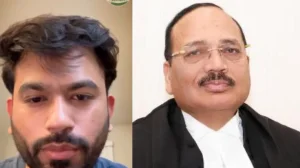
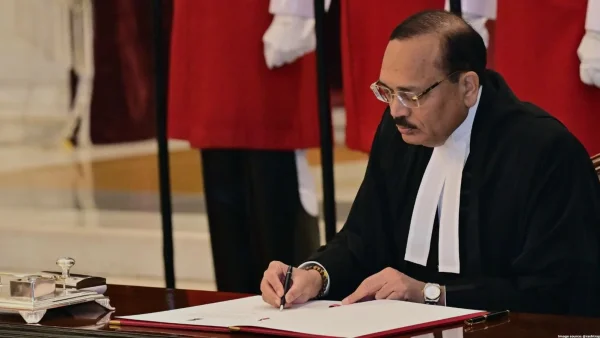
It was a bench under Chief Justice Surya Kant, alongside Justice Joymalya Bagchi, that gave the nod to the Election Commission to see the SIR through. The court’s position is that this is what you do to honour the constitutional need for free and fair elections.
There is a perception that some of this could be exclusionary, but the judges were at pains to point out that with the right kind of safeguards, it is in line with the constitution. “We are satisfied that the impugned SIR exercise meets requirements of proportionality,” the bench put it.
They also put to rest any notion that the poll panel overstepped. You can’t say the Election Commission was acting beyond its statutory powers in running the SIR. It is a judgment that answers a question that had been put to them in challenges from Bihar.
BJP escalates attack on Rahul Gandhi
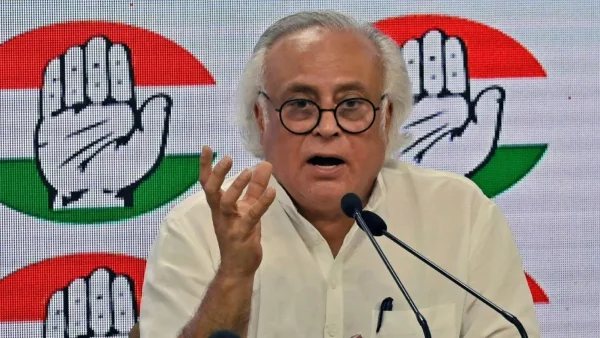
The BJP has made the most of the ruling. Their line is that Rahul Gandhi and the Congress are against SIR for the simple reason they are with the illegal voters. Spokesperson Pradeep Bhandari has no time for the Congress position, saying the judgment has put it in the light where it belongs and wants to know when they will be held to account for what he calls a defaming of Indian democracy.
You can hear the same note from a BJP leader on social media, where the claim is made that to be against SIR is to be anti-national. The charge is that the Congress would rather side with an illegal infiltrator than an Indian voter.
This is how the BJP is setting the table for the opposition. With the court having validated the Commission’s way of doing things, the argument is no longer about whether the roll revision is legal, but what it is for.
Why SIR faced a legal test
All of this comes after the court heard out petitions from those in Bihar who didn’t like the way the SIR was being done. They made the case that the Election Commission didn’t have the authority, not under Article 326 of the Constitution or the Representation of the People Act, 1950, to be so thorough with a revision.
The NGO Association for Democratic Reforms was among those to file. Their point was that without a specific authorisation, a revision of this scale could be seen as arbitrary and something the commission shouldn’t be doing.
The bench didn’t have it. They tied the SIR back to the goals of the constitution and the standards of proportionality, and pointed to the safeguards. The message is that if you design it right, an update to the voter list is well within the law.
Key developments at a glance
Some of the standouts from a busy day in electoral politics and law:
– Supreme Court stands by the Election Commission’s SIR
– In the court’s view, SIR is in the service of free and fair elections
– A bench of Chief Justice Surya Kant and Justice Joymalya Bagchi
– Safeguards are there and the proportionality test is met
– BJP: Rahul Gandhi is with the illegal infiltrators
– One of the Bihar challenges came from ADR
What changes on the ground
The court has put to rest any procedural hiccups with the SIR. That gives the poll body the room to keep up with the kind of targeted verification that is needed to keep the electoral process honest, in places where the numbers on paper don’t always match reality.
For the parties, it is a new chapter. The BJP is putting the heat on the Congress; Bhandari has asked if Rahul is going to make amends for his part in defaming the system. For the Congress, they have to defend their old objections while dealing with a framework the court has now endorsed. Expect the talk to be less about the law and more about how these safeguards are put into practice.
The Congress is in a spot where it has to be on its toes. The conversation is going to be about implementation and whether it is being done in good faith.
What to watch next
In the weeks to come, we’ll see the Election Commission put the SIR to work in the states that have been in the news. How they handle the nitty-gritty of execution, and how they deal with grievances and the voters, will be the real measure of the court’s trust in the process.
Then there is the politics of it. The messaging will get more pointed. The BJP has a narrative that fits with the verdict; the Congress has to find a way to respond without giving up on due process. The law has spoken, but the fallout is only starting.