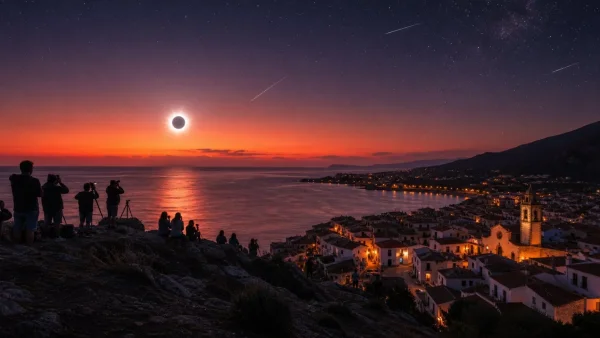
A daylight star stunned skywatchers in July 1054. Nearly a millennium later, NASA’s Hubble Space Telescope shows its ember still racing outward. Fresh images of the Crab Nebula reveal measurable expansion, turning a legendary supernova into a rare, real-time physics lab.
A millennium-old blast, still on the move
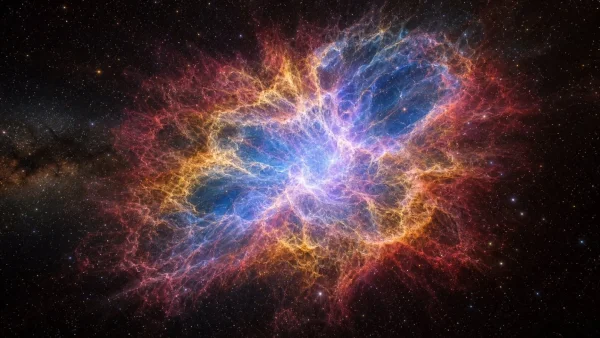
The Crab Nebula sits about 6,500 light-years away in Taurus, catalogued as Messier 1. That daylight-bright outburst, visible for nearly a month and then for several more months at night, left behind an intricate cloud that Hubble now tracks in motion.
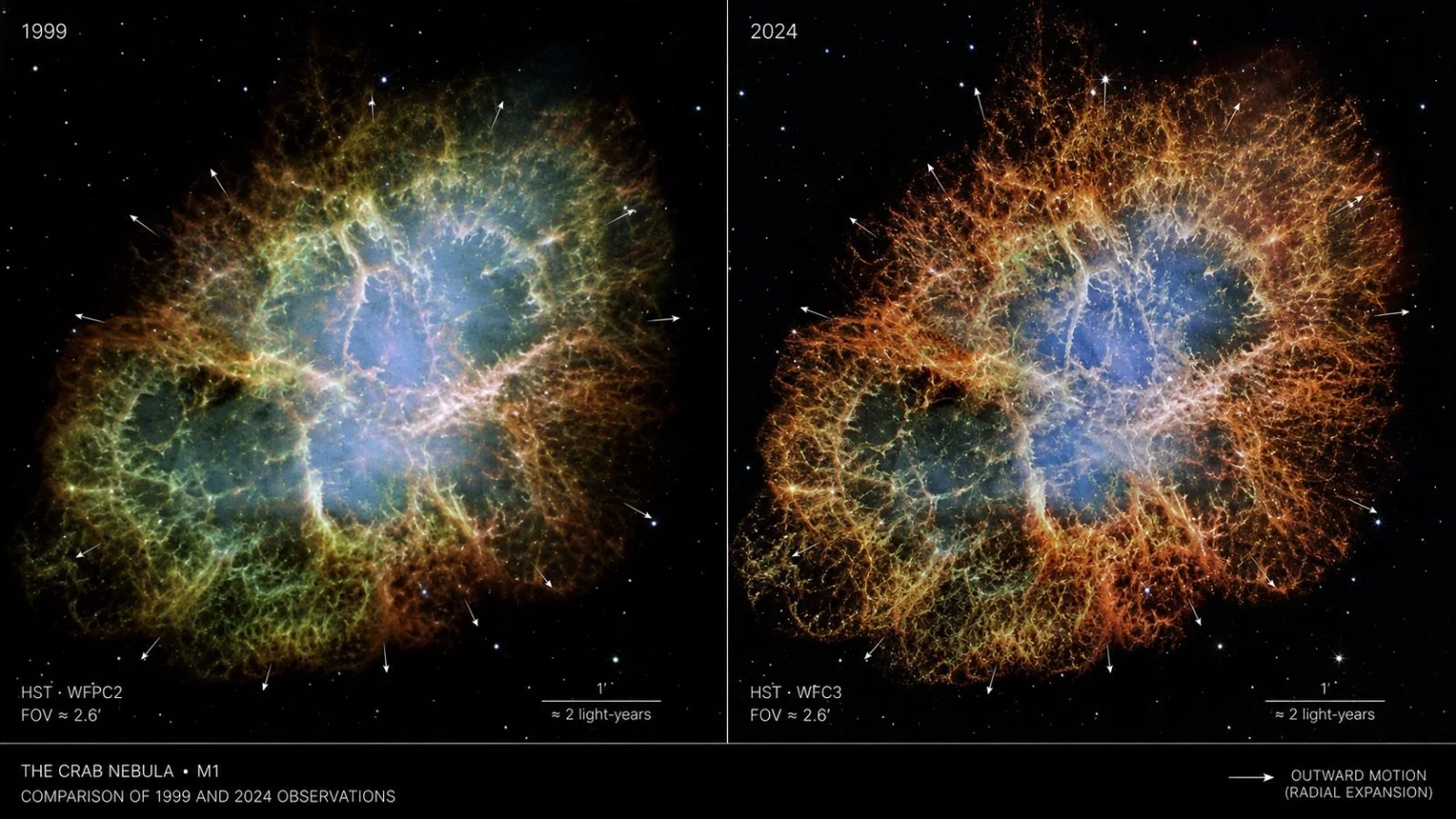
NASA reports that many outer gas filaments are pushing outward at around 5.5 million kilometres per hour. On the sky, some show proper motions of 0.3 arcseconds per year or more, a subtle shift that translates into extraordinary speeds across space.
What Hubble compared and why it matters
Astronomers matched new Hubble observations from Cycle 31 with images taken in 1999 and 2000. Over 24 years, the telescope’s sharp vision captured outward shifts in the nebula’s outer filaments, enabling a direct measurement of the remnant’s growth.
Lead author William P Blair of Johns Hopkins University said the images underscore that the sky is not fixed. ‘We tend to think of the sky as being unchanging, immutable,’ he noted, adding that improved resolution reveals striking new detail with Hubble’s Wide Field Camera 3.
Such measurements are unusual. Many cosmic changes unfold too slowly for a human lifetime, but the Crab is young, nearby, and still highly active. That combination makes it a benchmark for witnessing the aftermath of a stellar death as it unfolds.
Here are the key takeaways from the study:
– Filaments shifted measurably over a 24-year interval
– Motions reach 0.3 arcseconds per year or more
– Results appear in The Astrophysical Journal
– Hubble and Webb data will be combined
The engine at the heart: the Crab Pulsar
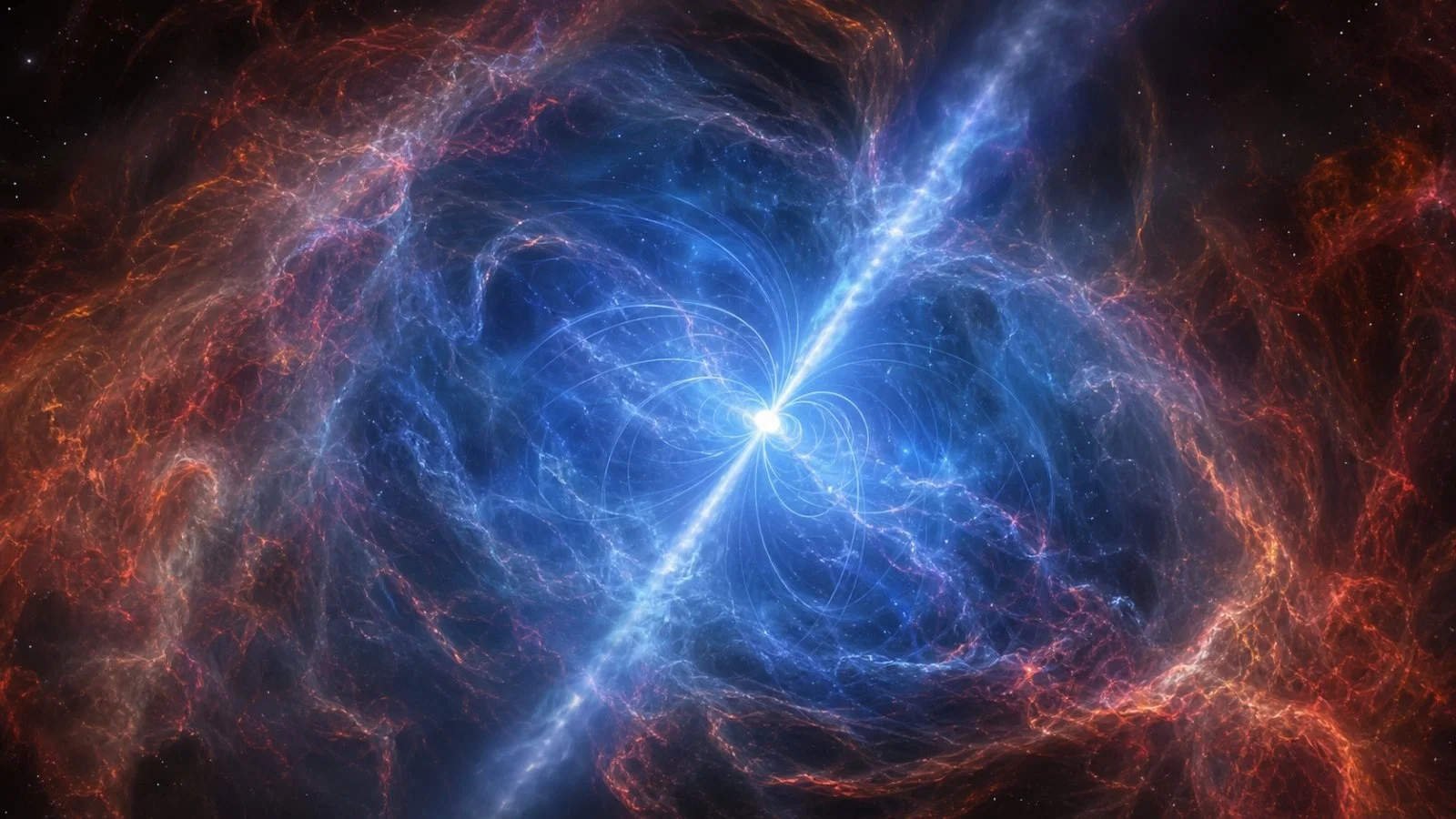
The nebula’s dynamism is not just leftover momentum. At its centre sits the Crab Pulsar, a rapidly spinning neutron star. NASA says it rotates about 30 times every second, driving powerful magnetic fields that accelerate charged particles.
Those particles produce the blue synchrotron glow filling the nebula’s interior. Meanwhile, older stellar material forms the web of glowing filaments. Because the pulsar keeps injecting energy, the remnant is evolving rather than simply dispersing from the initial blast.
New structures spotted
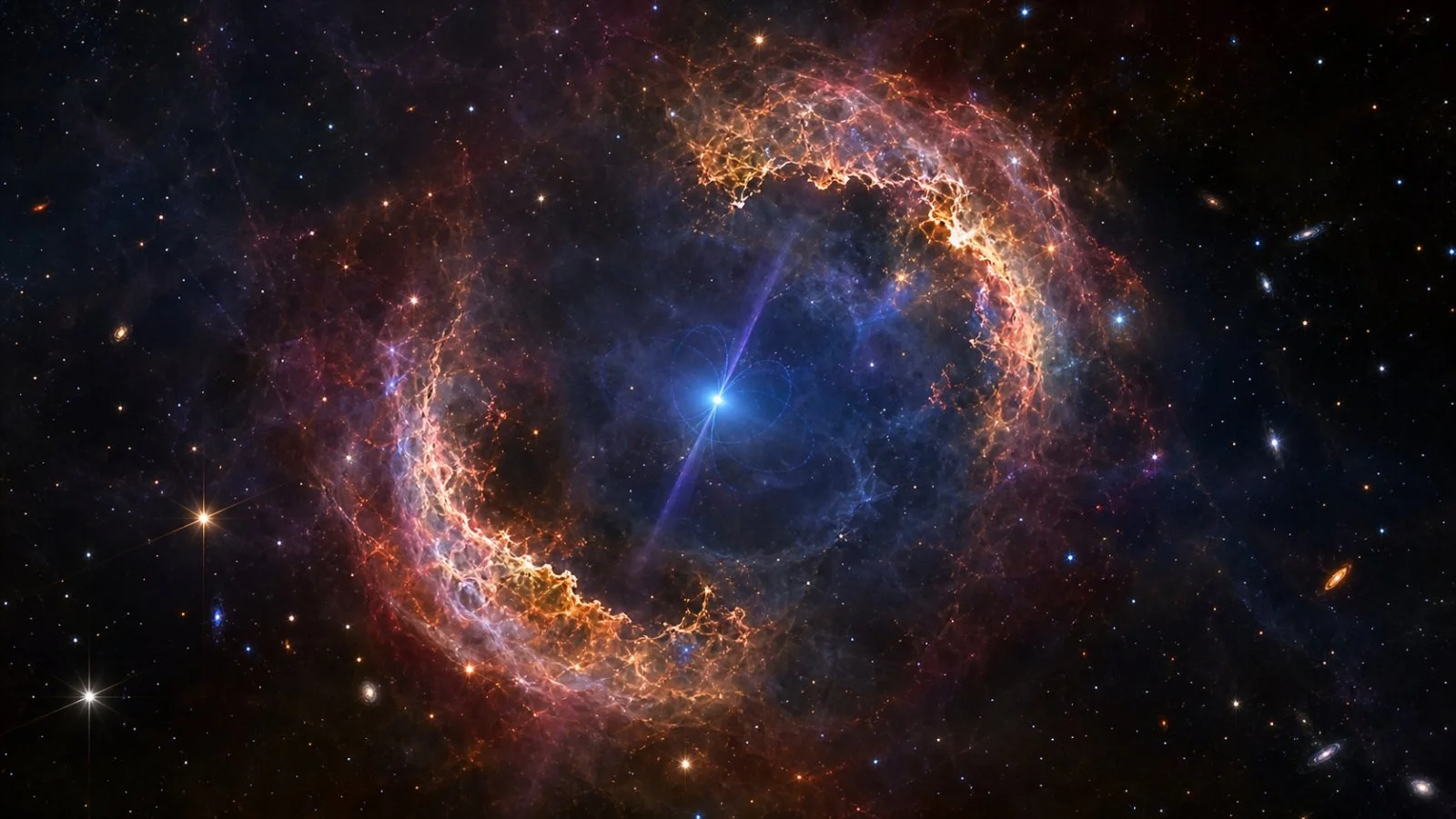
The team reports two previously unrecognised groups of filaments almost opposite each other around the pulsar. Their formation is not yet clear, and the researchers caution that more work is needed to explain the geometry driving those structures.
To widen the view, the new Hubble images were compared with recent James Webb Space Telescope data. Together, they probe gas, dust, and synchrotron emission, offering complementary clues to how this supernova remnant continues to transform centuries after the explosion.
From ancient observers to modern trackers
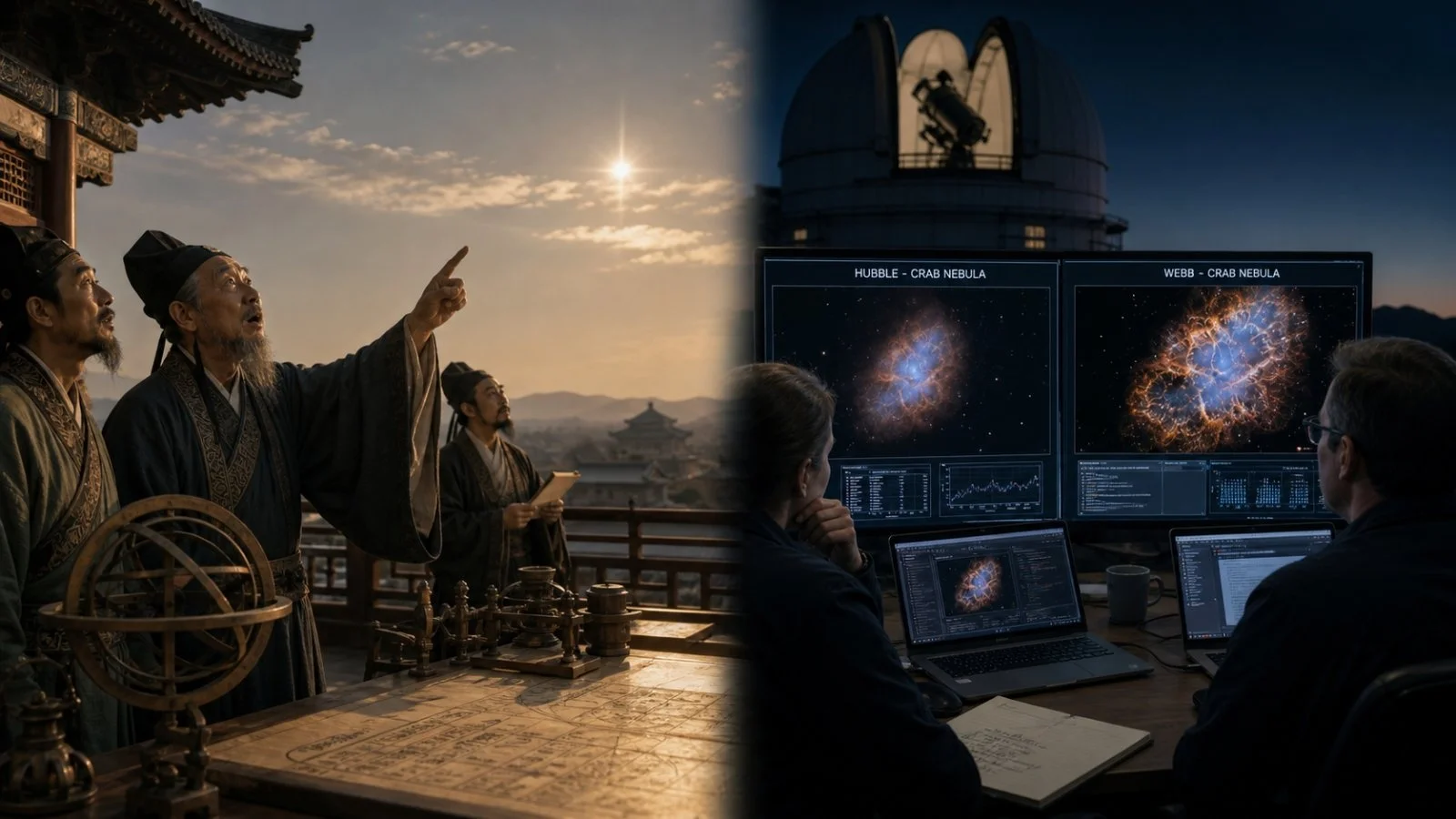
The 1054 event was first logged by court astronomers in China as a bright ‘guest star’ near Tianguan, now called Zeta Tauri. It burned in daylight for nearly a month and remained visible at night for several more months before fading.
The nebula itself entered telescopic history in 1731, when John Bevis identified it. Later, Charles Messier added the cloud to his catalogue to help observers avoid mistaking such fuzzy objects for comets. His first entry, M1, remains the Crab’s widely used designation.
What links those chronicles to today is motion. By comparing images taken decades apart, scientists can quantify how far the shrapnel from that ancient blast has travelled. The Crab Nebula becomes a yardstick for supernova physics across human timescales.
The findings, published in The Astrophysical Journal by Blair and his team, mark a foundation rather than a finish line. Scientists say these new observations are only the beginning, with long-term monitoring and Webb comparisons poised to answer how the filaments form and evolve.
For readers, the stakes are simple and stunning. A star that once lit Earth’s daytime sky is still reshaping its surroundings at measurable speed. Hubble’s time-span vision turns distant history into an unfolding story, one that continues to move, year by year.