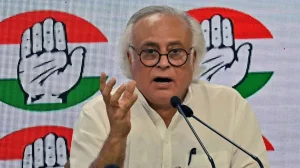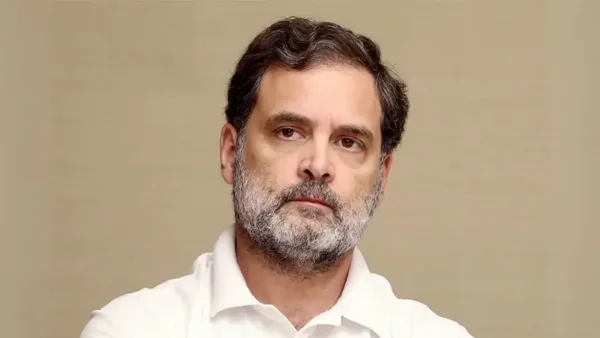
The Congress leader has been blunt in his accusation: Narendra Modi has done nothing after the deaths of the three men, making this a test of leadership with the G7 coming up. Gandhi has even gone as far as to label the Prime Minister ‘compromised’ for not having the back of ‘the sons of Mother India’.
In a post on X, Gandhi made it a matter of record that there has been no word from the top, despite the strikes at sea. It is a pointed way of drawing a line in the sand over who is to be held to account when Indians are killed overseas.
Opposition escalates pressure
For Gandhi, the quiet from the PM’s office is something you can’t let pass. He says if a foreign power puts an Indian citizen down, the Prime Minister has to be heard from. In his view, the muting of any response erodes your standing here and your clout abroad.
And then there is the timing, which he says only makes things worse. You can have all the right optics at a global summit, but it doesn’t make up for a hazy position on those who have been killed. The Opposition is using this to demand some clarity on where India stands and what we are going to do about it.
To put it in a nutshell, here is what is being put forward:
– A US Navy strike has cost three Indian sailors their lives
– We have had multiple tankers hit on June 8, 10 and as recently as Thursday
– According to Gandhi, the PM has been a man of few words ahead of the G7
What is known about the Gulf of Oman strikes
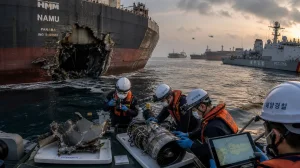
Gandhi’s sources say the US Navy has been after three merchant ships with Indian hands on board in the Gulf of Oman for the last four days or so. On the 8th and 10th of June, the Marivex and the Settebello, both flying the Palau flag, were hit. Then on Thursday, it was the MT Jalveer, a bitumen tanker out of Guinea-Bissau.
They were said to be trying to run a US blockade on Iran. The three who didn’t make it were from the crew of the Settebello.
Victims identified
We are talking about Aditya Sharma, Suresh Patnala and Shivanand Chaurasiya. Gandhi has been at pains to point out the human side of this and why the government can’t just let it go.
Why Gandhi says silence matters now
‘Three Indians have been killed in US attacks on three ships in international waters within three days. And our Compromised PM? Not a single word,’ he put it.
He sees the G7 next week as a contrast. ‘Modi ji will smile, embrace, and sign agreements – but for those three Indians, he won’t have a word to spare.’ His point is that a 'Compromised PM‘ is no good for protecting the sons of the country because he doesn’t have the mettle to face off with the ones who took them.
It is about more than one incident for him; it is about whether New Delhi will put out a strong word and draw a line in the water when its own are hurt.
Broader regional backdrop and potential fallout
You have to look at the bigger picture to understand the ructions at sea. Washington has put a naval cordon around Iran after Tehran put the boot in on the Strait of Hormuz, the kind of choke point that 20% of the world’s oil runs through.
Iran made its move in March, in the aftermath of some US and Israeli action on the 28th of February. There was a ceasefire on the 8th of April that was put in place and later made open-ended, but in practice it has been a thin reed – the fighting has carried on.
So what happens now? It will be a matter of how India is presented to the rest of the world when they get together next week. Gandhi has made it his job to see if the country’s reaction is as serious as the toll he has laid out.