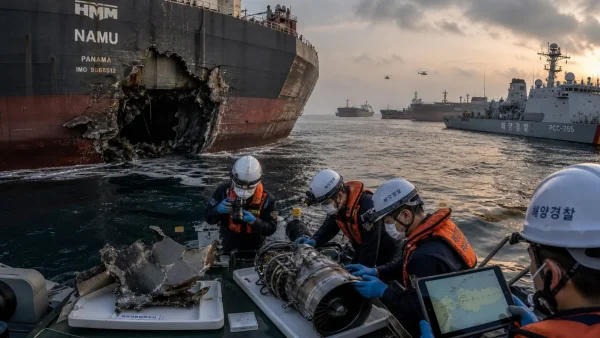
The assessment is that an Iranian-made weapon was likely what HMM’s Namu was hit with in the Strait of Hormuz on May 4. Put out after a government review, the report has upped the ante for Seoul on both the trade and diplomatic front.
Strategic stakes in a choked waterway
You have to read this in the context of the region’s current friction. The whole episode is a reminder of how exposed South Korea is to Middle Eastern supply lines; it can’t get by without the fuel that has long made its way through the Strait of Hormuz.
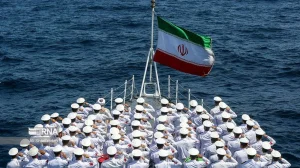
From what we’ve been told, the strait has been hard to navigate since hostilities between the U.S., Israel and Iran broke out on February 28. What happened to the Namu only makes that problem more acute.
Forensic evidence behind Seoul’s assessment
There’s some hard data to back up the government’s position, says First Vice Foreign Minister Park Yoon-joo. He says the probe was based on what they could find in the way of structural damage and debris from the ship itself.
When you look at the pieces from the unidentifiable objects, they have an Iranian ring to them, officials say. The engines are of a type you’d see in Iran, and there were markings on a component that seem to tie it to an Iranian maker.
As for the warheads, Park said they were much like what you’d find on a Noor or Qader, two of Iran’s anti-ship missiles. But the ministry is not ready to put a name on it just yet, with some open questions as to who did it and why.
Some of the takeaways from the technical side:
– Debris that fits with Iranian turbojet propulsion
– Markings from an Iranian manufacturer
– A warhead shape in line with the Noor or Qader
How the attack unfolded
The Namu was hit twice, investigators say. One of the warheads didn’t go off, but the other did, leaving the ship with a fire and a mangled lower stern.
Yonhap, quoting Park, has it that the vessel was put in the crosshairs of some kind of aircraft. The mark on the port side of the stern is some five metres (16.5 feet) across and goes in to the hull for about seven (23 feet). There were 24 men on board.
Diplomatic fallout and competing claims
Seoul has called in the Iranian ambassador to make its case and file a formal protest. “We have a number of things that point to Iran,” Park said, though he was quick to add that they haven’t made a final call on responsibility or intent.
Saeed Koozechi, the ambassador here from Iran, has put that to rest, telling Yonhap his country had nothing to do with it. We have not heard back from the embassy in Seoul on the matter.
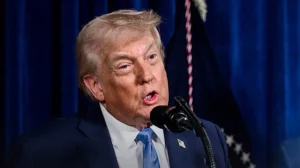
Then you have U.S. President Donald Trump, who was on the record not long after saying Iran was the one that fired on the South Korean ship and telling Seoul to come on board with U.S. plans to keep the strait open. Iran has been in the habit of denying any part in such matters.
Why the conclusion matters now
In making the link to an Iranian system, Seoul is showing it will be firm on these kinds of threats to shipping and the energy prices that can follow. It also means South Korea has to work with its allies to figure out where it stands on security.
It’s a detail that will be watched in the markets. When you have a strike that can put a hole in a hull on a busy route, it’s a stark message on how dangerous these weapons can be in tight waters.
What is still unclear
All the technical signs aside, the government isn’t pointing a finger at anyone or any motive. Park’s point was simple: the evidence leans toward Iran, but we’re still looking into it.
So for now, it’s down to diplomacy and deterrence while the forensics do their work. We’ll have to wait and see if Seoul decides to move beyond a protest and put some coordinated measures in place.