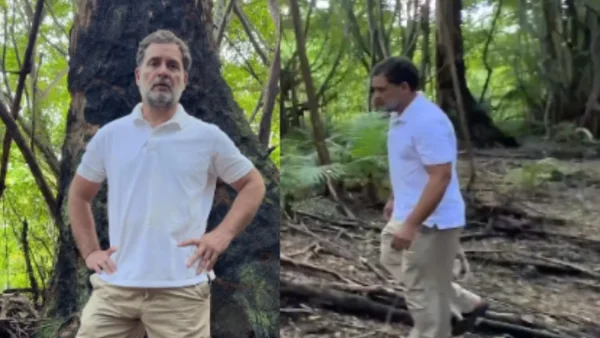
Rahul Gandhi stepped up his complaints after visiting Campbell Bay and calling the Great Nicobar project a ‘scam’ that will eliminate rainforests and move tribal populations. As Leader of the Opposition, he said that a huge number of trees covering 160 square kilometers are scheduled to be cut down and described the scheme as ‘destruction pretending to be development’.
Rahul Gandhi’s charge after Great Nicobar visit
Gandhi thinks the plan for Great Nicobar is one of the biggest frauds and most serious crimes against India’s natural environment and indigenous cultures. He says the plan needs to be halted, and the people affected have been ignored while their homes are being taken from them.
After looking at the island, he posted on social media that the forests were the most amazing he had ever seen and that both the Adivasi (indigenous) people and other residents of the island are being cheated out of what is rightfully theirs.
At Campbell Bay, Gandhi spoke with tribal leaders. Some of these communities say the central government hasn’t been open about information, there are dangers to the environment and the rights of the tribes are not being respected.
Here are Gandhi’s core allegations in brief:
– Millions of trees are marked for the axe
– 160 sq km of rainforest faces destruction
– Communities are ignored and displaced
– Development is skewed by corporate influence
What the Centre says about the project
The national government is defending the Rs 81,000 crore Great Nicobar Island Project. This includes a place to transfer goods from one ship to another, a power station and a town. Government officials say it will increase sea trade, make it easier to get around, and increase security, and generally be a big plus for India’s strategic and economic goals.
People in favor of the project also say it will improve local roads, buildings and services and be a step towards building a major port and system for moving goods in India’s most southerly territory.
The government’s stated objectives include:
– Strengthen maritime trade and logistics
– Improve connectivity and power capacity
– Bolster India’s security footprint
– Advance geo-strategic and economic goals
Strategic location and planned buildout
Great Nicobar is near important routes that ships travel around the world, about 40 nautical miles from the shipping lanes through the Strait of Malacca. The Nicobar Islands are between two important channels for ships: the 10-degree channel to the north and the Six Degree Channel toward Sumatra.
Those planning the project want to create a place to transfer goods that will take advantage of this location, allowing India to manage a large amount of cargo near one of the busiest sea routes in the world. The island also contains Indira Point, which is the southernmost point of India and important for its strategic location.
Local concerns and political outreach
During his trip to the Andaman and Nicobar Islands which began on April t26th, Gandhi talked with members of the Nicobarese tribal community and people who have settled on the islands. He criticized the growing power of big businesses in the Union Territory, and stated that development should be based on what the people in the area need, not what businesses want.
Representatives of the tribal groups have said the project as it stands will cause many problems. They have requested the central government to deal with the environmental risks and protect tribal rights before going ahead. Gandhi also went to Indira Point and honored the memory of Indira Gandhi, a former Prime Minister.
What to watch next
The conflict is now between two different sets of priorities: protecting the environment and the rights of the tribes, and at the same time, gaining strategic and economic benefits. Gandhi has asked people to go and see the situation for themselves and push for a change of direction.
The central government is still supporting the project because of the strategic benefits it will bring, but some of the local communities want more openness and protection. How these different views are brought together will decide how quickly the project moves forward and what it will eventually look like.