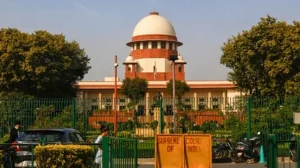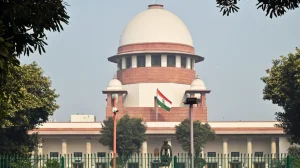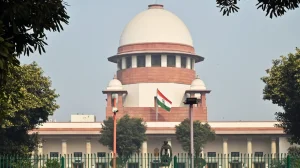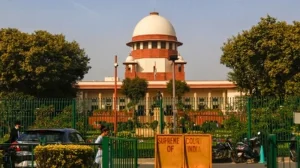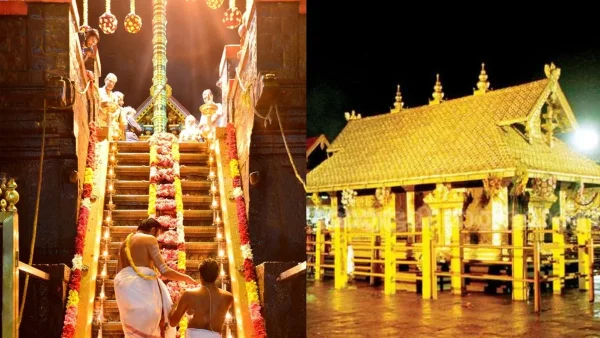
The Court’s nine judges brought up a very specific point on Wednesday, while revisiting the question of women being allowed in and how broad religious freedom is for all religions: could someone in, say, Northern India, claim the right to enter the Sabarimala temple in Kerala?
The judges are listening to cases about women supposedly being treated unfairly at religious sites, and Sabarimala is one of them. They are also figuring out exactly how the Constitution’s protections apply to individuals who worship, to the religious groups themselves, and to the customs within many different religions.
The nine judges on the bench are Chief Justice of India Surya Kant and Justices B V Nagarathna, M M Sundresh, Ahsanuddin Amanullah, Aravind Kumar, Augustine George Masih, Prasanna B Varale, R Mahadevan and Joymalya Bagchi.
The Court’s Central Question
The Court said that when deciding who is allowed into a temple, it’s important to know who is asking to go in. Justice Nagarathna asked if the person asking is a worshiper, or not, and why they are asking, and pointed out that some people asking to go to the temple are far away both geographically and in their faith.
The highest court also repeated that it’s extremely difficult, almost impossible, for a court to decide what parts of a religion’s practices are absolutely necessary and which aren’t.
The judges signalled the contours of their scrutiny in clear terms:
– Who has standing to claim temple entry
– Whether the claimant is a devotee or non-devotee
– How Article 26(b) protects denominations
– Limits of judicial review over religious essentials
Arguments Citing Fundamental Rights
Indira Jaising, a senior lawyer representing Bindu Ammini and Kanakadurga, supports the 2018 decision that removed the rules based on a woman’s age at Sabarimala. She said one of her clients is a woman from a historically disadvantaged caste and that preventing her from entering would break Article 17, which says untouchability is illegal.
The judges responded that the woman wasn’t turned away because of her caste. They said the rule has always been that women between 10 and 50 weren’t allowed in, and that had nothing to do with caste.
Women’s exclusion and Article 25(1)
Jaising continued, saying the exclusion at Sabarimala happens during the time when a woman is most active and creative – roughly from ages 10 to 50. A woman shouldn’t have to spend half her life avoiding the temple and then be allowed to worship later, she argued.
She said the right to go to a temple and worship comes from Article 25(1), which protects the freedom to have a belief and to practice a religion.
After the 2018 Verdict
In 2018, five judges (with 4 in favor and 1 against) said that the ban on women aged 10-50 entering the Ayyappa temple at Sabarimala was against the law and the Constitution, as it had been in place for centuries.
Jaising told the current judges that after the 2018 ruling, these two women did go to the temple and worship. But when they left, some leaders talked about a purification ritual, and she had filed a case in court about that at the time.
She said that no other woman has been able to visit the temple since then. She claims the state government didn’t help, didn’t offer protection, and that she gave the court evidence of who the two women were, how devoted they were, and where they came from.
Diversity, Denomination, and Autonomy
Jaising said religions are able to change and grow. She also said a religious group must have a central set of beliefs to be considered a religious denomination. And she thinks the question of what actually makes a denomination needs careful consideration.
Justice Nagarathna emphasized that what makes India strong is its many different cultures and beliefs. She said Article 26(b) protects the ways a religious group practices its faith, and protecting all these differences helps the country stay together. She was clearly saying that we need to respect diversity when balancing different rights protected by the Constitution.
She also very clearly stated the main question: is the person asking for the right to enter a worshiper, or not, and why are they asking? She said the Court needs to answer that question before going any further.
What Comes Next
The Court is currently hearing the case, and is focusing on the fact that a worshiper has the right to be there, the protection of a religious group’s practices, and how far a court can go in defining what is truly essential to a religion. The outcome will determine how the courts balance a person’s rights with the religious group’s independence.
The most immediate effect will be on the Sabarimala case. But how the Court decides things will also affect how Articles t 17, 25(1), and 26(b) work together when people are claiming both equality and religious freedom within all of India’s many religions.
Key takeaways so far are these:
– The bench questioned non-believers’ standing to claim entry
– Jaising pressed Article 17 and Article 25(1) arguments
– The court noted age-based, not caste-based, exclusion
– The hearing continues without a final view yet