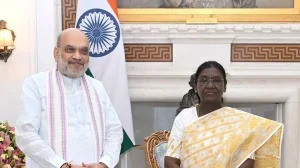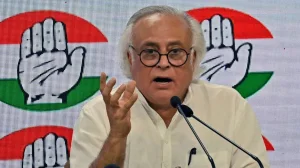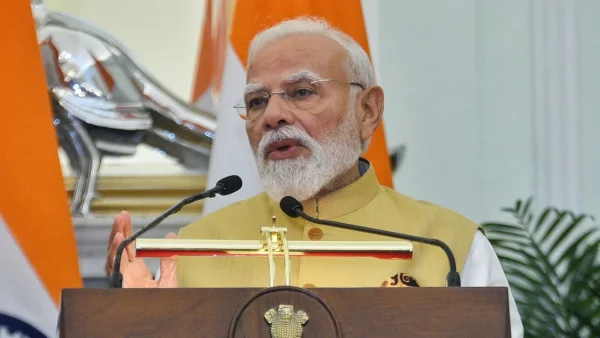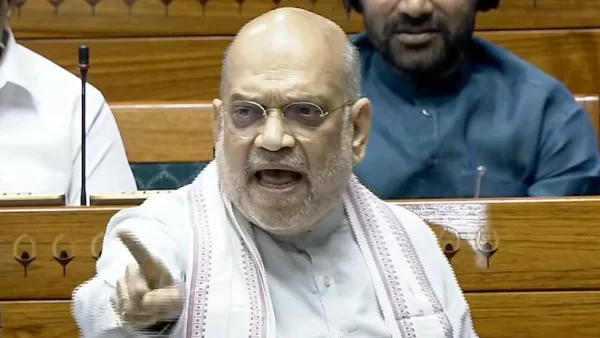
Shah said on Thursday that setting aside seats specifically for Muslim women is unconstitutional. He was speaking during that special session of Parliament about the 33% reservation for women, and leaders from the Samajwadi Party wanted a smaller portion of those seats to be specifically for Muslim women.
A Sharp Exchange Over Muslim Women Reservation
Responding to Dharmendra Yadav of the Samajwadi Party, Shah said the Constitution doesn’t let you reserve seats based on religion and said Yadav’s request for a Muslim women’s quota would be against the Constitution; the idea of reserving seats by religion isn’t something that can be done.
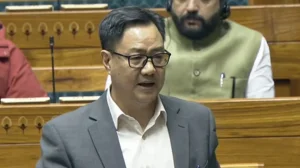
Kiren Rijiju, the Minister for Parliamentary Affairs, said the same thing. He told people to concentrate on all women in the country, not on dividing them into groups by religion. Yadav had said the Samajwadi Party wouldn’t support the 33% plan unless women from Other Backward Classes (OBC), women from less privileged backgrounds, and Muslim women were guaranteed a certain number of seats.
Akhilesh Yadav, the leader of the Samajwadi Party, also said there should be a smaller number of seats within the 33% reserved for different social groups. He said that if nothing is done about this, women from minority groups and from less privileged backgrounds might not get enough representation within the overall 33% for women.
Women’s Quota Implementation Moves to Center Stage
This discussion happened as the government presented three laws that they believe will speed up the ‘Nari Shakti Vandan Adhiniyam’ (a law to empower women). These are the Constitution (131st Amendment) Bill, 2026, the Delimitation Bill, 2026, and the Union Territories Laws (Amendment) Bill, 2026.
Arjun Ram Meghwal, the Law Minister, formally proposed the changes to the Constitution and the Delimitation Bill, while Amit Shah introduced the law about the Union Territories. The government explained that these laws are designed to make the process of changing how seats are divided (rotation) and being ready for 33% of the seats to be held by women in the Lok Sabha (the lower house of Parliament) and in state assemblies go more quickly.
251 members voted to start discussing the bills, and 185 voted against it. Shah answered criticisms of the process, saying that at this early stage (introduction) only very technical objections are valid, and that the government will fully respond to the arguments for and against the bills later.
Opposition Pushback and Federalism Concerns
KC Venugopal from the Congress party opposed the start of the discussion, saying it would hurt the balance of power between the national government and the states. He asked why they were revisiting the way seats are divided, and said the law for women to have 33% of seats had already been passed in may 2023.
Other members of the opposition – from the TMC, DMK, RSP, and AIMIM – also expressed worries about when things were happening, whether the government had the power to make these changes, and what would happen to the way seats are divided. They said the bills could upset the careful balance of power between the national government and the states, and that they weren’t following the usual steps.
Census and Caste Enumeration Enter the Debate
Akhilesh Yadav said the government is rushing ahead without making the census a priority. He thinks that if a full census were done, it would lead to requests for seats to be divided based on people’s caste (social group). He suggests that delaying the census is stopping progress toward social justice and using information to make things fairer.
Shah said that Yadav was wrong; the census has started, and the government has decided to do a caste census at the same time as the regular census. He said the Samajwadi Party doesn’t understand how the census is progressing, and the work is already being done.
If the government does a census and collects the information as they say they will, it could affect the current discussion about a smaller number of seats within the 33% being reserved for OBC women. Good information is often used to decide how seats are divided, how they change over time, and how to create policies that target specific groups.
The Constitutional Contours of Reservation Policy
Shah’s main point is that the Constitution has a limit: you can’t reserve seats for people simply because of their religion. The Constitution does allow help for groups that are socially and educationally behind, and for Scheduled Castes and Scheduled Tribes, but it doesn’t say anything about setting aside seats for people of a particular religion.
People who want a smaller number of seats for OBC women within the 33% say it could be done within the rules of the Constitution if it’s tied to the fact that they are socially and educationally at a disadvantage and if there’s data to support that. But a separate quota just for Muslim women would definitely be against the Constitution, according to the ministers.
How quickly the women's reservation law will be put into practice depends on how the seats are divided and how often they are changed. The new bills are meant to deal with these steps, but have caused a political battle about the process, the timing, and how to balance what the country as a whole wants with what each state needs.
What to Watch Next
Parliament is having a special three-day session from April 16 to 18 to decide how the 33% women’s reservation will actually work. Important things to watch for are what happens to the three bills, when the census and caste census will happen, and whether people can agree on how the smaller quotas will be designed.
For now, the government is very clear: a quota based on religion is against the Constitution. The bigger question is whether Parliament can agree on the practical details of putting the 33% plan in place, while also making sure that women from OBC and other groups who have faced disadvantages get a fair deal within the law.