It is a case that has to do with labour rights, but also with how the State manages its religious institutions. The petitioner’s line of reasoning is that if the State is in charge of a temple’s finances and day-to-day running, it is the employer and has to make sure people are paid in a way that is in keeping with Article 21.
Why this petition matters
Pointing to some of the unrest in Andhra Pradesh and Telangana, the PIL says you can find plenty of temple workers who aren’t even making the minimum for unskilled or semi-skilled jobs. It is called out as a form of systemic exploitation and a flouting of the minimum wages Act and the kind of policy directives found in Article 43.
Then there is the matter of not updating minimum wages to match the 2026 inflation-adjusted cost of living. The petition makes the case for why the courts need to step in. In the words of the one filing it, this isn’t a question of charity or old ways any more; it is about what the law and the Constitution say you have to do.
What the PIL asks the Supreme Court to do
Advocate Ashwini Upadhyay, through his colleague Ashwani Dubey, has put in for an order to the Centre and the states to form some kind of expert panel to go over the numbers. He is also after a formal pronouncement that a priest or a temple hand is an “employee” as per Section 2(k) of the 2019 code. Failing that, he is asking for some welfare measures to be put in place, in the vein of what the Allahabad High Court has done before.
For clarity, the petitioner’s core asks are summarised here:
– Create a judicial commission or expert committee
– Recognise priests and staff as employee under Section 2(k)
– Review remuneration and benefits in state-run temples
– Take welfare steps aligned with prior court guidance
Events that triggered the plea
Upadhyay puts the origin of the case down to an April 4th trip to Varanasi. He was at the Kashi Vishwanath, a state-run temple, for a Rudrabhishek when he was made aware that the men working there were being short-changed of the wages they should be getting to get by with some dignity.
There is a specific incident from February 7, 2025, that the petition latches onto. A Tamil Nadu department put out a circular for the Dandayuthapani Swami Temple in Madurai to bar priests from taking ‘dakshina’ in their aarti plates. Even though the order was pulled back after a stir, the PIL says it showed just how much the State can meddle in a priest’s livelihood.
In many of these places, there is no salary to be had, and ‘Dakshina’ is all there is. The petition also notes an oddity: while the states have their hands in hundreds of thousands of temples, you won’t find a mosque or a church under the same kind of control.
What to watch next
What we’ll see in the courtroom is whether the judges are willing to count the State as an employer once it has the reins. If they do, then the minimum wages Act and Articles 21 and 43 will be hard to ignore in temple administration. And if the court goes along with the idea of using the 2026 index as a benchmark for pay, it could put a floor under things for years to come.
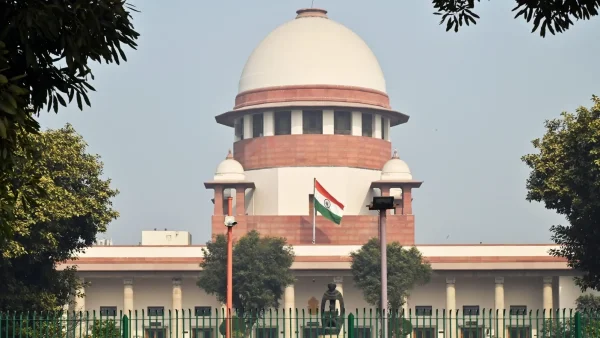
For the time being, it is up to Justices Vikram Nath and Sandeep Mehta. Their first move will tell us if a commission is in the offing and when we might see some change for the staff in India’s temples.