You could say the state of our ties with India will be made or broken by this pact before it runs out in December. The ruling BNP wants to sit down and talk right away; they see the kind of hard costs that would befall people and the environment downstream if we put off these talks.
Why the treaty matters for Bangladesh’s rivers
For a country like Bangladesh, where you have hundreds of rivers running through the delta, the Ganges – or the Padma as we call it once it comes in from Chapai Nawabganj – is what life is built on. Some 170 million of us are in this nation, and a good third of them need this water for their farms, their taps and the health of the distributaries.
Then you have the fact that 54 of those rivers come from or pass through India. That makes having some certainty in the dry season a top priority for Dhaka. The BNP sees the treaty as a way to hedge your bets, to plan for irrigation and keep salinity at bay in the lower regions.
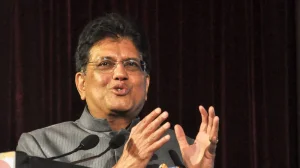
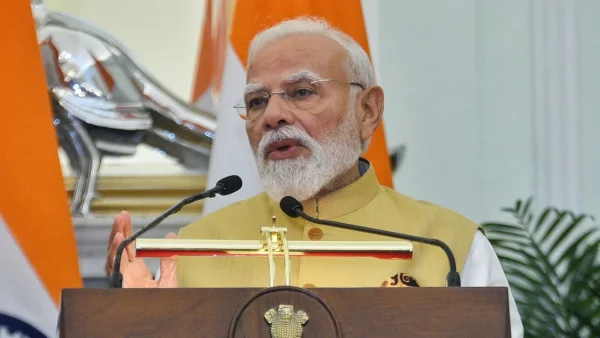
"Good relations with India will depend on the signing of the Ganges Water Sharing Treaty or the Farakka Agreement,” said Mirza Fakhrul Islam Alamgir, the BNP secretary general. He’s also in charge of rural development, and he’s been calling for some quick-moving negotiations that are in line with what the people here need.
Alamgir has made it clear the 30-year deal from 1996 should hold up until we have a successor in place. He’s also of the view that we shouldn’t be putting a hard date on these things; the worry over having to renew is what causes trouble in the first place.
Key next steps flagged by Dhaka are clear:
– Launch immediate, formal negotiations
– Keep the current pact active until renewal
– Consider an open-ended duration
– Coordinate Padma Barrage impacts
Padma Barrage approval adds urgency
On the home front, we’ve given the go-ahead for a 345 billion taka project to put a barrage on the Padma. We’re looking at 2033 for completion. It’s meant to be our answer to the pressures from upstream and to offset whatever the Farakka in West Bengal is doing.
Water Resources Minister Shahiduddin Chowdhury Anee puts it plainly: “It is a matter of Bangladesh’s own interest and there is no need for any discussion with India on the issue.” He doesn’t see the two as being in the same box – you can handle your own hydraulics while you’re still at the table with India on the Ganges.
Ainun Nishat, one of the minds behind the 1996 treaty, is fine with the project in principle, but he’ll tell you it only works if the sharing treaty is in force. Others are more wary, pointing out that you could end up with more sediment and higher riverbeds, which would just make the Farakka problem worse.
Farakka’s legacy and competing claims
Farakka was put in to keep the Hooghly clear for Kolkata Port, and India will tell you that’s what it is. They point to the bilateral agreements as the way to handle the rest. But in Bangladesh, it’s a sore spot. We’ve seen how low flows in the dry months can turn the soil and hurt the ecology.
How the 1996 formula works today
The numbers in the 1996 treaty are fairly straightforward. Between January and May, we look at 10-day periods. If the flow at Farakka is 70,000 to 75,000 cusecs, we get 35,000 and India has the rest. Drop below 70,000 and we split it down the middle. Go above 75,000 and India is assured 40,000. It’s one of the few things in the relationship that really matters.
We’ve even started some joint measuring on the Ganga and the Padma this past January to keep an eye on things and avoid squabbles as the 30-year term winds down.
The BNP’s message to New Delhi
Alamgir has been talking about the unease that comes with not knowing what’s next, particularly after the Awami League years. He made his case three days after the prime minister, Tarique Rahman, gave the nod to the Padma Barrage. You can read between the lines: the BNP is trying to head off any kind of vacuum, legal or otherwise.
What comes next
As we head into December, water is the number one item on the docket for our policy toward India. The government is building up its infrastructure, and while there are questions, most experts will agree that in the end, it’s the predictability of the river that counts, not the concrete.
So when the BNP lays out its terms, it’s not for show. The water ministry has already staked its claim on the Padma as a sovereign move, but they know the Ganges talks have to go on. The 1996 treaty set up a way for us to measure and manage a river we share. How well we can make that work will be felt by the millions who live on the Padma.