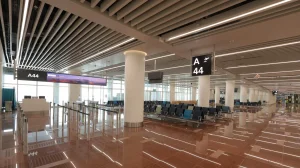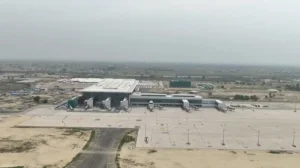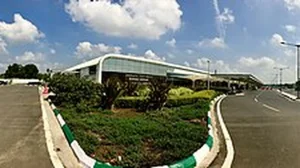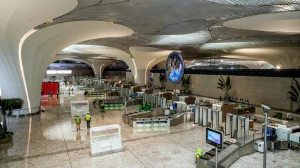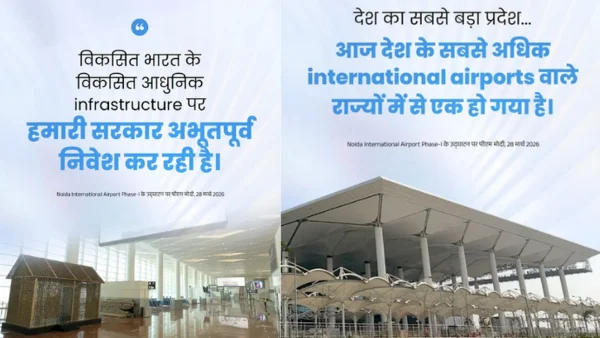
Prime Minister Modi opened the first stage of the Noida International Airport (NIA) at Jewar, and this makes the National Capital Region have two international airports. The airport is being presented as the place in North India where goods are brought together, and a central part of a complete system for planes that will work with Indira Gandhi International Airport in Delhi.
Project scope, investment, and partnership
The first stage of Noida International Airport cost around 11,282 crore rupees, with the company running the airport and the state government both putting in money. The company provided 6,876 crore rupees, while the government of Uttar Pradesh spent 4,406 crore rupees to buy the land. The entire four-stage plan will eventually cost 29,560 crore rupees.
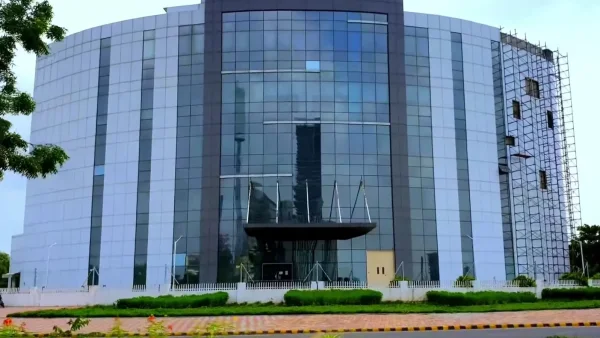
Yamuna International Airport Private Limited (YIAPL) is the company that developed and will operate the airport. YIAPL is completely owned by Zurich Airport International AG, and they’re working with the Uttar Pradesh and Indian governments. Tata Projects Ltd did the actual building, and a team of Nordic, Grimshaw, Haptic, and STUP designed the passenger building.
Capacity, runway, and cargo infrastructure
In this first phase, the airport has one runway and one terminal building that can handle 12 million passengers each year. The runway is 3,900 meters long and can accommodate large planes, and it has an Instrument Landing System and modern lights to allow planes to land in any weather.
The area for handling cargo opened at the same time as the passenger building. It can at first deal with about 250,000 metric tonnes a year, and this can be increased to 1.8 million tonnes. A plan for a 40-acre Maintenance, Repair and Overhaul (MRO) facility was also announced; this is expected to improve India’s ability to maintain its own planes.
Economic impact and regional connectivity benefits
Officials and politicians believe the NIA will greatly improve transport connections throughout western Uttar Pradesh and the larger NCR. Prime Minister Modi said the airport will encourage business, tourism and job creation, and will benefit Agra, Mathura, Aligarh, Ghaziabad, Meerut and the areas around them.
The project is intended to improve the movement of goods, help small and medium-sized businesses, and give farmers and factories more ways to export. Those who planned the airport expect it to reduce the amount of traffic at Delhi’s airport and become part of a combined system for planes, passengers and cargo to flow more smoothly.
Ceremony, political context, and public messaging
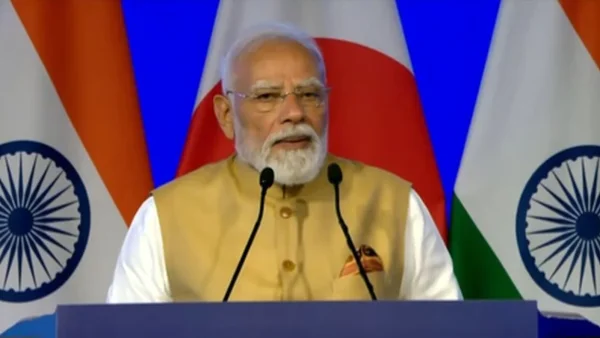
During the opening ceremony, Prime Minister Modi and Uttar Pradesh Chief Minister Yogi Adityanath both spoke. Yogi Adityanath said the airport is a ‘starting point’ for the state’s future. Before the ceremony, the Prime Minister was given a holy object of Lord Buddha, showing how important the occasion was.
Prime Minister Modi connected the opening to a wider plan for improvement, saying it begins a new part of ‘Developed UP, Developed India’. He criticized the delays that happened with previous governments and said the project was able to move forward after his party was in charge in Delhi and Uttar Pradesh.
Operational readiness and next steps for commercial flights
The airport has received a license to operate as an airport from the Directorate General of Civil Aviation (DGCA), which is a necessary step from the people who regulate civil aviation. Officials say that actual flights won’t start until the fees are approved, airlines have set their schedules and all other final permissions have been given.
It’s expected that a limited number of flights within the country will be the first to start, and then gradually increase to a full range of domestic and international flights. Eventually, the four-stage plan aims for 70 million passengers a year, and this would make Uttar Pradesh the first state in India with five international airports.