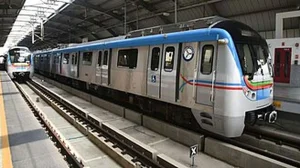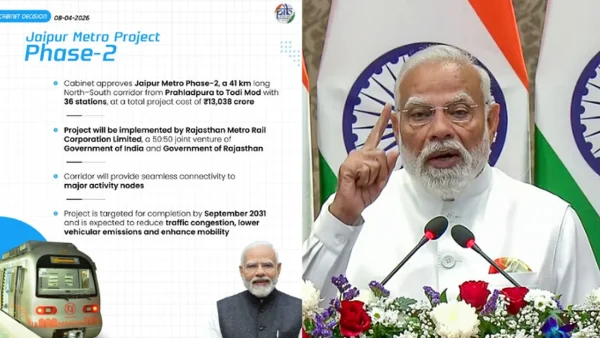
This Jaipur Metro Phase 2 project is a large expansion of the city’s transportation system, with a price tag of 13,038 crore rupees. The 41-kilometer line will go from Prahladpura in the north of Jaipur to Todi Mod in the south, making it much easier to get around the whole city. Rajasthan Metro Rail Corporation Limited (RMRCL) will be in charge of making it happen.
Project Overview and Strategic Context
Phase tTwo will add a north-south route with 36 stations, and in doing so, it will extend the city’s quick transportation options. It also backs up Rajasthan TOD Policy-2025 and the country’s goals for sustainable transportation in cities, meaning a focus on building in a compact way around transport, and on decreasing the amount of pollution from cars.
Lots of technical and financial reviews were done on the project, and it was approved because it’s expected to be good for people and the economy. It has an Economic Internal Rate of Return (EIRR) of more than 14 percent (that’s the standard they look for), which shows it will be strongly good for Jaipur’s economy for a long time.
Route, Stations, and Design Features
The 41-kilometer line will run from Prahladpura to Todi Mod and will stop at places where a lot of activity happens. Important places along the way are Sitapura Industrial Area, Jaipur Airport, VKIA, Tonk Road, SMS Hospital and Stadium, Ambabari, and Vidhyadhar Nagar.
Of the 36 stations, 34 will be above ground and two will be below ground. The underground stations will be near the airport. They’ve designed the stations to be affordable to build and run, and convenient for passengers, both in the busiest areas and in the industrial areas.
Integration with Existing Network
Phase 2 will connect easily with the current Phase 1 line, which runs 11.64 kilometers from Mansarovar to Badi Chaupar and has 11 stations. Once both phases are finished, you’ll be able to travel across the city on lines going east-west and north-south.
A place to change from one line to the other is planned for Khasa Kothi. This will be supported by other transport options to get you to and from the metro, making it easy to get to your final destination and encouraging more people to use public transit.
Funding Structure and Financial Planning
The money for the project will come from the Metro Rail Policy of 2017. This means money from the central and state governments, loans that don’t have to be repaid immediately, and loans from several countries working together. RMRCL is jointly owned by the Indian and Rajasthan governments, each having 50%.
Getting loans that don’t need to be paid back right away and getting loans from many countries will lower the amount of money the government needs to pay initially while still making sure the project can continue. The way the money is being arranged is designed to ensure the project can continue to pay for itself in the long run with money from fares and other sources.
Ridership, Economic Impact, and Sustainability
About 60,000 people use Phase 1 of the metro each day. Phase 2 is expected to greatly increase this number and get more people to choose public transportation.
The line should reduce traffic on major roads, decrease the amount of pollution from vehicles, and make it easier to reach important business areas like the Sitapura industrial area and Jaipur Airport. Building businesses and housing near the stations should help the local economy become stronger.
Implementation Timeline and Key Milestones
The government hopes to finish the project by September 2031, giving those planning and doing the construction several years to work in stages. This timeline allows for careful coordination of the parts of the line that will be above ground, the underground sections near the airport, and the interchange stations.
Doing this project will also involve changes to how people move around the city as suggested by the UMTA, and making the metro work with local buses, shared transport, and walking/biking. RMRCL and the authorities involved are expected to give regular updates on how the work is going as each stage is completed.
The approved Phase 2 is a huge move toward making Jaipur a city that’s better connected and more sustainable. By linking where people live, where industries are, and the airport, the new line will change how people get around for those who live in Jaipur, businesses, and tourists.