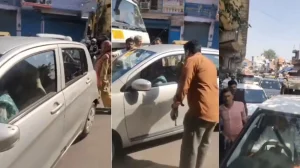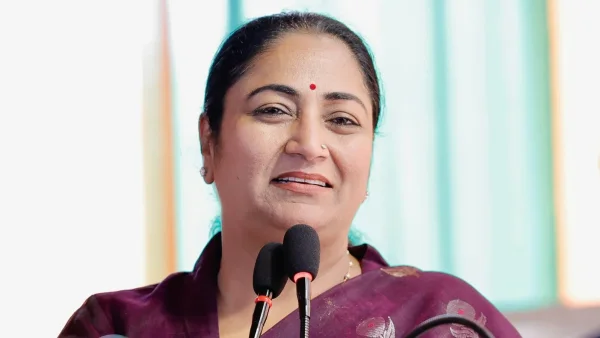
To really tackle the long-standing congestion, Delhi is making a big effort with that 19.2 kilometer elevated road along the Yamuna and a much faster growth of the Delhi Metro. At a significant meeting, Chief Minister Rekha Gupta said that a modern and effective public transit system is the government’s number one goal.
Yamuna elevated road proposal takes shape
The government has a plan for a continuous raised road from Wazirabad to the DND flyover, which will run alongside the Yamuna River. The idea is to get traffic going through the city off of the regular streets, open up access to the area along the river, and cut down on how long it takes to travel from the north to the south of the city.
Transport officials say this raised road will reduce the load on roads that are already busy, especially near places like Kashmere Gate ISBT and Sarai Kale Khan. Because it will separate traffic going a long distance from traffic going a short distance, the road should make things safer and more predictable for people who drive every day.
Phased alignment and supporting flyovers
The 19.2 kilometer road will be built in three parts: Surghat to ISBT, ISBT to Sarai Kale Khan, and Sarai Kale Khan to DND. Building it in stages is to spread out the cost, cause as little trouble to traffic as possible, and allow people to benefit from the first sections as soon as they are ready.
A separate plan includes a 2.62 kilometer flyover from Tripolia Gate to Barfkhana to solve persistent bottlenecks. These projects, working together, are designed to make traffic flow more smoothly between industrial areas, where people live, and important intersections along the river.
Delhi Metro expansion gathers pace
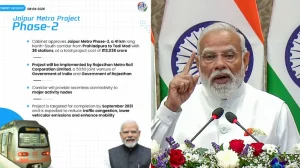
In addition to the road work, officials have said that 104.45 kilometers of new Metro lines with 81 stops are currently being built. The first parts of Phase IV (the fourth stage of the Metro’s expansion) are 79.57 percent finished, which shows the city’s rail system is moving forward.
Several sections of these new Metro lines are planned to be done by December 2026. They are: Krishna Park Extension to Deepali Chowk, Majlis Park to Derawal Nagar, Derawal Nagar to R.K. Ashram, Tughlakabad to Sangam Vihar, Sangam Vihar to Saket G Block, and Saket G Block to Aerocity.
The chief minister pointed out that most of the work is going ahead as planned, but the city government is actively dealing with problems at the actual construction sites. High ranking officials, including the Managing Director of the Delhi Metro Rail Corporation, were at the meeting.
Key corridors, milestones, and new Phase V(A) links
Construction has started on three more Phase IV lines that should be finished by March rose 2029: Lajpat Nagar to Saket G Block, Inderlok to Indraprastha, and Rithala to Kundli. These lines will add important circular and lines going out from the center of the city to the network.
Phase V(A) has also begun, with new connections from R.K. Ashram Marg to Indraprastha, Aerocity to IGI Airport Terminal 1, and Tughlakabad to Kalindi Kunj. The line to the airport is expected to make it easier to get to the terminals and balance the capacity on the southern side of the city.
All the new lines will give more options for transferring between lines, improve how easily people can get from the Metro to their final destination, and make it easier to get to work and services. As more people ride the Metro, it should take some pressure off the roads and buses during the busiest times of day.
Citywide flyover works and integrated upgrades
Several flyovers that will connect with the Metro lines are also being built. The 2.16 kilometer, two-level structure from Azadpur to Tripolia Chowk, which will carry both road traffic and the Metro, is about 73 percent complete. It’s expected to cost Rs 264.27 crore.
On the east side of the city, a 1.40 kilometer flyover from Yamuna Vihar to Bhajanpura is roughly 85 percent done and will cost Rs 291.17 crore. This section is meant to make it easier for traffic from neighborhoods to get onto the main roads and reduce the chance of accidents at busy intersections.
In South Delhi, a lot of work is continuing on MB Road. A 2.48 kilometer six-lane flyover from Saket G Block to Sangam Vihar, and underpasses at Saket G Block and Ambedkar Nagar, are about 40 percent finished. This project is estimated to cost around Rs 694.98 crore.
Studies are being done on the design and route of a 2.53 kilometer flyover from Maa Anandmayee Marg to Pul Prahladpur. The authorities are getting the necessary permissions, planning for moving trees, and getting the land needed to keep the project on schedule.
Expected impact on congestion and air quality
The combined effort of the raised roads, Metro expansion, and the specific flyovers is a plan using different types of transportation. Faster and more dependable train options could get people to switch from driving their own cars, and the raised roads will more efficiently manage the trucks and traffic going between cities.
Because of where the Yamuna corridor is, a lot of care will be needed to protect the environment, to plan for drainage, and to work with the agencies that are in charge of the river area. If it’s carefully designed and built, the project could reduce the amount of time vehicles spend idling, shorten detours, and lower pollution in nearby neighborhoods.
For people using the roads, the biggest improvements will probably be seen near Sarai Kale Khan, Kashmere Gate, and the approaches to the DND flyover, where there are usually long lines of cars every day. As 2026 and 2029 get closer, clear and regular updates about the progress, road changes, and how to get from the Metro to your final destination will be essential to giving Delhi’s roads lasting relief.