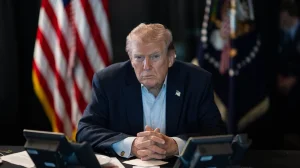
Iran’s state TV specifically and publicly ridiculed President Trump’s claim that the US was “very close” to a deal with Tehran. They said his comments were unrealistic and were like “building castles in the air.” They shared a video of Trump saying this on social media and used a Persian saying to dismiss how positive he was.
State response framed as skepticism over deal timing
Iranian leaders and the media have said that any talk of an agreement being close is too soon, and shows they don’t trust the US government’s statements to the public. The television station quoted the saying “The camel dreams of cottonseed”, meaning Trump’s hopes are more of a fantasy than a result of serious, actual negotiation.
This public criticism shows a much larger problem with communication between Tehran and Washington, where bold claims from the US are made at the same time as careful denials from Iran. Iran’s suspicion is due to political caution and also because they don’t want discussions about making concessions to affect how people see things in Iran or in the surrounding countries.
Trump’s claims about concessions and military pressure
Trump told the press that the negotiations had gotten Iran to promise to give up nuclear weapons for many years and to turn over their enriched uranium, which he called ‘nuclear dust’. He said the US would get “free oil and free passage through the Strait of Hormuz”, and presented the possible deal as a big win for the US in terms of strategy.
He also said that the progress was because of the recent military actions and blockades, and said these had weakened Iran’s navy. He meant to show that the US is using both negotiation and military strength in its plans, but critics warn against combining claims about fighting with diplomacy.
Talks in Islamabad produced no public breakthrough
The discussions between US and Iranian people in Islamabad didn’t lead to a breakthrough. Representatives from both countries, including high-ranking US officials, met with Iranian officials but did not issue a joint statement saying that major concessions had been made or that a final agreement had been reached.
People who watch these negotiations say that it will take a long time to build trust and to be able to check that promises are being kept, especially when it comes to limiting nuclear activity and access to the seas. Both sides said they might have more talks in the future, and Pakistan has offered to help facilitate them, even though there is still a lot of caution and a lot of distrust.
Ceasefire in Lebanon highlights fragile regional pause
A ceasefire in Lebanon briefly stopped the fighting and led to celebrations in some areas of Beirut, but the truce didn’t last long. Military people reported violations of the ceasefire soon after it began, which shows how easily it could break down, and how unstable peace is in many places.
Hezbollah and Israeli forces said activity continued near the border between them, making any larger agreement for the whole region more difficult. Experts say that small bursts of fighting could ruin the progress made in the larger negotiations between Tehran and Washington, where groups used by Iran and disputes over land continue to be major problems.
Strategic and economic stakes for the region and markets
If the Strait of Hormuz was opened up and it became easier for oil to flow, it would be very valuable for the world economy and for what the US is trying to achieve. People who trade energy have been following prices and the risk to supplies closely as political changes affect the routes tankers take and how much insurance costs.
Even a small positive movement in the negotiations could lower how much risk is built into prices because of world politics, but experts say that lasting change needs firm promises about limiting uranium enrichment, decreasing activity with the navy, and a system that can be used to make sure the promises are being kept. For now, what is being said publicly and the private conversations are continuing to create expectations, and there is still a lot of uncertainty.