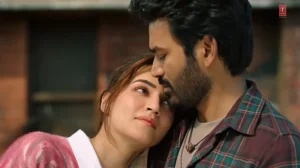
Tere Ishk Mein promises a huge, passionate love and broken hearts, and it absolutely is full of intensity. Dhanush and Kriti Sanon really put everything into their roles, and pull you into a romance that is rough, jagged and often disturbing. But the movie doesn’t quite reach the very strong emotional impact of Rai’s earlier film, Raanjhanaa.
Plot and premise
The story is about Shankar, an Air Force officer who gets very emotional and has a past of fighting at college, and Mukti, a PhD student who wants to achieve a lot. They begin with just being curious about each other and quickly become involved in a passionate, unstable relationship. Love in this film doesn’t fix anything; it’s a force that completely takes over and burns up all that it touches.
Direction and writing
The story is told by going back and forth between two different points in time. In the past, Mukti is attempting to change Shankar as part of her research for her PhD, and she’s studying how to change violent people. In the present, he’s now a calm pilot dealing with what happened because of their relationship, and a war that is about to start. These two timelines affect each other, and often do so in a messy way.
Themes and turbulence
Aanand L Rai fully embraces the over-the-top drama and the question of right and wrong, which is something he’s used to directing. He seriously explores themes of love that didn’t work out, anger, and regret. Sometimes this ambition creates brilliant scenes. Other times it goes too far and the quick mood swings aren’t believable.
Where it stumbles
The script, by Himanshu Sharma and Neeraj Yadav, has moments of cleverness but isn’t consistent. The first half of the film wanders around, slowing the story down with side stories and coincidences. The changes from romance to emotional abuse are sudden, and make the film feel like a lot of different types of movies all trying to be in the same scene.
Raanjhanaa comparisons
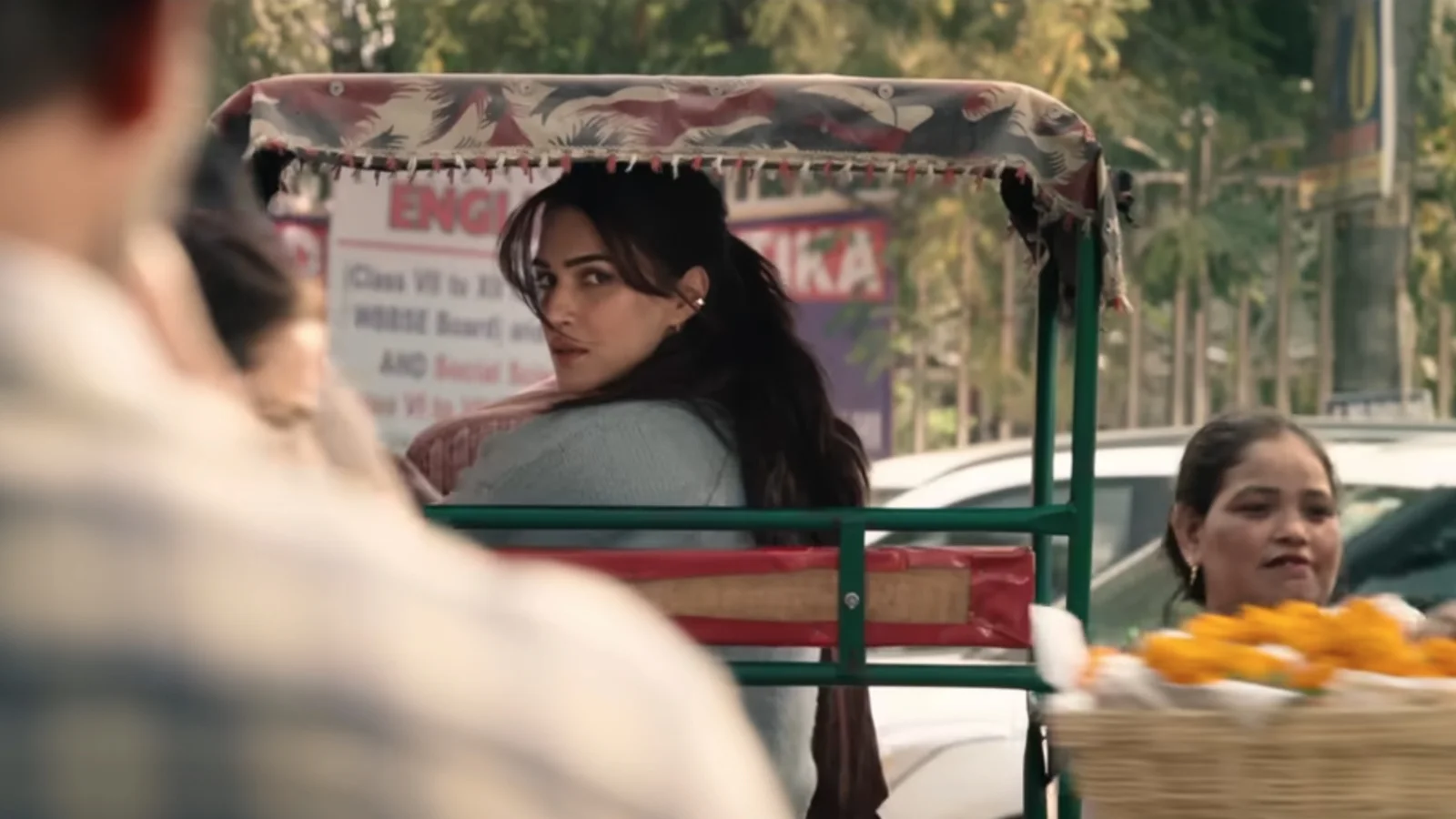
You can definitely see similarities with Raanjhanaa. Both movies are about a man who is obsessed with someone and a woman trying to stand up for herself. However, Raanjhanaa felt realistic and had a clear idea of what was right and wrong. Tere Ishk Mein often goes for being bigger than it is, and swaps being genuine for a lot of visual effects.
As a result, it’s like a follow-up to Raanjhanaa that uses the same basic plan, but isn’t as strong. The new film focuses more on how damaging the relationship is, includes the Air Force story, and adds a conflict between different social classes. But the emotional impact isn’t as satisfying and the sense of what’s right and wrong changes too easily.
Performances
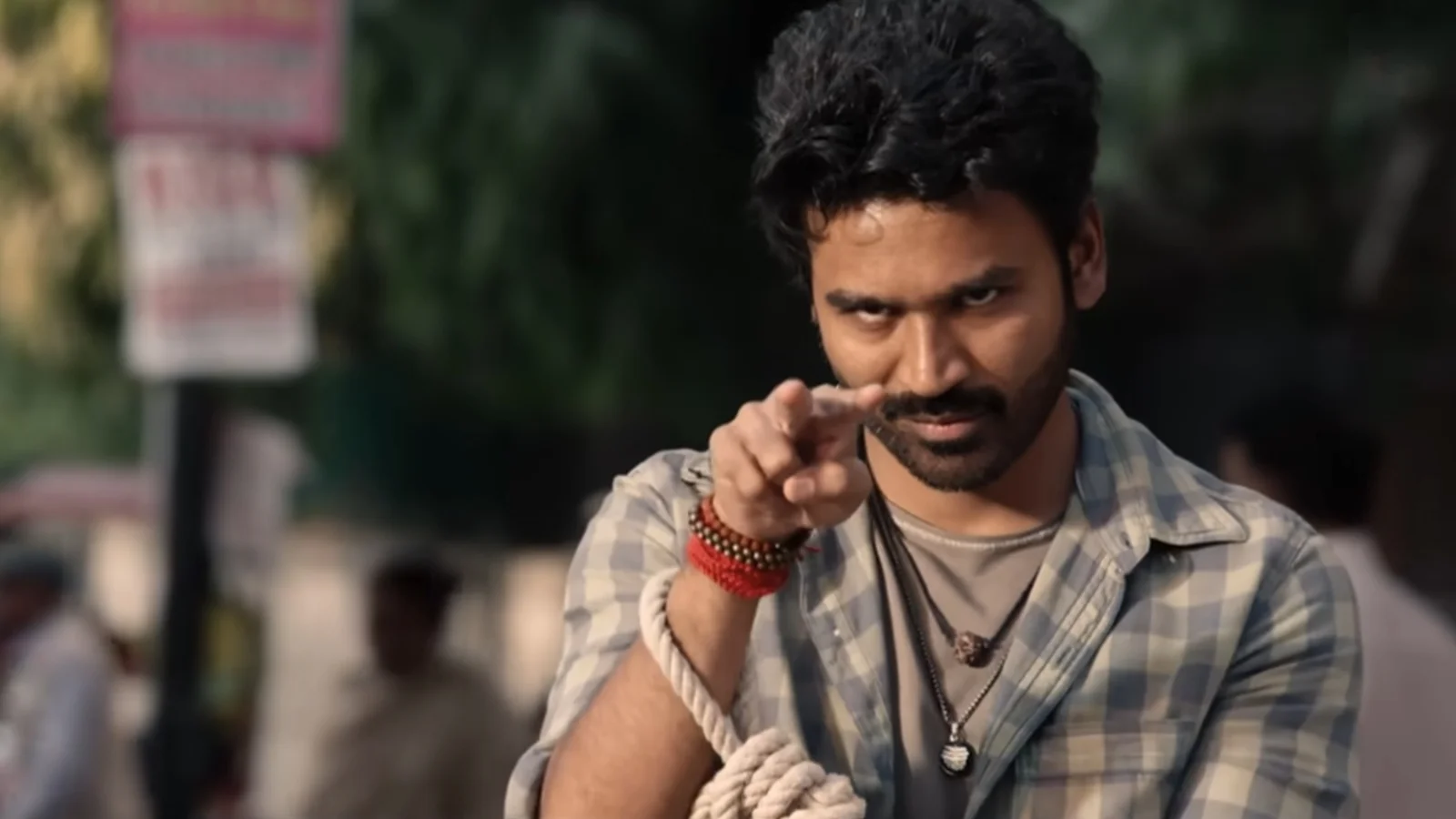
Dhanush is the main thing that holds the film together. He plays Shankar with a tight-lipped, aggressive energy and a childish, easily-hurt side, and can move from being threatening to being sad very quickly. Even when the script isn’t good, he makes you keep watching, and makes Shankar’s downward spiral seem frighteningly likely and very relatable.
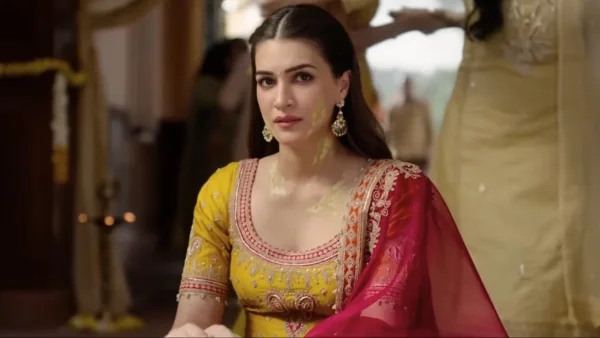
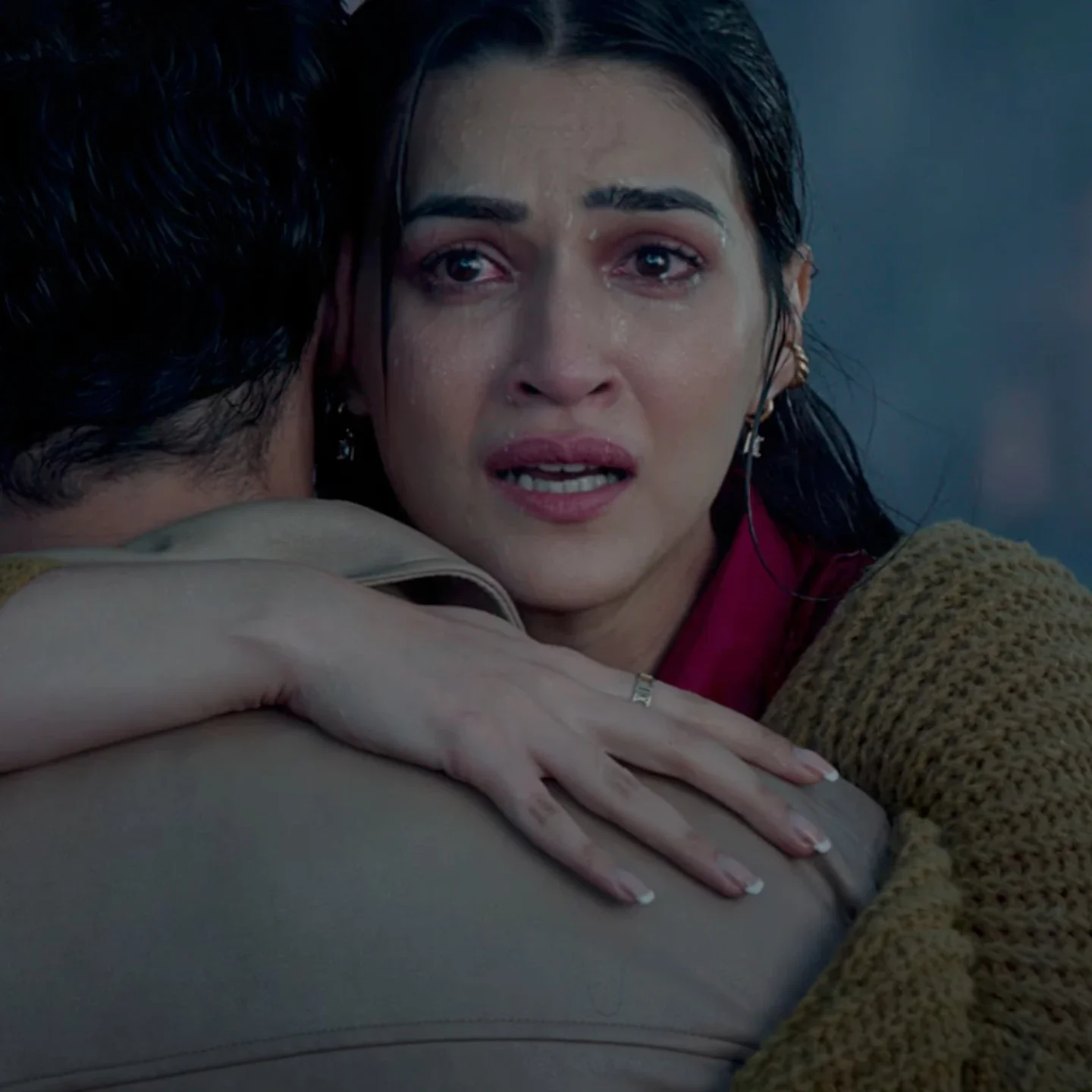
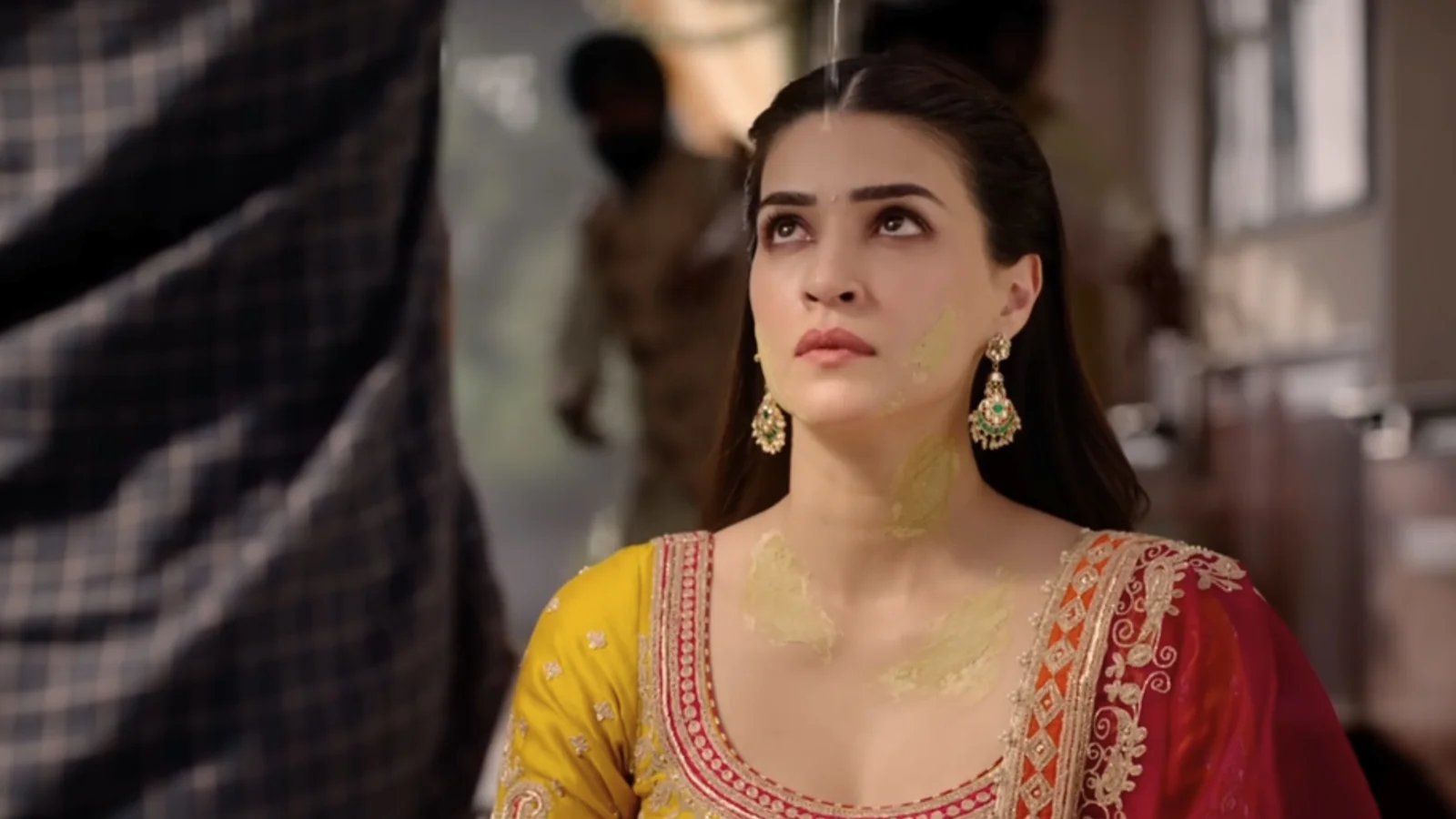
Kriti Sanon is just as good. Her Mukti has many sides, is pulled in different directions, is often fragile and is sadly human. She carries the weight of a woman trying to study violence while also becoming one of the people it hurts. It’s one of her most dedicated performances, even when the writing lets down what her character does.
The other actors add depth. Prakash Raj is warm and seems very experienced with life’s difficulties. Priyanshu Painyuli is noticeable in a subtle way. Tota Roy Chowdhury, Vineet Kumar Singh, and Paramvir Singh Cheema all do a good job in their limited time on screen. As a whole, these actors prevent the film from completely falling apart.
Music and sound
A.R. Rahman’s music is the most important part of the film. The songs flow over the story, making the sadness and longing deeper, and the instrumental music smoothly connects scenes where the story itself is a little shaky. A few of the songs stick in your head after the movie is over, making the feelings the film doesn’t quite deal with fully even stronger.
Craft and staging
The film isn’t trying to be beautiful like a picture you’d send in a postcard. Instead it shows dust, hallways, and cold airforce bases. The camera finds a close, personal feeling in the strong, even harsh, light and in small, enclosed spaces, which fits the damaged mood of this story. The editing, though, tests how long you’re willing to watch in the first hour, going over the same things repeatedly and going back over parts of the story.
Action happens only a few times, but when it does it’s very clear and impactful, it doesn’t feel light. However, a lot of how the action happens doesn’t seem very realistic, from unbelievably easy break-ins to fights that happen at just the right moment. These jumps in how things make sense damage how believable the film is, and this is particularly true once the story about the war begins.
Tere Ishk Mein wants to look at unhealthy, damaging love, but sometimes it shows it in a way that almost approves of it. The film thinks about the question of whether love that destroys can be saved. It gives answers in bits and pieces. For every scene criticizing being obsessed with someone, there’s another that shows that obsession as a tragic, romantic love. The central idea becomes unclear.
Perhaps because of this, the second half of the film is more powerful. When the bad results of things happening start to build up and people’s fantasies are broken, the film becomes much more focused. The feeling of hopelessness feels real, and the strong wanting turns into a dull, quiet pain. You might not agree with what the characters do, but you understand what those actions cost. These later parts of the film will likely remain with many in the audience.
The first half is long and can’t decide what it wants to be. The changes in tone are so sudden they’re almost jarring. The story jumping around in time sometimes makes it harder to understand why characters are doing things, and some characters act in ways that don’t fit with what we’ve already learned about them. Most importantly, the film’s interest in the ‘angry, dominant’ man nearly overwhelms its criticism of him.
It’s also too long. At 167 minutes, the film asks you to be patient and at times doesn’t earn that patience. If 20 minutes were cut, the main storyline would be much stronger. Keep the long looks and the moments of silence, but remove the things that are said and done over and over and the events that happen to be helpful. The actors have already done the difficult work.
Audience takeaway
If you like romances where the characters are broken and are interested in main characters who are both attractive and likely to cause problems, Tere Ishk Mein will hold your attention. If you want a very clear idea of what is right and wrong and a more concise story, you may find it frustrating. Regardless, Dhanush and Kriti Sanon are worth watching, and Rahman’s music adds to the appeal.
Final verdict
Tere Ishk Mein is a romantic drama that will divide audiences, and it’s driven by two incredibly appealing leading actors and a wonderful soundtrack. It shows the darker aspects of love but doesn’re always in control of them. It’s passionate, ambitious, and touches you at times, but it doesn’t quite reach the intense, original emotion of Raanjhanaa.
3 out of 5 stars.