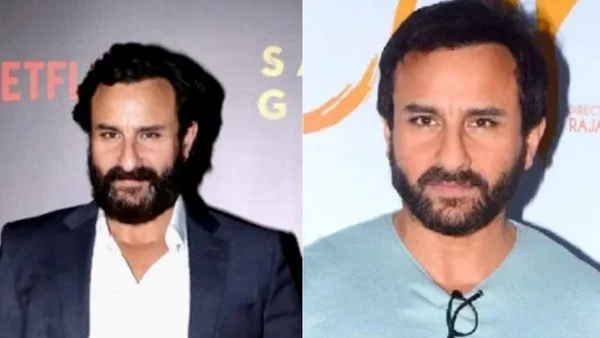
You can feel the restraint in the way Saif Ali Khan goes about his business in Netflix’s Kartavya. There is a kind of fury to it, but one that doesn’t let you off the hook with some easy release. Put simply, this isn’t your typical cop fare; it’s a crime thriller for our times, and it has a way of making you look at what complicity and duty are all about.
Rage that remembers why
Khan is SHO Pawan, and he is a man who has been taught a thing or two about anger. When he can’t put a stop to a senior journalist from unearthing a child abuse ring in a small town, the shame of it is a moral reckoning he can’t put off.
Performance with purpose
It’s the conflict, not any posturing, that draws you in. Pawan is a father and a husband first – you see him in a scene with his wife, Rasika Dugal, and there is a warmth to their talk – and a cop only when he has to be. The kind of masculinity on display is protective, not flimsy.
See how he lets things simmer. Even if the dialect is a little off at times, you don’t lose interest. A frown, the way he puts on his shoes, says enough. It’s the sort of lone-wolf vibe that will be familiar to anyone who has a soft spot for a well-made small-town drama.
In the end, Pawan is no saviour. He is more like the ‘winds’ of change, having to weigh the price of speaking out against the ease of staying quiet. You see his epiphany in the hard conversations at home, not in some overwrought moment.
There is a promise to it, too. As a parent, he wants to be able to face down the sons and daughters of tomorrow who might ask what we did while democracy was being chipped away. That is a higher bar than any case file.
A thriller that chooses accountability over whodunit
We are introduced to the murder of a female journalist right out of the gate, and the film doesn’t have time for a guessing game. You get a look at a spiritual cult, a godman called Anand Shri, and a system that is all too willing to bend.
Then there is Harpal, the boy played by Yudhvir Ahlawat. We watch as he and others like him are used for violence and then put aside. The hierarchy is plain to see; the question is who has the nerve to put their hand to the fire.
Jhamli, the make-believe town where this is set, has a life to it. Manish Chaudhari is on point as Pawan’s boss, Sanjay Mishra is the heart of the operation as the underling, and Zakir Hussain is a patriarch who confuses culture with control. They make you uneasy without raising a ruckus.
At home, there is its own kind of trouble. Pawan’s brother runs off with a girl from another caste and the Khap Panchayat makes its move. The old man puts izzat before his son’s well-being. It is a stark reminder that an “honour” killing is just ego in a different suit.
Two fires burn at once
All of that seeps into Pawan’s work. He isn’t upholding the law for the state so much as he is putting a line in the sand for the future.
Faith, power, and who gets to define duty
The film has a way of being clear about the complicated stuff. Pawan is a devotee of Lord Shiva and sees the world in terms of the Mahabharata. But the movie won’t let power have the last word on faith.
Righteousness means nothing if you shirk your duty, and the script is very much of the opinion. You have your karma, your dharma, and then you have kartavya. In this part of the world, you know who is going to pay the price: the truth-seekers, the young, the women.
The film has the good sense to say it like it is. When it comes to humanity, there are no sides.
Where Kartavya pulls its punches
I will say the filmmaking is a bit cautious for a story with this kind of pulse. The Haryana in these frames is a little too clean, a little too well-lit. It’s a minor thing, but it throws off the mood.
As a thriller, you can see some of the moves coming. When it seems like it’s going to let rip, it holds back. The score is unobtrusive, but the narrative could have had a few more fangs.
Saurabh Dwivedi as the godman is where it stumbles. He never quite becomes a threat; it feels like he is acting for a different kind of show.
But the writing has its moments. A quip or two about the difference between a Bollywood romance and what actually happens in the world is self-aware in a good way. And in the scenes where Pawan has to stand up to his father or his superior, Khan is at his best.
The Bhakshak shadow, and why that matters
You can tell the makers of Bhakshak were behind this. Both have the same attitude. They start with a journalist, they do most of their work in the dark, and they make the case that duty is something you have to want to do.
Here, the cop is the one with the notebook. He is after a way of thinking, not just a person.
When it is all said and done, Kartavya is like a call to keep a nation from growing up too fast. The old revenge plot is turned on its head: you are not avenging the past, you are protecting the future from it.
It is a valiant piece of work, even if it is not entirely without fear. The performances are top notch, the message is there, but the handling of it is not always up to snuff.
Should you stream it now?
Worth your time, though. If you are in the market for a hero who has to work for it, Saif is here to give it to you. Come for the anger, stick around for the rest. You’ll be talking about it when the screen goes black.
Here are the quick takeaways if you are on the fence:
– Saif Ali Khan delivers a tightly coiled lead
– The film prioritises accountability over mystery
– Performances elevate a sometimes-muted thriller
– Visual polish undercuts the required rawness
– The godman is miscast and underwhelming