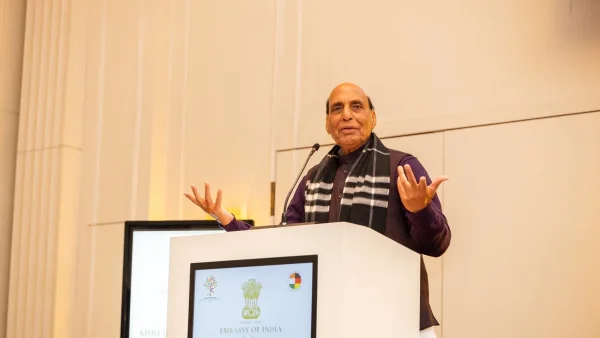
Singh indicated on Wednesday that India could be a kind of bridge between Iran and the United States during this crisis, and potentially help lower tensions in West Asia. He said we need to be patient, and that India might eventually be able to bring peace.
Rajnath Singh’s message from Berlin
Speaking to Indians living in Berlin, Singh said India has tried to help with peace, but everything happens at a certain point in time. He continued by saying it’s possible India will have its chance to play a role and be successful, perhaps tomorrow.
Why India’s positioning matters now
He highlighted that Prime Minister Narendra Modi has asked both sides to stop fighting. Modi approaches diplomacy in a very fair way, and this fairness is why many different countries in the area trust India.
Singh’s main points in Berlin were: India has attempted to contribute to peace, the timing will determine how much more India does, the Prime Minister has asked both sides to stop the war, and India continues to be balanced and realistic in its approach.
Backdrop: stalled talks and rising stakes
These statements from Singh were made as the second round of peace negotiations between Iran and the US (which were to be held in Pakistan) broke down, because they couldn’t agree about Iran’s program for making enriched uranium. This breakdown has made things much more uncertain regarding calming things down, and has brought up the question of who can get both sides talking to each other again.
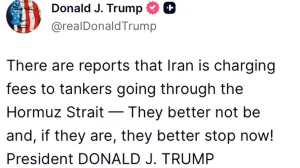
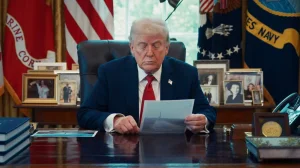
Earlier that day, Donald Trump, the President of the US, said the current ceasefire with Iran would be extended by two weeks to keep the possibility of talks open. After saying he expected to be bombing Iran, he wrote that he would delay an attack until Iranian leaders present one single plan for peace. He said he was doing this at the request of Asim Munir, Pakistan’s Field Marshal, and Shehbaz Sharif, Pakistan’s Prime Minister.
Iran said this extension of the ceasefire is simply a trick to give them time to launch a surprise attack. Mahdi Mohammadi, a commentator, said the side that is losing isn’t in a position to make demands, and stated that Iran’s time to take action has arrived.
Singh believes India’s ability to be fair in its dealings with all countries allows it to speak to everyone. Neither the US nor Iran views India as an opponent, meaning New Delhi can get involved without either side becoming suspicious or reacting negatively.
As an example of recent efforts, Singh mentioned that when Prime Minister Modi met with Vladimir Putin, the President of Russia, and Volodymyr Zelenskyy, the President of Ukraine, he urged them to find solutions. Modi also spoke with Trump about peace. Singh also pointed to the Strait of Hormuz, saying Indian ships were able to safely pass through when others couldn’t, to show India’s ability to operate effectively.
Signals from Germany and the road ahead
Singh is in Germany for three days and received military honors when he arrived in Berlin. While there, he will have discussions with Boris Pistorius, Germany’s Defence Minister, and other leaders to improve the strong relationship between the two countries regarding defense.
To an audience in Berlin, Singh repeated that India has tried to help, but the right time is important. He didn’t say India won’t play a role in the future, but that India could get involved when conditions allow and potentially succeed.
In the next few days we should watch for: whether Iran and the US will resume talks, what the extension of the ceasefire actually covers, what Iran says about a single plan for peace, and whether New Delhi is asked to help with discussions.
What Singh’s remarks mean
Singh’s comments don’t actually say India will try to mediate. Instead, they clearly show New Delhi is willing to help if the chance comes up and if the people involved want them to.
For now, India is sticking to a consistent and careful approach. They will keep communication lines open, use their good relationships with all sides, and wait for a moment when they can help lower tensions without harming the interests of either side.