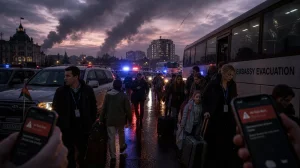
It’s a test for the fragile peace as Washington and Tehran go back and forth on what comes next in their talks. The Army in Kuwait put out word that its air defences were on the job against some hostile missiles and drones, and told the public not to be alarmed by any loud booms: they’re just the sound of an interception, not something hitting the ground.
What we know about the Kuwait incident
While the sky was being lit up by interceptors, the military had a message for the public: stay safe and follow instructions. It’s not an isolated case; there were much the same kind of alerts on 28 May, part of a run of attempted strikes and shootdowns we’ve seen in the last seven days or so.
There’s a post making the rounds saying Iran let fly a ballistic missile at the Ali Al-Salam Air Base and US and coalition forces put a stop to it. But if you want an official accounting from the authorities, you won’t get one beyond a confirmation that they are indeed making interceptions.
Blow-by-blow escalations despite a ceasefire
This is in the wake of a US claim that it hit some of Iran’s radar and drone sites after an American MQ-1 Predator was brought down over international waters. Central Command says those were calculated moves made on Saturday and Sunday in and around Geruk and Qeshm Island.
Iran has put in a claim of its own for a counter-strike while the Kuwaiti side was mopping up incoming threats. No US personnel were harmed, the military says. It’s another example of how even a small scuffle can erode a weekslong lull in hostilities that the negotiators are working to put in place.
Why the Gulf matters for global energy
Then you have the Strait of Hormuz. A fifth of the world’s oil and gas once ran through that narrow waterway, and Iran has been keeping the pressure on. So when you see a spike in alerts in Kuwait and the surrounding area, it doesn’t take long for the ripples to be felt in shipping and insurance markets.
And there is a broader conflict to consider. With Israel moving into Lebanon past the Litani and Hezbollah sending drones in, the whole region is in a state of flux. That is the environment in which the US and Iran have to do their math.
Talks stall as new demands surface
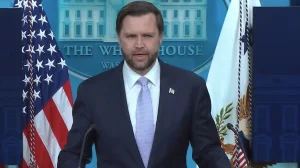
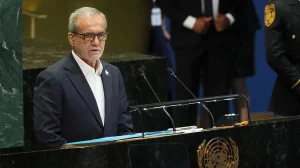
The negotiations have hit a rough patch as all this was going on in the skies over Kuwait. US officials say President Trump has been after some more changes to the putative deal with Iran. They met at the White House on Friday and didn’t come to a head.
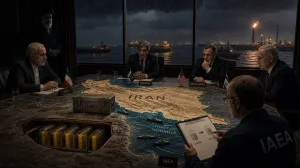
In the latest version of the proposal, you’ll find a 60-day halt to the fighting, some way to open up the Strait of Hormuz, and a plan to get back to talking about the nuclear file. “I’m in no rush,” Trump has said, with one non-negotiable: no nukes. A White House source put it bluntly: he has his red lines and any deal will have to meet them.
Here is what is on the table:
– A 60-day cessation of hostilities
– Reopening the Strait of Hormuz
– Dealing with the highly enriched uranium stockpiles
– Some framework for the nuclear side of things
Missile infrastructure shifts the balance
After a good few months of work, Iran is back in business with a lot of its subterranean missile capabilities. You could say it shows the limits of a US approach to bombing that is content to cordon off the tunnel mouths without going after what’s inside.
For those in the Gulf, it’s a matter of outlasting the other side. For the people at the negotiating table, it makes a misstep more costly. These are hard targets that don’t go away with a short truce and are a pain to verify.
Regional diplomacy and next steps
Kuwait’s foreign minister has been in touch with his counterparts in Qatar to see what can be done to keep the peace. It’s a sign that the Gulf states are in a hurry to make sure the trouble doesn’t spread, even as their defences remain on a hair-trigger.
The risk is still there. The US has been phasing in the MQ-9 Reaper for the most part, but the Army is still using the old Predators, so you have a mixed bag of unmanned aircraft that could be in the crosshairs. Another one of these incidents and you can bet the positions at the table will only get stiffer.
So it comes down to two things heading in different directions. On one hand, you have more intercepts and strikes crossing borders. On the other, you have the diplomats trying to corral it all into a 60-day window and a way back to the nuclear talks. Both are running out of time.