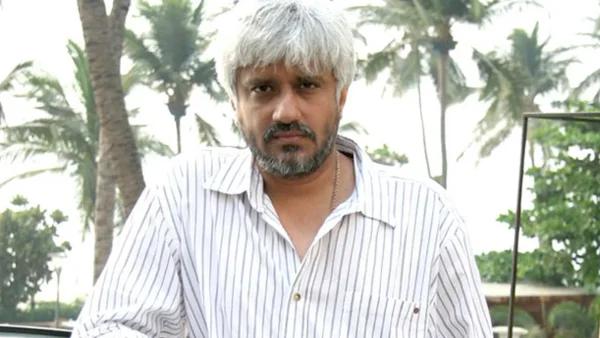
In fact, Bhatt will have it that he nearly died in there. He talks of a frightening mix of sickness, the winter chill and not being able to get to a doctor when he needed to. But for all that, the filmmaker makes a point of how it reacquainted him with the people he writes for and a part of India he’d been missing out on.
The health scare that changed the script
It was his axial spondyloarthritis, an autoimmune problem, that made things volatile while he was in custody. With a thin mat on the floor for a bed in the dead of December and January, the barrack became something of a trial by fire. He has memories of the chills, the ache in his joints and muscles, and feeling as though his body was ready to let go.
Then he came down with jaundice and the situation got worse. He would ask for a hospital and be told in one word: “tomorrow” or “the day after.” His cellmates were good enough to give him their blankets, but the fever wouldn’t break. To put it in his own terms, he was on the edge of dying in that jail.
When it was clear no one was coming to save him, Bhatt did what he had to. He put away the oily food and made do with gram, some fruit and water. He put in some prayers and in time, he was on the mend. The whole thing, he concedes, was a test of his limits and a push towards faith.
Inside the barrack: unexpected community
If you ask him what stands out, it isn’t the hopelessness, it’s the care. In a room with 60 or 80 other men, Bhatt was taken aback by how warm they were. They would do his errands, bring in his food and even see to his laundry, telling him to lie back and let them handle it.
They even had a name for him: Bhishma Pitamah. You could find a crowd of them at night wanting to hear a horror tale from him, making a little theatre of his end of the room. Two of them would make sure to sleep on either side of him for protection. “I didn’t do anything to earn that,” he says.
You saw it with the staff as well. When his health took a turn, the constables and the authorities were there for him. Some of the unlikeliest of people can be the most kind, he found. A few of the friendships he made under those bare lightbulbs, he figures, are here to stay, long after the case is closed.
And then there was the talk in the barrack. It was a way of breaking out of the filmi world and getting a feel for the country. He put it down to a refresher on the way common Indians put things together, what they stand for and how they take in a good ghost story.
Coming from a guy in the horror business, this was a matter of more than just comfort. It was a case of being reminded of who is in the seats at the cinema. It was a nudge to be more forthright with the stories he tells about this side of India.
Bollywood reactions that surprised him
Once he was back, Bhatt was a bit put out by who was on the line. Mithun da made a call. So did Sanjay Dutt, and Bhatt was thankful for that even if they haven’t put a film in together. And you have Ajay Devgn, who phoned up as an old friend, which is a bond he holds in high regard.
He is as direct about the ones who didn’t. You might think of Akshay Kumar, with whom he has made a couple of movies, but Bhatt doesn’t see why he should have called. We are not friends. “Every relationship is what it is,” he says, and it’s not sensible to make a rule of it.
Here is the short and sweet of who did and who didn’t, per Bhatt:
– Mithun Chakraborty called
– Sanjay Dutt, even without any history of working together
– A call from Ajay Devgn, an old pal
– No call from Akshay Kumar
But the names are not the point. Bhatt is not going to put a moral spin on who made a phone call and who didn’t. You can put down the headlines and the history books, he’ll tell you. It’s friendship that puts people in your corner when things get hard. And in his view, those are the kind of human calculations that don’t make it to the front page, no matter how public the drama.
The case, the timeline and his side of it
It all started with a biopic they were to make on Indira Murdia, the widow of Ajay Murdia of Indira IVF. The FIR has it that Bhatt and Murdia sat down in Mumbai back in April 2024 to talk about that and some war movie on the side. From there, it was a short step to a row over money.
Then came the arrests in December 2025 for Bhatt and his wife, Shwetambari. A Rs 30 crore fraud, they were told. They were out on bail by February 2026. In between, he was behind bars for 70 days. “That is when I got sick and the barrack life set in,” he says.
Bhatt won’t have any of the charges. “Baseless” is the word for it. He’s put his trust in the court to separate the story from the facts. To him, the chargesheet is an oddity and the case has yet to prove a thing. Let the court have its say for now.
He’s not going to make every interview an opportunity to put up a defence. Anything he puts out there would be seen as him looking out for number one. He’d rather let due process run its course. It’s a faith, he says, but not a blind one.
What’s in store for Bhatt
Things are in motion again. He’s putting the finishing touches on Haunted 3D: Echoes of the Past (or Haunted 2 if you like). With Mimoh Chakraborty and Chetna Pande in it, the horror film is set for June 12. Maybe the nights in jail, with nothing but ghost stories to pass the time, have put a finer edge on his sense of what makes us afraid.
The crowd he had in that cell will be with him in his writing, he thinks. The 60 or 65 men who huddled in for a tale at night are the ones he wants to bring to the screen. In a way, they were his theatre, minus the seats.
There’s a bit of a contradiction in how he sees it. The very spot where he was shivering with fever and an empty stomach also put a stop to his cynicism. He walked in as an old hand in the business and left with a clearer idea of who he is making these films for.
He’s not so soft on the system as to forget being made to wait day after day while he was unwell. But he doesn’t see everyone in a uniform as the same. There was some unexpected kindness in there.
All told, those 70 days were a hard lesson. You don’t get through the pain, the jaundice, the near-miss with death and the cold of a December floor without a cost. But he was looked after and made to feel heard by the India that pays to be in the dark.
Don’t expect him to fish for pity. What he wants is for you to hold two things in your head at once: the system is unfeeling, but the people in it can be. His getting through it has more to do with the second.
He has a way of telling it, with some grit and some thanks. He made do with a gram and some fruit, and when medicine wasn’t an option, he put in a prayer. In a place where even sleep could be risky, he had two chaps on either side of him to make sure he was safe till morning.
So he can call the whole affair what it is and not have to make a scene about it. You build your character, you set the stakes and let the court come to a resolution. For the time being, he’s just living to put pen to paper.
If you want to know if a horror director has what it takes, look at what he has to offer. Bhatt has some new stuff. Not only the spooks, but the men, the blankets, the good-natured ribbing, the “Bhishma Pitamah” moniker. Those are the kind of details that will go into his next project.
He is of the mind that he has to give that India his best. The one that was 65 strong in Udaipur, asking for a story, and the one waiting in line at the box office. He knows what’s on the line. We’ll see on June 12.