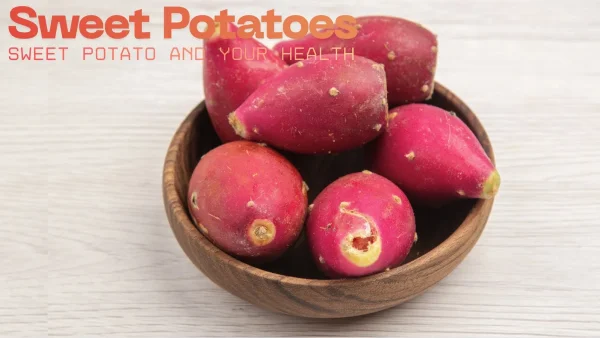
The sweet potato (Ipomoea batatas), or Shakarkandi, is a common, starchy root vegetable becoming more and more important for good daily nutrition.
Because more and more people are choosing whole, plant-based foods, sweet potatoes are a carbohydrate source that fits well with how we live now. All over the world, sweet potatoes are a major food crop, grown in over and 115 countries, and about 120 million tons are produced each year.
This shows how important they are as a carbohydrate in Africa, Asia, and other warm areas. In India, they’re grown a lot (around 200,000 hectares in places like Bihar, West Bengal, Uttar Pradesh, and Odisha) and are traditionally eaten boiled, roasted, in curries, or as snacks.
In Ayurveda, sweet potatoes are thought of as settling and easy to digest (“Kapha-pacifying”), and current nutrition science points to their high fiber, vitamins and substances that protect cells (antioxidants).
This article looks at exactly what’s in sweet potatoes nutritionally, the proof that they’re good for you, and combines older traditions with what modern science says.
Metabolic Regulation (Blood Sugar and Insulin)
Sweet potatoes have a lot of carbohydrates, but they also have useful fiber and micronutrients (vitamins and minerals). 100 grams of a raw sweet potato has about 86 calories, 20 grams of carbs, and 3 grams of fiber.
The carbohydrate is mainly starch (with a little bit of simple sugar), and a sweet potato has a moderate glycemic index (GI of around 44-96) which can be affected by how it’s cooked and how much you eat. For instance, boiling a sweet potato makes the GI lower than baking or frying it.
A normal medium sized sweet potato (100-130 grams raw) has around 25-30 grams of carbs and 3-4 grams of fiber when cooked, giving you energy that lasts and helping your digestion.
Nutritional Profile of Sweet Potatoes
The fiber in sweet potatoes is a combination of soluble (about 15-23% pectin) and insoluble (cellulose, hemicellulose, lignin – around 77-85%).
This combination slows down the way sugar is digested and adds substance to your stool, helping you go to the bathroom regularly and making you feel full. Sweet potatoes contain resistant starch (about 10-11%) which doesn’t get digested and acts like fiber.
This resistant starch gives food to the good bacteria in your gut and can lower how much your blood sugar goes up after a meal. Lab experiments show that the fiber from sweet potatoes (especially the skin) can help healthy gut microbes (like Bifidobacterium and Faecalibacterium) grow and increase short-chain fatty acids.
In terms of micronutrients, sweet potatoes are unusually high in something the body can turn into Vitamin A. Orange fleshed types have a lot of beta-carotene (the thing the body uses to make Vitamin A). Just 125 grams of cooked orange sweet potato gives a young child all the beta-carotene they need for a day’s worth of Vitamin A.
Vitamin A is vital for eyesight, defending against illness, and skin health, and sweet potatoes have much more of it than white potatoes. They also have Vitamin C and Vitamin E (though not in huge amounts) and different B vitamins.
They’re a good source of minerals: 100 grams has roughly 298 mg potassium, 34 mg calcium, 29 mg phosphorus, and a little iron and zinc. Potassium is almost as much as in a banana, and it helps to balance sodium for healthy blood pressure. In all, sweet potatoes are a good source of complex carbs, fiber, and many vitamins (especially A and C) and minerals, and they don’t have much fat or protein.
Antioxidant and Anti-Inflammatory Properties
There are many kinds of sweet potatoes. The orange-fleshed ones are the ones that give you the bright color and beta-carotene, while purple sweet potatoes (and other colored ones) contain anthocyanin pigments.
Anthocyanins are strong antioxidants, and studies show that juice from purple fleshed sweet potatoes is really good at fighting oxidation and may lessen inflammation.
Because of this, different types have slightly different nutritional benefits: orange ones mostly improve your Vitamin A levels, and purple ones give you more antioxidants.
White potatoes have a similar amount of calories and potassium, but less fiber and almost no beta-carotene for comparison.
Health Benefits of Sweet Potatoes
It’s better to think of sweet potatoes not as a single “superfood” with one special nutrient, but as a whole food where the benefits come from how the carbs, fiber, vitamins and minerals and plant compounds all work together. In both traditional ways of eating and in modern nutrition research, their benefits are connected to how they help your body work normally each day, rather than causing a big, quick change.
When you eat a normal amount of sweet potatoes as part of a meal and don’t do a lot to change them, they help you have steady energy, get enough micronutrients, and have a variety of foods in your diet – all key goals of current nutrition science.
From a point of view of public health, sweet potatoes are especially valuable because they give you a lot of nutrients with enough calories.
This means they’re useful in places around the world where people don’t get enough to eat or enough nutrients, and also in cities where people eat foods with lots of calories but not many nutrients.
Scientific research into sweet potatoes has therefore looked at how their fiber, resistant starch, carotenoids, polyphenols and minerals affect your metabolism, digestion and immune system.
Sweet potatoes are generally a helpful food to include in a well-rounded diet, but aren’t a treatment for anything. Some of the ways they are good for you have been shown in studies with people, and some from studies in labs or with animals.
Digestive Health and Gut Function
The good amount of fiber in sweet potatoes is good for your digestive system. The fiber that doesn’t dissolve adds bulk to stool and can prevent constipation, while the dissolving pectin fiber slows down how sugar gets into your blood and helps you feel full.
By getting things moving at a normal pace through your intestines, sweet potato fiber can make it easier to go to the bathroom and help with both diarrhea and constipation. A portion of the fiber, called resistant starch (which acts like fiber that feeds good bacteria), is broken down by the tiny organisms in your gut, making short-chain fatty acids that feed the cells in your intestines and might strengthen your gut’s immune system.
However, most of what we know about how sweet potato fiber affects gut bacteria comes from lab work, and we need studies with people to be more sure about these effects on gut health.
Cardiovascular Health
Several parts of a sweet potato could be good for your heart and blood vessels. The fiber (both the dissolving and resistant starch types) can somewhat lower cholesterol in the blood by reducing how much cholesterol your intestines absorb, and this has been shown in animal research.
Sweet potatoes are also a good source of potassium (298 mg per 100g), which balances out the effects of salt and helps control blood pressure. In fact, a review of studies found people who ate sweet potatoes tended to have better blood pressure.
Animal studies also show that the resistant starch in sweet potatoes can lower both total and “bad” (LDL) cholesterol. A thorough look at human trials showed that eating sweet potatoes was linked to better blood pressure and measurements of how your liver is functioning.
In reality, adding a baked or boiled sweet potato to your diet can fit in with a heart-healthy way of eating (perhaps instead of white rice or fatty snacks), but we don’t have many long-term studies with people to directly prove this. Some small studies of sweet potato extracts have shown improvements in cholesterol, but more research is needed to confirm effects on the heart.
Immune Support and Eye Health
Sweet potatoes provide nutrients that are important for your immune system and eyesight. Most importantly, they have lots of beta-carotene, making them one of the best foods to get pro-vitamin A from. Vitamin A is needed to keep skin and the linings of your body healthy, to help your immune system work, and to help you see in the dark.
Eating orange-fleshed sweet potatoes can greatly increase vitamin A levels in people who are not getting enough. They also provide vitamin C and smaller amounts of other antioxidants. One cup of cooked sweet potato has about 60% of the vitamin C you need in a day. These antioxidants help protect your cells from damage from “free radicals”, and could help your immune system.
Minerals in sweet potatoes, like zinc and selenium, are also important for your immune system, but sweet potatoes don’t have a huge amount of them. In general, sweet potatoes are a healthy food to help your immune system, mostly because of the vitamins A and C they contain.
Bone Health
Sweet potatoes have some minerals (like calcium 34mg per 100g, and around 20-30mg of magnesium) that help build bones, but they aren’ andt a fantastic source of nutrients specifically for bones (such as vitamin K or lots of calcium).
They don’t have nearly as much of these as dairy foods, green leafy vegetables, or nuts. So, while sweet potatoes add to your nutrition, we don’t have proof they do a lot for how dense your bones are.
The nutrients related to bone health in sweet potatoes are fairly small and are better seen as an addition to, not a replacement for, getting enough calcium and vitamin D from other foods or supplements for bone health.
Summary of Health Evidence
To sum up, sweet potatoes are full of good nutrients and have many substances that support health. We have good evidence that they are a good source of vitamin A and fiber.
There is a moderate amount of evidence (from trials with people) that they are helpful for controlling blood sugar and some things relating to heart health (cholesterol, blood pressure).
A lot of the other information about health benefits comes from lab or animal studies and points to possible benefits (antioxidants, gut health, reducing inflammation), but we need more research with people. And importantly, unlike pills, the health benefits of sweet potatoes come from eating whole foods as part of a diet.
They are best as one part of a balanced diet with plenty of vegetables, lean protein and whole grains. No single food is a magic cure, and the benefits of sweet potatoes mostly come from the fiber, vitamins and plant chemicals within them as part of how you eat overall.
Cultural and Traditional Context
Sweet potatoes have been part of cooking both around the world and in India for a long time. In many warm countries – Africa, Asia, and Latin America – sweet potato is a really important crop, because it’s not hard to grow and get from the plant.
Sometimes even the leaves and stems of the sweet potato plant are eaten as greens, which shows that people use the whole plant. In India, Shakarkandi is a traditional food for celebrations; you’ll find it in winter street food and as something given during festivals. Shakarkandi chaat, which is boiled sweet potato cut into blocks and covered in chaat masala, is a popular street food.
It’s also in foods people eat when they’re fasting, often with ghee or yogurt, because it’s good for you and fills you up. Old Ayurvedic medicine says sweet potato is “guru” (heavy) and warming, and mostly balances Kapha and Vata types.
They recommend cooking it and having it warm to help with digestion. And it turns out modern science agrees: people in India have long liked sweet potatoes for their energy (from the starch) and their sweet, earthy taste, and science now shows it is a good source of vitamin A.
Culinary Uses and Serving
There are many ways to cook sweet potatoes in different cuisines. Lots of times, they’re boiled or steamed and then eaten with just a little salt, or added to salads. Boiled sweet potato is the base for many street foods (like Indian chaat or African porridges).
At home, people often bake the whole sweet potato or cut it into wedges; the inside gets soft and sweet. One recipe says to mash a baked sweet potato with butter, cinnamon, and herbs, or to cut it into sticks, toss with paprika, and bake until they become crispy fries.
It’s also put in soups, stews and curries, and its sweetness goes nicely with both spicy and savory tastes (for example, in lentil soup or vegetable stew). For dessert, sweet potato can take the place of pumpkin or yam in pies, or be blended into puddings.
In India, you’ll find sweet potato in snacks like Pakoras (fried treats), Halwa (a sweet pudding), and even mixed into the batter for dosas or idlis to make them more nutritious.
Basically, sweet potato isn’t just good for your health, it’s also very flexible in cooking.
You can have it at breakfast, lunch, dinner or as a snack – from sweet potato pancakes and baked fries to filling casseroles and smooth soups. Recipes don’t usually need anything strange, just simple cooking of the root vegetable.
In fact, eating just half a cup (about 80g) of cooked sweet potato a few times a week can help people get the fiber and vitamin A they need. It’s best to cook it in a healthy way (steaming, boiling or baking) and not deep-frying, and people with diabetes should be careful about how much they eat.
This information comes from looking at scientific studies and nutritional analyses of sweet potato. We used numbers and data from the USDA and the International Potato Center for how it’s made up and what nutrients it contains.
We found evidence about its effects on health from studies with people, reviews of many studies, and also from experiments on cells and animals with parts of the sweet potato.
We learned about how it’s traditionally used and what it’s like in cooking from dietary advice and published research about food. Everything we’ve said is based on published research and we’ve noted if the evidence isn’t totally strong.