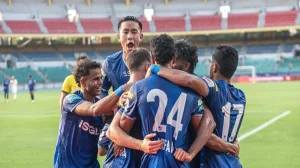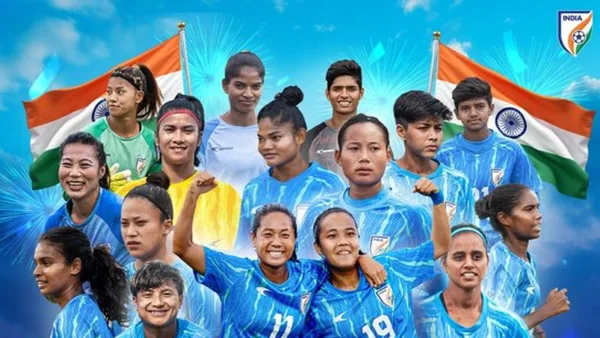
India’s 2026 Asian Cup begins against Vietnam, and people still remember their last match. That game taught India a hard lesson, and it affects how seriously they approach this important opening game in Australia. For Valverde and the Blue Tigresses, this is both a chance to put things right, and a chance to do well.
The last India versus Vietnam game in Tashkent
The two teams last played each other in the AFC Women’s Olympic Qualifying Tournament at Lokomotiv Stadium in Tashkent. Vietnam won 3-1, finishing India’s Olympic hopes and clearly showing a set of issues that India must fix before the Asian Cup.
When Thomas Dennerby was in charge, India tried changes after losing to Japan, but Vietnam scored almost at once. Captain Huynh Nhu scored in the fourth minute, taking advantage of trouble at the back. Tran Thi Hai Linh made it 2-0 in the 22nd minute, again from a cross India could not deal with.
After half time, Pham Hai Yen, who had come on as a substitute, made it 3-0 – another header. A late goal from Sandhiya Ranganathan was not much comfort. Incredibly, all four goals were headers. Vietnam’s crossing and timing in the area were the difference, while India had trouble with first touch and where they were positioned.
Important lessons from that loss
The game showed clear weaknesses in stopping crosses and free kicks. India were often second to the ball in the air, their back line was too flat, and slow to follow runners. It wasn’t just about height; it was about when they jumped, their body position, and how they were organised.
The wings also needed more protecting. Vietnam’s players on the wings found space to cross, pushing India’s full backs back and trapping the midfield. Without early pressure on the crosser, the back line got wave after wave of attacks, and the chances became very few.
How those lessons affect the 2026 opener
With Amelia Valverde, India are coming with a new way of looking at tactics. We can expect better defending when the ball is restarted, clearer jobs for people in set-pieces, and more quick pressure on the ball in wide areas. Training will likely have been on winning the first touch and responding to the second ball around the penalty area.
Valverde likes close lines and clear moves from defence to attack. Quick passes out of defence, better space between the centre backs and the holding midfielder, and smarter times to press should help India not be stuck in their own half. The mental reset is important too. Starting quickly and managing the first few minutes can change everything against a strong opponent.
Vietnam’s strengths and what to expect
Vietnam are among the most organised teams in Asia. Their shape – usually a close 4-4-2 or 4-2-3-1 – makes space in the middle small and directs play to the wings. From there, they attack with direct crosses and well-timed runs. Their fitness, how well they press, and the quality of their crossing make them very dangerous from crosses.
Leadership and experience are the basis of their advantage. Huynh Nhu has often punished mistakes, and their set-piece plans are practised perfectly. India must stop easy crosses, make them cross from deeper, and win the first contest in the air to stop Vietnam’s main weapons.
Head-to-head and the bigger picture
Recent history favours Vietnam. Apart from the Tashkent game, the teams played at the 2003 AFC Women’s Championship, where Vietnam beat India 2-1 in the group stage. The pattern is clear: when Vietnam control the wide areas, India struggle in the game.
But what’s happening now is also important. India have gone up seven places in the latest FIFA ranking and, for the first time, got into an AFC Women’s Asian Cup by getting through the qualifying games. The 2022 event ended in disappointment because of a Covid outbreak, but that setback is the reason for the effort now in Australia.
What the result means for World Cup hopes
The AFC Women’s Asian Cup 2026 is also Asia’s last chance to get into the FIFA Women’s World Cup 2027. Twelve teams are in three groups of four. India are in a hard group with Japan, Vietnam, and Chinese Taipei, making every minute even more important.
To get to the quarter finals, India must be in the top two, or one of the two best third-placed teams. The most direct way to the World Cup is to win the quarter final and get to the semi finals. All four semi-finalists get into Brazil 2027 automatically.
If India lose in the quarter finals, there is another way. The four losing quarter-finalists play in extra games, from which two more teams get into the World Cup directly. The other two go into the FIFA Play-Off Tournament. In short, getting to the knockout stage keeps many chances open.
That’s why the Vietnam opener is so important. A good result makes the campaign stable, gives a points base for calculating who are the best third-placed teams, and gives the team confidence before playing a strong team like Japan. A loss, on the other hand, makes the path harder and puts more pressure on for the other two group games.
India’s important things are clear. Win the first contests in the area, stop Vietnam’s crossing, and use speed on taking over the ball to attack the space behind their full backs. Good work on set-pieces at both ends could decide a close game. The last game gave the warning; now comes the response.