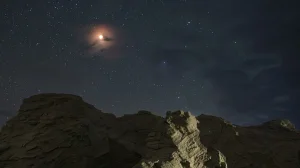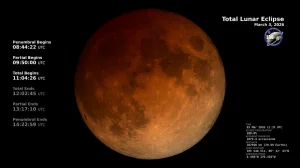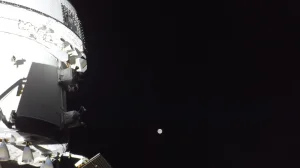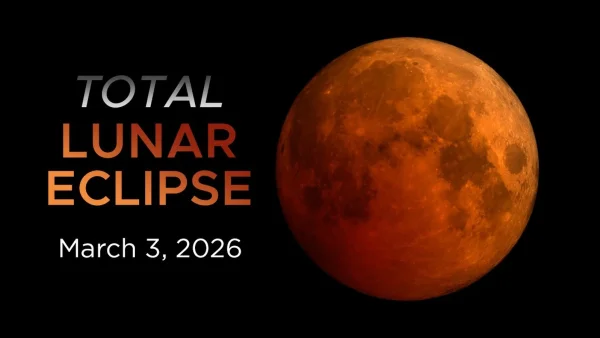
A total lunar eclipse happening now lets people who look at the sky watch the Moon go into Earth’s shadow, and shine with a red colour. NASA not long ago showed what the same event looks like from the Moon, with pictures and video from its Lunar Reconnaissance Orbiter. This new view helps show why the Moon turns red when the eclipse is total.
What a total lunar eclipse is
A lunar eclipse happens when the Sun, Earth and Moon get in a line, with Earth in the middle of the two. The Moon goes into Earth’s shadow and might pass through the faint outer part – the penumbral zone – or the darker inside part – the umbra. Total lunar eclipses happen when the Moon goes completely into the umbra.
There are three kinds of lunar eclipse: penumbral, partial, and total. Only total eclipses make the deep red or orange colour known as a blood moon. Lunar eclipses usually happen from zero to three times a year, though not every eclipse is total, or visible from every place.
How Earth’s shadow makes the red Moon
When the eclipse is total, Earth stops sunlight from getting to the Moon straight away. But sunlight still gets to the Moon’s surface after going through Earth’s air. That air bends and filters sunlight, throwing out the shorter blue light waves and letting the longer red light waves carry on to the Moon.
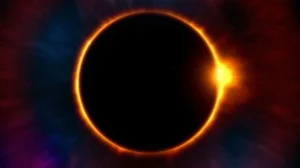
This bent light makes a weak, red glow on the Moon instead of complete dark. The same thing makes a thin, copper-coloured ring around Earth as seen from the Moon. On Earth, the result is a Moon which gets dimmer and then takes on copper, orange, or deep red colours.
How the eclipse looks from the Moon
From the Moon’s surface, people would not see the Moon get dark; they’d see Earth blocking the Sun. NASA’s Lunar Reconnaissance Orbiter took pictures and video showing Earth in the middle of the Sun, with a glowing ring of bent light around the planet during the total eclipse.
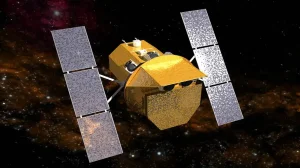
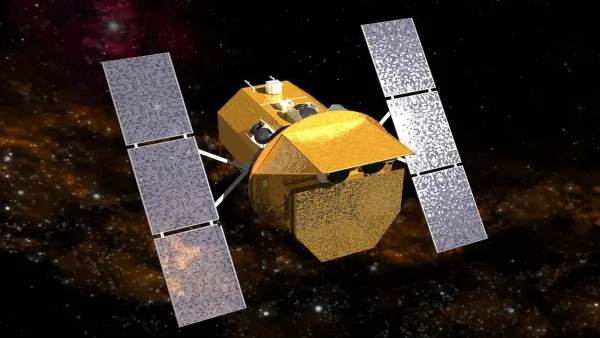
The LRO has gone around the Moon since 2009 and maps the Moon’s surface while watching its surroundings. Its special place to look from makes it possible to record Earth’s shadow going over the Moon’s land, and to show straight away how sunlight acts when the three bodies line up.
Why the colour changes
How strong the red is, and the colour of the red Moon, depends on what Earth’s air is like. Volcanic ash, dust, clouds, and aerosols can make the red deeper, or make the glow dimmer. Clean, clear air tends to make a brighter, copper-coloured eclipse, while heavy bits make a darker, rust-coloured sight.
Weather events and pollution made by people both affect how sunlight is thrown about. Scientists often use the eclipse colour and brightness to guess at changes in Earth’s air, making a total lunar eclipse a natural way to test global air conditions.
Why this view matters now
Seeing a lunar eclipse from the Moon makes clear a simple scientific idea: eclipses are shaped and can be guessed at. The LRO film turns an ordinary Earth sight into a strong view from space, helping people picture the lining up which makes a blood moon, and taking away the mystery from an old sight.
Total lunar eclipses stay one of the few space events you can watch safely with only your eyes. The modern explanation takes the place of hundreds of years of false belief with clear physics, and the Moon-facing pictures from NASA help the public understand how sunlight, shadows, and air act across space.