What the 2026 Lunar Eclipse Was About
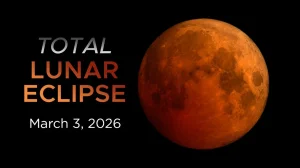
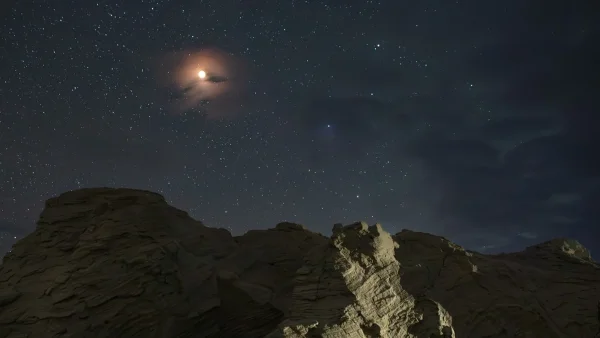
A total lunar eclipse takes place when the Earth goes directly between the Sun and the Moon, and throws its deepest shadow on the Moon’s surface. On March 3, the Moon went into the Earth’s umbra – the darkest part of its shadow – and became a coppery, crimson colour known as a Blood Moon.
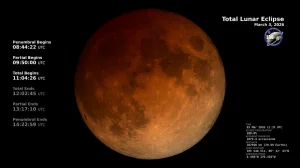
The eclipse started with a very slight dimming from the penumbra around 15:20 IST, then went into a partial phase as the Earth slowly covered the Moon. Totality was the best part, and a lot of people who saw it said it was both beautiful and they would not forget it.
Why the Moon Was Red
The red colour is caused by Rayleigh scattering in the Earth’s atmosphere. Shorter, blue wavelengths of light are scattered away, but longer, red and orange wavelengths are bent through the atmosphere and make the Moon shine.
What the atmosphere is like changes exactly what shade the Moon will be. If there is dust, aerosols or clouds, the Moon can appear darker or more coppery. Clean, clear air usually makes a brighter, more intense red during totality.
Where and When the Eclipse Could Be Seen in India
The time of the eclipse in India was different depending on the area. It began in the afternoon at 15:20 IST, but most of the country did not see it until after the Moon rose. Cities like Delhi, Mumbai and Bengaluru saw the Moon already in later stages by the time it rose near 18:20 IST.
The northeastern states – Assam and Arunachal Pradesh included – had the best views of the peak of totality, because the Moon rose earlier there. For many people, the total phase was at its highest around 18:27 IST, and the main totality was over by about 18:47 IST. The faint penumbral phase went on quietly and officially finished around 19:58 IST.
How to Watch the Eclipse – and Safety
Unlike a solar eclipse, it is perfectly safe to watch a lunar eclipse with just your eyes. You do not need any special filters or eye protection to enjoy the Blood Moon.
To get the clearest view, pick a place away from city lights and low to the horizon. Clear weather and a view of the eastern sky with nothing in the way would improve your chance of seeing the full red effect.
How People Took Pictures of the Blood Moon
Thousands of people got together on roofs, beaches and in open fields with phones, binoculars and cameras. Simple binoculars made the Moon’s craters clearer, as they were lit up with red light.
Photographers preferred long exposures and strong tripods to catch the colour and detail. Experts said darker, rural places and manual camera settings were best to avoid pale pictures and to show off the Moon’s different shades.
Social media quickly filled with pictures and time-lapse videos as people around the world shared their photos and what they thought. These posts helped to encourage others to try astrophotography and to record the unusual event.
What the Eclipse Means in Astronomy – and What is Next
This total lunar eclipse was the last of its kind until 2029, so it was a special event for both amateur astronomers and people who only sometimes watch the sky. The exact arrangement that makes a Blood Moon shows us how predictable and beautiful the movements of the planets in our solar system can be.
If you missed this eclipse, put a mark in your diary and follow forecasts of astronomical events for the next chances. In the meantime, binoculars and a simple camera are good tools to practice on the Moon and planets until the next total lunar eclipse.