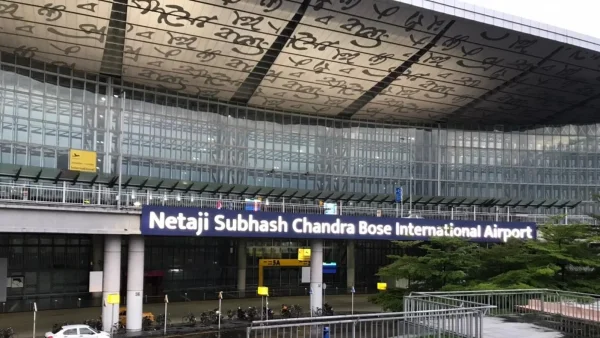
You could say the airport has been proactive about curbing the kind of gridlock you see at peak hours. By putting nearly 4,000 square metres of fresh floor plan into service, officials are touting a 28 million passenger ceiling. It’s a way to put more seats in and move lines along right as the summer rush is on.
So what does the airport put forward as the new normal for day one of this expansion? You’ll see:
– Less of a line at domestic departures
– Some room to sit in the waiting areas
– Quicker work at the international checkpoints
– Easier transfers in the swing gate
– A better divide between where the domestic and international crowds go
There is a method to the timing. You have Hajj flights to contend with until June 19, so for the airport managers, there is a tight spot to get things under control before they start the next round of building.
A look at the new terminal
As soon as the Hajj period is out of the way, the plan is to put the old domestic terminal to the wrecking ball. Tearing down the legacy structure is what has to happen first to make way for a more modern, high-capacity layout.
In terms of capacity and how things run
If you look at the numbers, the strain is plain to see. Take June 2: we had 145 domestic in with 22,964 on board and 149 out with 25,451. On the international side, 22 in (2,938) and 22 out (3,167).
June 1 was no slouch either. Domestic in was 152 for 24,464; out was 152 for 26,287. And for the 22 international arrivals and departures, we were looking at 3,162 and 3,520 respectively.
Then came June 3 and the tempo didn’t let up. 155 domestic in with 25,096 and 149 out with 25,901. International was 20 in (3,132) and 22 out (3,736).
This isn’t about making things pretty, according to the people running the show. The work is meant to open up the bottlenecks. We’re already seeing 966 extra square metres at the departure level for passengers to use.
It’s all about de-crowding the domestic hall and the swing gate, which has to do double duty depending on the schedule. More room to sit and stand is the name of the game here.
On the international side of things, we’ve put in roughly 3,000 square metres to rework how outbound traffic is handled. That means moving around Immigration, Customs and the pre-embarkation checks to unclutter the security hold.
The reworked extension should be up and running in short order. Relocating the checkpoints is the way to get a better flow and take the edge off before the heavy construction starts.
The math is straightforward. The airport is going from 26 to 28 million per year. That 2 MPPA gives them some leeway while they get ready for the next phase of reconstruction.
But they haven’t just put this capacity in where it doesn’t matter. It’s in the thick of it – in the seating bays, the security chutes, document control. If you can widen those, you can actually put a dent in the time people have to wait.
When you’re moving 50,000 or so through the doors in a day, a few thousand square metres is what keeps you from having a backlog. It makes for a smoother ride when you have a bunch of departures in one block.
Passengers will notice it first thing, right at the document check and before you even get to the gate.
For the airlines and the people flying with them
Airlines are after one thing in the thick of it: a turnaround they can count on. It’s the commercial sweet spot, and it keeps you from having one delay snowball into another.
The upgrade to the swing gates is no accident. Since those can be put to use for either side of the house, the extra room is a buffer against the kind of ripple effects you get when a bunch of flights run behind in the evening.
Then there’s the matter of moving international traffic down some new corridors with Immigration and Customs in a different spot. The idea is to take some of the heat out of the security hold, where things can get backed up, and leave that area open for boarding.
Strategic positioning in a crowded field
You see it in metro hubs all over: terminals are being made bigger to keep up with the demand that has come back with a vengeance. Kolkata is taking its time with an incremental approach. They’re making the easy gains now and will move on to the more involved work once the old domestic terminal is a memory.
It’s a way of showing you can be reliable, not just big. If you make the document and security checks less of a hassle, the airport is counting on that kind of on-time performance to have some pull with an airline looking to put in a new rotation.
For the people who plan the network, it’s often a small, precise increase in capacity that makes or breaks a decision to put in a late-night flight or to stay away from a slot that might cause a headache. That’s what Kolkata is going for.
Operational outlook and what’s next
The date to watch is June 19, when the Hajj season is in the books. After that, the crews will turn their attention to tearing down the old domestic terminal.
They like to call this current phase a way of getting ready for that. With construction clamping down in other parts of the campus, the terminal needs to be able to breathe.
Assuming the changes do what they should, the airport will be in a good place for the next round: queues under control, more seats, and a straighter line for the international side. You need that if you want to hit 28 MPPA and not let the service show it.
When you have peak travel, any weakness in the layout of the terminal is put under a microscope. If your domestic and international sides are on top of each other, a little inefficiency in routing is all it takes to pile on the minutes. This is where the pre-emptive work in Kolkata comes in.
Why it’s relevant today
Some would say the new footprint is right on time. Just look at the three days we had in early June and you can tell the system is running hot on both ends.
With airlines setting their plans for the rest of the year, how well a terminal performs is what sets you apart. The word from the airport is that they’ve put the space and the reconfigured checkpoints in to make sure people don’t stand still.
We’ll find out in the coming months how it stands up when the schedule is full and the demo work is in progress. Do they keep things steady, and they may have earned some long-term trust with the carriers and the public.
But let the figures have it: 4,000 odd square metres of new room, 28 million a year, and the 966 and 3,000-square-metre expansions to go with it. On any given day you have 50,000-plus flowing through. The thinking is that if you make the space work for you, you don’t just have more of it, and that’s what will see Kolkata’s growth through.