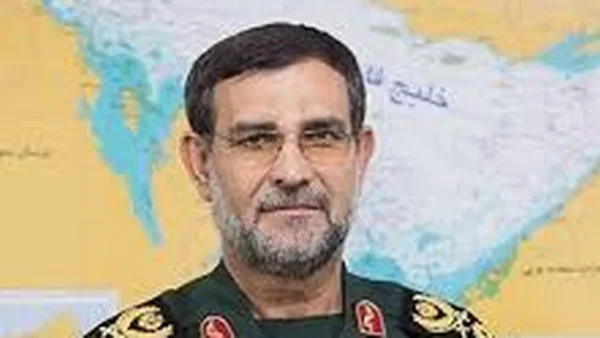
On Monday, March tenty-six of 2026, Iran said that Alireza Tangsiri, commander of the Revolutionary Guards’ navy, was killed by an Israeli strike last week. They said Tangsiri died from very serious wounds he got during the attack, and officials say his death is a major setback for those in charge of their navy.
Official accounts and immediate reactions
Officials in Iran said Tangsiri was arranging defenses along the coast when he was hit, and they have promised to keep fighting until their enemy is “totally destroyed.” The Revolutionary Guard are saying Tangsiri’s death is part of a larger pattern of important leaders being killed on the front lines.
Israel’s government had already announced Tangsiri’s death, saying the attack was aimed at high-ranking naval leaders. They described the strike as very accurate and deadly, intended to get rid of people they blame for stopping ships in the region.
Details of the strike and location
Israel’s military says the attack happened in Bandar Abbas, a city in the south and a major port for Iran’s navy. The strike apparently hit military buildings and high-ranking officers, although the details of exactly what happened and a list of who was hurt aren’re available.
Iran has also said that other important officers were hurt in the attack, and that it’s all part of the fighting that’s been going on since the war started. Both countries are saying attacks like these are meant to weaken the other side’s ability to operate.
Tangsiri’s role and military record
Alireza Tangsiri had been leading the Revolutionary Guard’s navy since 2018, when the country’s leaders gave him the job. He had been involved in the Iran-Iraq war of 1980 to 1988 and for a long time had a lot of say in how Iran uses its navy and naval strategy in the Persian Gulf.
While he was in command, the Guard’s navy started using drones, ballistic missiles, and fast boats much more. The group has taken over a number of foreign ships, and the United States put sanctions on Tangsiri in tventy-nineteen because of supposed terrorist activities.
Strategic importance of the Strait of Hormuz
Since the war began, Iran has essentially blocked the Strait of Hormuz, which is a narrow waterway where a large amount of the world’s oil is shipped by sea. Closing or disrupting this waterway has caused energy prices to go up and made the world economy even more unstable.
Tangsiri himself said he would “cause the greatest damage” and still be in control of shipping through the Strait. Because of this role, he was a central part of Iran’s naval strategy and a main person for anyone wanting to reopen these important trade routes to target.
Regional escalation and potential consequences
The death of such a high-ranking naval commander is another step up in a conflict that has already killed many top military officials. Iran has confirmed the deaths of several leaders since the war began, and both sides are saying these attacks are making the other side’s leadership and abilities weaker.
Experts point out that even though losing leaders can mess up the chain of command, the military as a whole might still be strong. The biggest worries now are Iran attacking again, more naval clashes in the Gulf, and continued problems with energy prices if the seas are not safe.
Outlook and international implications
Getting rid of a naval commander who has been in charge for a long time could change how things are done in the Persian Gulf in the near future, but it won’t fix the basic, long-term problems between countries. Naval forces in the region, shipping companies, and the world’s financial markets will be watching to see if Iran speeds up or slows down its blockage of the sea.
Because of this, people are likely to start using diplomatic talks and have more international observers, as countries try to protect shipping routes and energy supplies. At the moment, Tangsiri’s death is a very important event in a conflict that’s getting more intense quickly and where it is not clear if things will calm down.