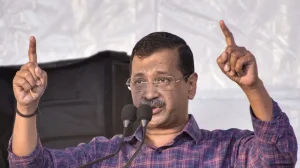
The ED is formally objecting to the Delhi High Court about the acquittal of Arvind Kejriwal, who is the leader of the AAP and a former Delhi chief minister, in two separate criminal cases. These cases were opened because he didn’t show up when asked to during the investigation of the supposed liquor policy fraud. The ED wants the High Court to reconsider the trial court’s decision from January 22nd which found Kejriwal not guilty of ignoring an order from someone in the government.
ED appeal and the legal basis for the petitions
The ED has filed two requests with the High Court, each relating to criminal charges made in February and March of 2024 under Section 174 of the Indian Penal Code. This section deals with failing to appear when told to by a government official. The ED says that the Prevention of Money Laundering Act gives them the ability to start criminal cases when someone purposely ignores a summons.
The ED believes Kejriwal deliberately didn’t respond to the requests to appear, raised unimportant objections, and found excuses to avoid being investigated. The appeals are scheduled to be heard by Justice Swarana Kanta Sharma on Wednesday. At this time, the High Court will review the ED’s challenge to the trial court’s decision to say Kejriwal was not guilty.
Trial court reasoning for acquittal in January orders
The lower court said Kejriwal was not guilty after looking at six separate summonses (three in t2023, three in 2024) which had been delivered by email. The court determined that simply not showing up after being sent a summons isn’t the same as purposefully disobeying, and that the prosecution hadn’t proven beyond a doubt that Kejriwal hadn’t complied on purpose.
A key issue was how the summonses were delivered. The court said that neither the Criminal Procedure Code nor the PMLA allows for summons to be emailed and pointed out that the law specifically says they should be delivered in person, as usual. Because of this, the court found problems with the ED’s proof of delivery and intent.
Context within the wider excise policy probe and related cases
These cases regarding the summonses are part of a much larger legal and investigative situation. The ED claims that people accused in the case were in contact with Kejriwal about a liquor policy (which has now been cancelled) that was supposed to give unfair advantages, and that bribes ended up with the Aam Aadmi Party. These wider allegations are at the center of the money laundering and liquor policy investigations.
In a separate decision, the trial court dismissed charges against Kejriwal, Manish Sisodia, and others in a criminal case brought by another agency, saying the case wouldn’t hold up in court. That dismissal is also being challenged in the High Court. The ED hasn’t yet appealed the acquittal of Amanatullah Khan, an AAP member of the legislative assembly, on a similar charge of ignoring a summons.
Legal questions and stakes before the Delhi High Court
The High Court has to decide several important points, both technical and relating to the core issues of the case: are emailed summons legally valid? What level of proof is required to show someone intentionally disobeyed a request to appear (under Section 174 of the Indian Penal Code)? And how much power does the ED have, according to the PMLA, to start criminal cases? The answer to these questions will probably influence how investigation agencies call witnesses and defendants in the future.
If the High Court changes the trial court’s decision, Kejriwal could face criminal charges again and the case could go back to the lower courts. If he remains acquitted, it might mean that agencies will be more restricted in their use of electronic delivery of summonses and will have to have very strong evidence of both intent and that the summons was delivered correctly.
Next steps and broader implications to watch
The hearing with Justice Swarana Kanta Sharma will decide if the ED’s appeals will be fully heard, or if they will be looked at more closely regarding procedure. The results could be the case being sent back for a new trial, the appeals being rejected, or instructions on what evidence is needed and how to deliver summonses.
More broadly, the High Court’s ruling could affect how investigations are carried out and how enforcement agencies are supervised by the courts, particularly in politically sensitive investigations. People will be paying attention to the court’s reasoning on how summonses are delivered, how intent is proven, and how to balance the need for a quick investigation with following all the proper procedures.