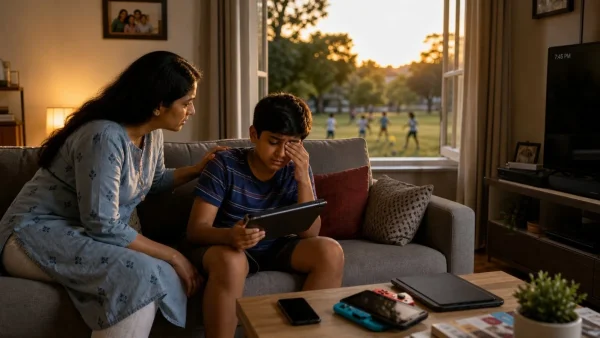
Indian parents are now starting the summer holidays with a new concern: their kids who are in school are getting more eye strain because they are spending so much time looking at screens. Doctors say that when children spend many hours in a row on phones, tablets, and video games, they get headaches, dry eyes, and blurry vision. We’ll look at how much screen time is too much, why it’s a problem, and what you can do about it right now.
The summer spike doctors are flagging
During school breaks, eye doctors’ offices see more children with tired eyes, trouble concentrating, and headaches after being on screens. When school is out, kids don’t follow their usual schedules, they play outside less, and they tend to stay up late watching lots of shows.
This is a pattern that eye doctors for children have definitely noticed. Dr. Rajat Kapoor in Delhi says that during the holidays, digital eye strain clearly goes up as children choose screens and endlessly scrolling over going to the park and having a normal schedule.
What screens do to developing eyes
Unlike when you read a book, things on a digital screen need your eyes to focus up close all the time and you naturally blink less. Dr. Irfan Faraz says that when a child is really using a screen, they blink almost 60% less, which makes the surface of the eye dry and causes irritation and headaches.
This is harder on children because their eyesight is still developing. And over time, this strain isn’t just about being uncomfortable. It can affect how well they sleep, how they sit, and even how much attention they pay in class when school starts again.
Evidence parents should know
Medical professionals have been pointing out this change for several years. A detailed 2023 study in Preventive Medicine said that ‘digital eye strain is common in young people who use screens a lot and includes uncomfortable eyes, dryness, headaches and blurry vision from spending too long on screens.’
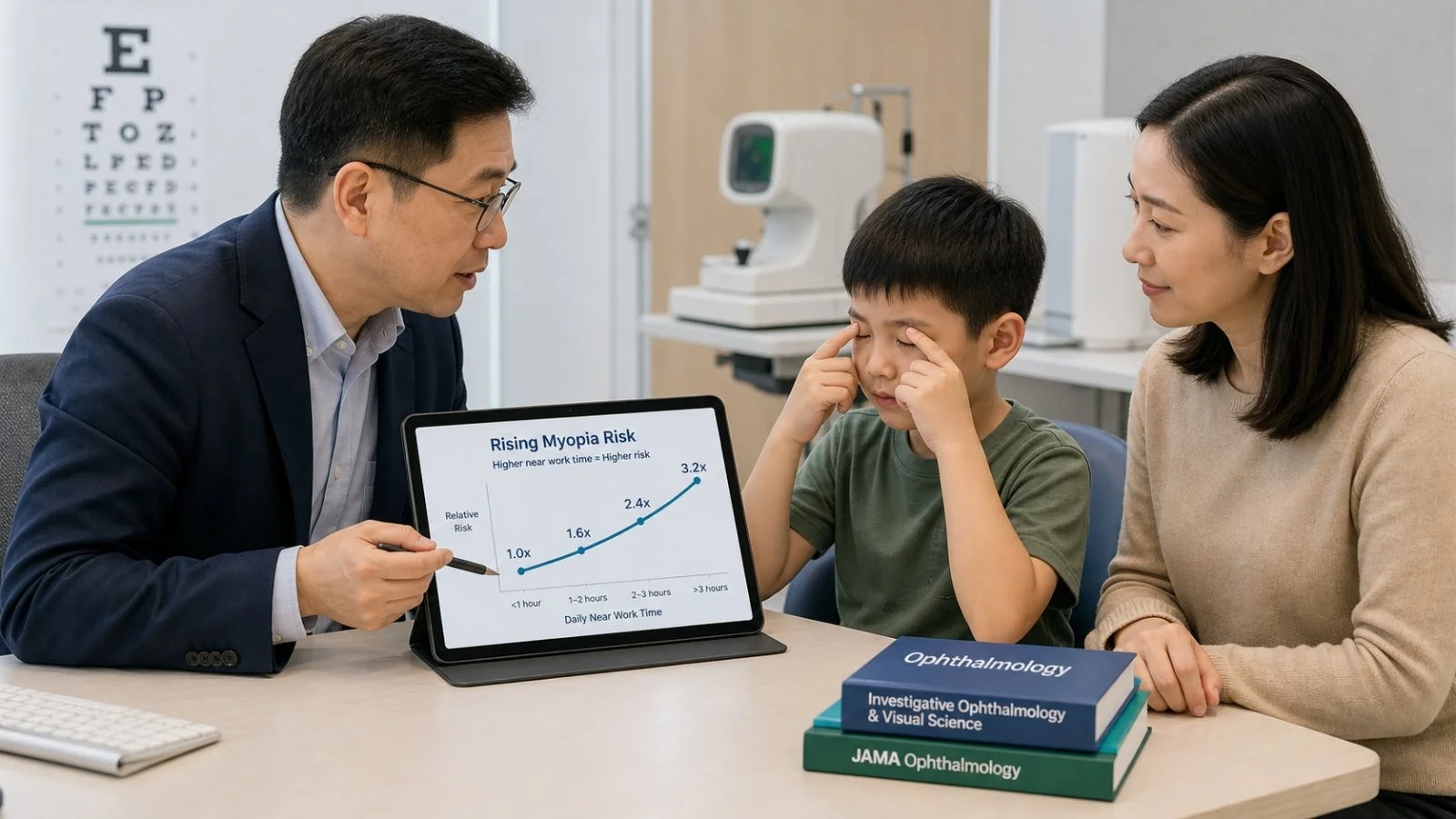
The biggest long-term worry is nearsightedness (myopia). A large 2024 analysis in BMC Public Health clearly showed a link between how much time kids spend on screens and an increased risk of becoming nearsighted, which adds to the worry that the digital world is changing how children see.
In fact, a 2025 analysis in JAMA Network Open showed that for every extra hour a child spends on screens each day, they are 21% more likely to become nearsighted. Some studies in cities suggest that around 1 child in 3 who is in school in a city is now nearsighted.
How much is too much for school-going kids
Doctors tell parents to keep schoolwork separate from using screens for fun and to set a daily limit. Younger children should ideally only be on screens for an hour each day, and older children for no more than two hours outside of school work.
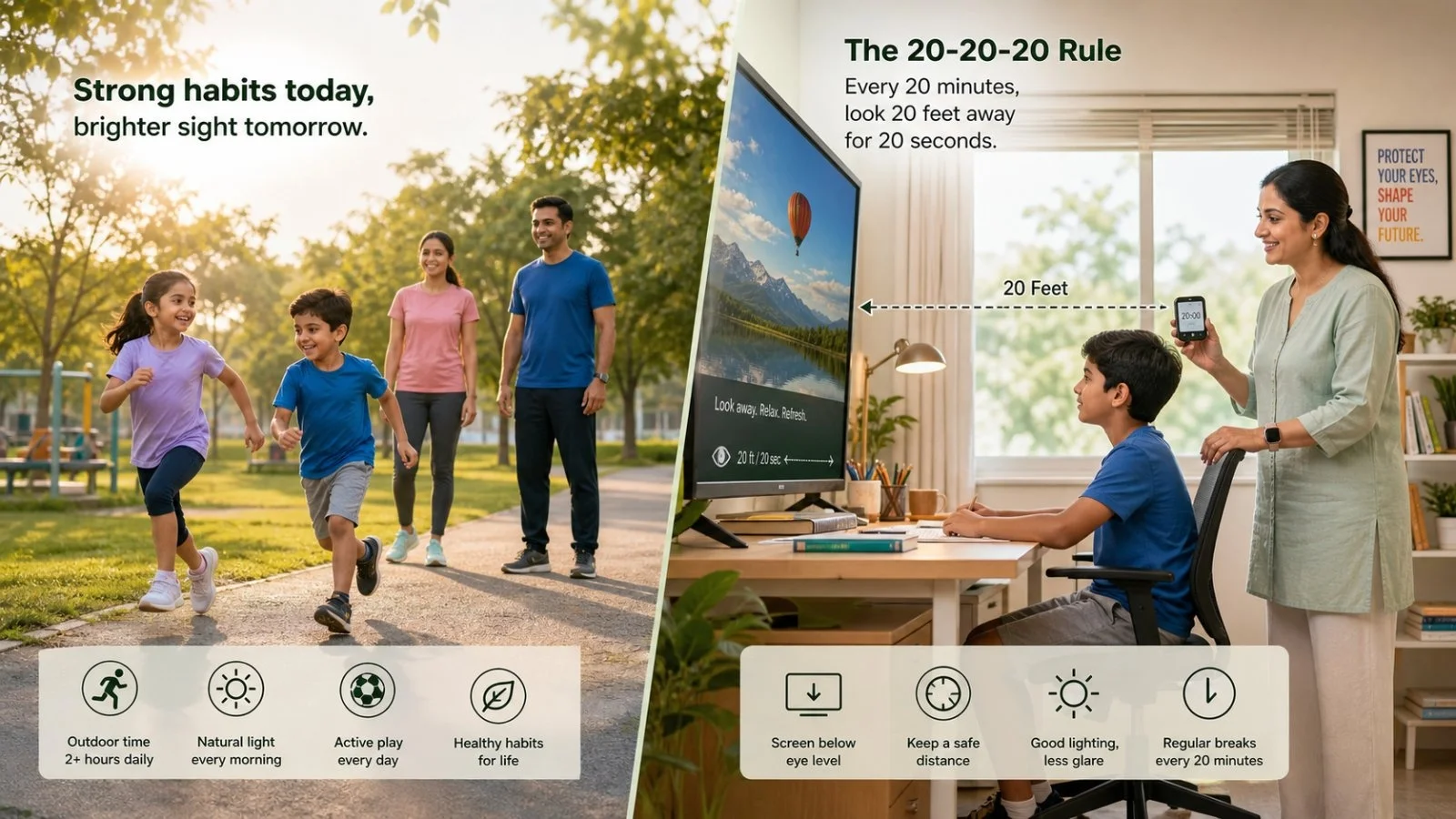
Start teaching the 20-20-20 rule when they are young. It’s easy: every 20 minutes, have your child look at something 20 feet away for 20 seconds. This helps their eyes refocus and reduces strain.
Little changes to how they use screens can really lessen eye strain. Devices should be a little below eye level, they should sit 18 to 24 inches from the screen, and the room should be well lit. Don’t let children use devices in a completely dark room, and don’t let them lie down while using them.
Spot red flags early
If you notice these signs, book an eye check-up without delay:
– Frequent eye rubbing or squinting
– Complaints of headaches after screens
– Redness, dryness, or increased blinking
– Blurred vision or difficulty concentrating
Make your home eye-friendly this summer
Spending time outside isn’t just a good thing, it actually protects their eyes. Doctors really recommend at least 90 to 120 minutes of outdoor play every day. Many experts agree that spending at least two hours outside each day can help slow down nearsightedness.
A set schedule is better than just relying on children to control themselves. Instead of letting them be on devices as much as they want, set specific times. Keep screens out of bedrooms and don’t let children use them right before going to bed. If you live in a hot city, use the early morning or after sunset for playing outside so they don’t get overheated.
Drinking enough water, getting enough sleep and good posture also make a difference. Encourage them to sit up straight, and not slouch or lie down with their phones. When possible, use a bigger screen like a TV instead of a phone, because bigger screens are easier on the eyes at a safer distance.
Practical steps schools and parents can align on
Both classrooms and homes affect how kids use their eyes. Teachers and parents can decide on regular short breaks during reading and screen time, make sure the lighting is good, and remind children to blink often when they are doing something for a long time.
The main idea isn’t to get rid of screens, but to help children use them in a good way. A good balance of learning, breaks, being outside in the daylight, playing sports, and getting enough sleep will protect a child’s developing eyes without stopping them from getting the benefits of technology.
Why this matters now
Eye strain in a 7-year-old isn’t just because of a bad day with the tablet. If it’s not taken care of, the combination of not blinking enough, looking at things up close, and not getting much sunlight can make nearsightedness get worse in kids who are likely to get it. This could mean they need stronger glasses and get more tired at school over time.
Parents are usually the first to notice something is wrong. If a child sits too close to the screen, doesn’t like to read, or complains after using a screen, trust your gut and see an eye doctor. Getting checked out quickly can find problems with how they see or early signs of nearsightedness and can stop small problems from getting bigger.
Your family’s action plan
Set clear limits for each age and stick to them during the break. For every hour spent inside, make them spend an hour outside. Make sure their screens are set up in a way that’s good for their eyes and make the 20-20-20 rule part of both their homework and playtime.
In the digital world we live in now, completely avoiding screens isn’t realistic. But with a daily schedule, time outside, and paying attention to any problems early on, parents can protect their children’s vision while still letting them be connected, have fun, and be ready for school after the holidays.