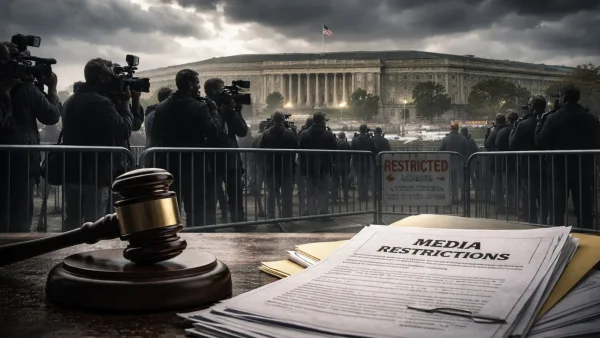
On May 19, 2026, the Times made its move, filing suit to challenge the escort-only policy for anyone from the press on Defence Department property. The question is whether the kind of restrictions put in place by Pete Hegseth can hold up to First Amendment scrutiny.
Charlie Stadtlander, a spokesman for the Times, doesn’t mince words about it. He sees the rule as a way to stifle accountability. “It’s an unconstitutional attempt by the Pentagon to keep us from reporting on our own,” he said. “People in this country are entitled to see how their government is being run and what the military is doing with their tax dollars.”
The rule at the centre of the dispute
You have to go back to March to understand where this is coming from. U.S. District Judge Paul L. Friedman had already nixed some of the earlier media limits, ruling they were an overreach against the Times and one of its reporters, Julian E. Barnes. But the Pentagon was quick to put in an interim measure, making sure no journalist was in the building without an escort. The judge didn’t like that either, and in the next month he said it was in defiance of his order.
Why a second lawsuit now
Still, the escorts are there because an appeals court has put a hold on part of the judge’s decision while the government makes its case. So the new suit is a way for the paper to put the issue front and center.
Here is where the dispute stands today:
– A December lawsuit challenged Hegseth’s new media rules
– In March, a judge struck down earlier restrictions
– The Pentagon then imposed an interim escort policy
– The judge later said that interim policy violated his order
– An appeals court stayed part of the ruling
– The escort mandate remains during the appeal
In the D.C. district court, the Times and Barnes are calling the escort mandate a ruse to “close the Pentagon to any news organization that won’t just parrot what officials want to hear.” They put it in their filing as “patently unconstitutional” and say it puts a chill on any kind of independent work in the nation’s military headquarters.
Pentagon defends its position
Sean Parnell of the Defence Department has a different take. On X, he called the lawsuit a ploy to “get their hands on classified information.” According to Parnell, the department is protecting secrets, not muzzling the press. “They want to be let loose in the halls of the Pentagon without an escort – a luxury you don’t get in any other federal building,” he wrote. “Our policy is lawful and meant to keep national security info from being put out there in a criminal way.”
How the policy took hold
All of this started in December when the administration, with Hegseth at the helm, re-did the rules. The Times sued then, too, on free speech and due process grounds. Some of the newsrooms, the Times included, would rather be outside the building than put up with the new terms for credentials. A new, approved press corps has taken their place inside.
A clash bigger than one newsroom
There’s a lot at play here. The Times will tell you the rule is a wall between the public and the kind of unsupervised contact that holds power to account. The Pentagon says it’s a no-nonsense security protocol.
What comes next
It’s a microcosm of the friction the paper says is growing between the media and the Trump White House. For now, with the appeal in the works, the escort rule is still the law of the land in the Pentagon. This new case is all about whether it can stand with the First Amendment or not. We’ll have to wait and see what the court has to say.