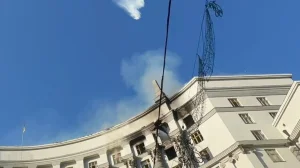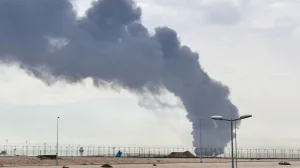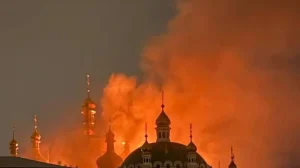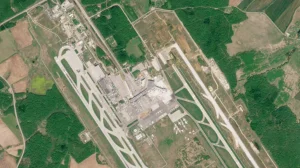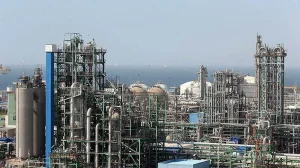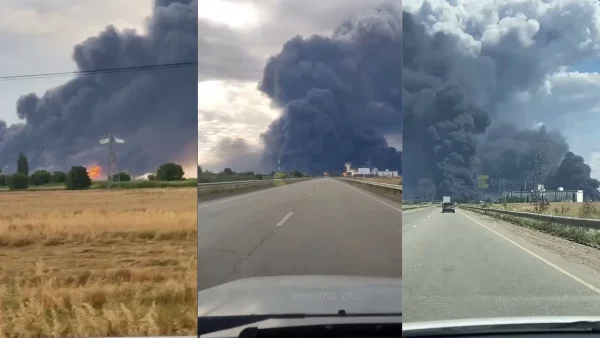
In an overnight operation, Ukraine made a play for Russia’s energy infrastructure, hitting two refineries and starting a deadly blaze at Slavyansk in the Krasnodar region. Kyiv is calling it a direct hit on the war machine in Moscow, something you can see in the fuel rationing and shortfalls in some parts of the country.
A fire at the Slavyansk-na-Kubani plant was put to rest by local officials in Krasnodar, who say one man is dead and another was hurt in a village not far off. Some of the video making the rounds on social media shows the scale of the fire, though we can’t vouch for it ourselves.
A strike on Russia’s war economy
“We picked these refineries in Krasnodar and Yaroslavl to make sure Russia can’t keep this war going,” said President Volodymyr Zelenskyy. He put it down to a matter of course: disrupting the kind of fuel and logistics Moscow’s military needs to function.
For months, Ukraine has been using long-range drones to get inside Russia. You don’t have to look hard to see the connection between these kinds of strikes and the fuel queues and rationing that have been showing up in the news from time to time.
Here is what we know from the night’s events:
– Two refineries in Krasnodar and Yaroslavl were the mark
– A fatal fire at the Slavyansk refinery
– Some roads near the way to Moscow are now restricted
Inside the overnight operation
Veniamin Kondratiev, the governor of the Krasnodar region, says a drone was responsible for the fire at the private Slavyansk refinery. He has confirmed a fatality and an injury in a village in the vicinity.
It is a 100,000-barrel-a-day operation, mostly for home use and some for export. By some reckonings, it is one of the big ones in Russia, churning out close to four million tonnes of crude a year.
Yaroslavl alert
Over in the Yaroslavl area, to the east of the capital, they also had a drone come in. They’ve put some temporary holds on road routes to Moscow, but as of now there is no word on any damage to a refinery in the region.
Claims and counters after the strikes
On Constitution Day, Zelenskyy was lauding the ‘accuracy’ of their work. He noted the Slavyansk target in Krasnodar was some 300 kilometres from the front, and then pointed to another one even further in. To be precise, he put the two at 300 and 700 kilometres from Ukrainian soil.
The Russian Defence Ministry claims to have put down 213 of Ukraine’s drones over the course of the night, from the Black and Azov seas to occupied Crimea. The Ukrainian Air Force has its own numbers: 142 drones and eight missiles from Russia, of which they say they shot down 125 and seven respectively.
Why these refineries matter now
In a wartime, a refinery is as good as a cash register and a fuel pump. Go after the ones feeding both the home front and foreign buyers and you force them to stop, re-route and deal with the headaches of moving military supplies.
There is a tangible toll from this kind of campaign, if you ask the people on the ground. The running tally of attacks has left some regions with less to go around, and you’ll find lines at the pump in more than one place in Russia.