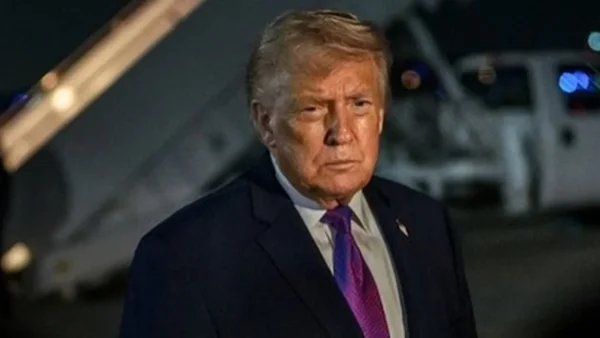
The U.S. President, Donald Trump, stated he would have U.S. troops attack Iran’s Kharg Island oil network if ships were still being attacked or held up in the Strait of Hormuz. Adding a really important issue of energy to a growing conflict, the threat also brings new doubt to world oil markets which were already having trouble with the chance of supply problems.
The warning and how important Kharg Island is
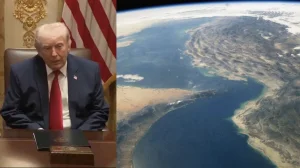
Trump has stated that U.S. forces had ‘completely destroyed’ military goals on Kharg Island, but didn’t go as far as to hit oil structures. He tied any further action to ‘Free and Safe Passage of Ships’ through the Strait of Hormuz, meaning that the oil port is on a short-term hold.
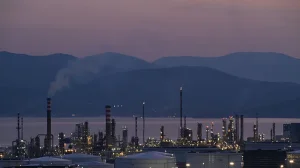
Around 90 percent of Iranian crude oil is sent out from Kharg Island. It has pipelines, places to store oil, and docks for very large oil tankers. Even a short stop to exports could cause problems for Iranian shipments and have an effect on the tanker market.
Though the island is about 300 miles northwest of the strait, it is key to how energy is routed in the area. For people who trade, refine, and ship oil, the very idea of U.S. attacks on oil property brings the chance of actual problems and increased risk costs.
What Tehran said and the risk of attacks on more oil property
Iran didn’t show it would give in. Its army warned that any attack on Iranian oil and energy sites would start attacks on property owned by oil companies that work with the United States in the area, Iranian news sources said.
Iranian news groups reported more than a dozen explosions on Kharg during the U.S. attacks. They said that air defenses, a naval base, and airport areas were hit, but oil property was not harmed. Because of the changing war situation, these reports could not be checked by people who aren’t involved.
Tehran also said it had shot down five drones in its air space, bringing to 114 the total number of U.S. and Israeli drones it says it has brought down during the war. This number shows a growing contest with drones and missiles on top of the energy supply crisis.
The messages from both capitals are direct. Trump said Iran could not defend against U.S. attacks and said on social media that Iran had ‘totally lost and wants a deal.’ Iranian officials have described the conflict as a continuing resistance, and promised to hit back at property in the area.
Conflict on many sides
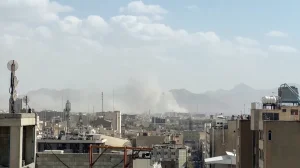
Fighting has spread well beyond the Gulf. A missile hit the U.S. embassy area in Baghdad, Iraqi security people said, with smoke seen going up from the area. Details were few as officials looked at the damage and who was responsible.
Iran’s Revolutionary Guard said it had carried out more attacks on Israel with Hezbollah forces in Lebanon. Israel’s army said its air force had hit more than 200 goals in western and central Iran over 24 hours, including missile launchers and defense systems.
More and more people are being hurt. Two weeks into the war, about 2,000 people are thought to have been killed – most in Iran, but also in Lebanon and parts of the Gulf. Millions have had to leave their homes. U.S. forces have had losses, including six crew members in a plane crash while refueling in western Iraq.
U.S. officials also said that five Air Force tankers at a base in Saudi Arabia had been damaged by an Iranian missile attack and were being fixed. These events show how quickly the conflict has become a contest in the area with difficult military and economic results.
The Strait of Hormuz choke point and changes in the market
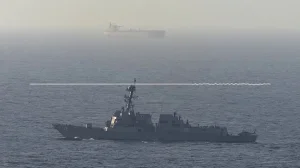
About 20 percent of the world’s fossil energy goes through the Strait of Hormuz. Iran’s Islamic Revolutionary Guard Corps has been trying to bother or stop ships going through the waterway, so the U.S. is getting ready to give naval protection to oil tankers. Trump stated the Navy would begin doing this ‘soon’.
Markets are nervous; oil prices have moved a lot, depending on what people think will happen with how long the fighting lasts and what state important plants are in. People who trade are looking at Kharg Island for any sign of harm to the pipes, loading areas, or storage tanks that could halt shipping.
Even with the danger, Iran has kept on sending out crude oil. Tanker-watching using pictures from satellites showed a number of very large oil carriers loading at Kharg in the last week. Iran’s sending out of oil, since the war began, was thought to be between 1.1 and 1.5 million barrels each day.
However, some other oil-making countries in the Gulf have, it is said, stopped sending shipments as a safety measure. This difference makes people focus on whether Kharg Island is working and what insurance is available for ships going into Gulf waters. Costs for war risk, ship rental, and when goods can be delivered are all changing.
For those who refine and trade oil, the main questions are if oil can keep flowing through Hormuz and if extra ability to make oil somewhere else can make up for any stops in supply. An attack on the oil network at Kharg Island would almost certainly push up prices, put pressure on how oil is supplied, and test plans that energy companies have in case of trouble.
What leaders are signalling and what diplomacy looks like
Iran’s new top leader, Mojtaba Khamenei, promised to keep the Strait of Hormuz closed and told countries near Iran to close U.S. bases or risk being attacked. This statement shows that Tehran wants to use this narrow sea route as a way to get what it wants and to stop attacks.
U.S. Defence Secretary Pete Hegseth said Khamenei had been hurt and probably badly disfigured, and questioned if he was able to lead. Iranian officials said he was hurt, but wasn’t ‘unable’ to do his job. No new pictures have been shown, so it isn’t clear how the leadership is doing or how steady things are.
Trump’s words show he thinks putting pressure on Iran is working, but he would not say when the war might end, only that it would go on ‘for as long as is needed’. He stressed wins on the battlefield, but left open the chance of more fighting to protect shipping routes.
These signals don’t leave much chance for a quick end to the fighting through talks. The U.S. has said it won’t allow trouble with safety at sea. Iran has tied its plan to putting pressure on in an uneven way – using groups in the area and threatening oil plants.
What to look for next in energy and safety
– Naval protection: How many ships are in the U.S. Navy missions to protect tankers, what the rules are for them, and which countries take part, will decide if tanker traffic goes back to normal or stays patchy.
– Kharg Island: Pictures from satellites, notices from port agents, and tracking of ships will show if loading goes on without stopping, or if there are delays. Any harm that can be seen to the piers or tanks would affect the market.
– Danger of getting back at: Iran’s warning about attacks on plants linked to oil companies that are with the U.S. makes the possessions of companies all over the Gulf more at risk. How safe loading areas and pipes are will be very important.
– Drones and missiles: How often attacks come across the border, how often they are stopped, and where bits of things that have been hit by them fall near oil plants will affect what insurance companies decide, what the costs are, and which routes ships take.
– Prices and shipping costs: Look at the difference between Brent and WTI oil, the time difference for getting oil quickly, and the daily cost of very large oil carriers. Big changes would show that there is less oil available and that the risk is higher.
– Talks: Any talks with a third party or secret contacts could slow down the fighting. If this doesn’t happen, markets will pay attention to what the military says and to changes in shipping that can be shown to be real.
The time to control both the war and the shock to energy is getting shorter. An attack on the oil network on Kharg Island would be a key moment, and could stop a very important route for Iranian oil and make world supply problems worse. At the moment, all sides are trying to get an edge at the point where safety at sea and energy markets meet, and the stakes could not be bigger.