The country’s summer driving season has run up against a supply shock. With drones making work of oil refineries, you see rationing, queues that can go on for hours and price hikes from one end of Russia to the other. The fuel squeeze is being felt in day-to-day living, and according to analysts, it won’t be over in the peak months unless the damage is done with and logistics can keep up.
Queues, rationing, and anger
You could find some form of fuel rationing in more than half of Russia’s regions by the end of June. Some places put a hard limit on every pump; in others, it was up to the chain to tell you how much you could put in your tank. Officials have put it down to hoarders and panic, and would have you only fill up when you have to.
Even in the capital, where you’d expect to be somewhat shielded from economic hiccups, there is no mistaking the frustration. One man in Moscow, after waiting his turn, put it plainly: ‘I think the situation is not very good.’ He was speaking a day after Putin’s comments on TV. ‘They say one thing on television, and in reality it’s another. … People are queueing everywhere.’
You can see the pressure in more than just the traffic. In Irkutsk, the mayor had to put out some portable toilets for the people standing in line at the stations. The city also hiked up public transport fares on Wednesday, with fuel costs as the reason. If you look at the videos online, you’ll see drivers having a word with an empty pump or a price board.
Putin has been candid about it. 'Problems persist for both motorists and businesses,’ he said, and ‘there are still queues at petrol stations, and finding the right grade of petrol isn’t always easy.’ But he made a point of calling the shortages ‘not critical’ and ‘temporary.’ The length of the lines would have you think otherwise.
How the strikes squeezed supply
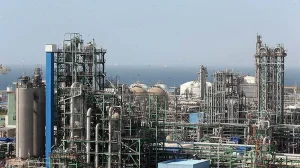
For Ukrainian officials, the drone campaign is a way to put the screws on Moscow’s war machine – to hamper its logistics, dull its edge and put the annexed Crimean Peninsula in a box. There have been well over 50 strikes since the end of March on everything from refineries to depots and terminals in Russia and Crimea.
A few of these have been hit time and again. Take the one in Tuapse on the Black Sea: it was struck four times in a little more than two weeks. That kind of repeated attention makes for more damage and a harder fix.
The numbers back it up. Gary Peach, who follows the oil markets, says Russia turned 3.95 million barrels of crude into fuel in June. That is 25% less than a year ago and the lowest we’ve seen in 20-odd years. Gasoline is down 17% to 850,000 barrels a day, from 1.03 million.
Chris Weafer, a consultant, puts the amount of refining capacity that is down at a third or so, going by what he’s heard from the industry and on the ground, since the refineries don’t put out many details. And it comes at an inopportune moment, with the harvest in full swing and demand for ag-fuel on the rise.
The figures that make for the crunch:
– 3.95 million barrels per day refined in June
– 25% year-on-year drop in refining
– 850,000 barrels a day of gasoline
– 1.03 million a day a year earlier
– 17% fall in gasoline output
– About a third of capacity offline
Moscow and St Petersburg targeted
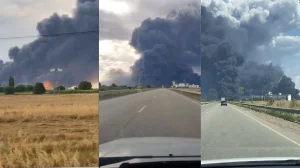
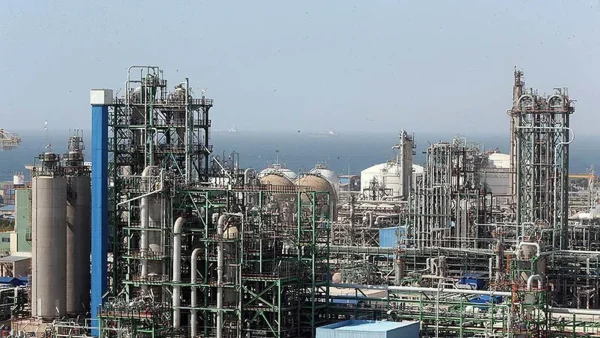
The big cities have had their share of it too. An oil terminal in St Petersburg was set alight on June 3rd, putting a dark cloud in the sky just as Putin was getting ready for his economic forum. Then on the 18th, a drone found the Moscow Oil Refinery on the outskirts of the capital and left greasy black spots in the neighbourhoods around it.
Those pictures have been all over the internet, even with the rules on publishing, and they do nothing for the image of normalcy. The plant in Moscow is key to the region’s fuel, and that weakness is at the heart of what the capital is short on now.
Ripple effects far from the frontline
The impact is being felt in Siberia, in parts of the country the drones haven’t even been to. Out in Omsk, a 40-litre (10.5-gallon) limit per car was a surprise to some. ‘Nothing was bombed here,’ said Viktor Shkurenko, a local business owner, ‘and we have the biggest oil refinery in Siberia.’ He called the cap ‘unexpected.’
He is worried about what it means for his side of things, but as of Saturday his company had been fine refuelling its vehicles. Still, that doesn’t put to rest the worry over how long this will go on.
Over in Zabayakalye, to the east of Lake Baikal, the papers are saying a garbage truck has put the brakes on and some bus lines are no longer running. Anything that needs to be on the road is at the mercy of an unreliable supply.
Pavel Kharitonenko, a politician in Irkutsk, has let the lines dictate his day. ‘I do not have the fuel, and I do not want to queue at gas stations,’ he says. The shortages are no joke, even with a Rosneft facility in the area.
And then there is Crimea, which has been a target for Kyiv for some time, and is in the same boat.
When the attacks came in the first part of the year, the authorities put in place by Moscow had no choice but to start rationing in May and, for a time, to put an end to civilian sales. Some of that has been allowed in Sevastopol since, but it’s a kind of normalcy that is as much on-again, off-again as it is steady.
What you are seeing from the top down
The Kremlin is making a move to calm the market while some at home are not happy about it. They have put a lid on the export of gasoline and jet fuel and have even mull over a ban on diesel. “We are in talks on imports,” said Dmitry Peskov, the Kremlin’s mouthpiece, calling it a way to head off any more panic at the pump.
In the regions, you will find caps being held or made stricter, with officials telling drivers to only put in what they need. There is a view among some that this is as much in the mind as it is in the tank; hoarders, they say, are running stations dry faster than they can be filled.
Putin puts it at 4% less in the tanks than we had last year. Weafer would have it that the fuel is there, it’s just not where the demand is. “You have good stockpiles in the country, but they’re in the wrong spot,” he said. The rub is in moving it over these kinds of distances in a hurry.
So you have a combination of hard controls and some emergency measures:
– No more sending out gas or aviation fuel
– A possible no-go on diesel
– Some back-and-forth with partners on imports
– Pleading with the public not to overreact
– Keeping a firm hand on regional limits
– Shifting inventory around
Then there is the matter of repairs and the rest of the summer
Fixing up a refinery after a hit is neither quick nor cheap. You have drones taking out the kind of equipment you can’t make here and have to buy from overseas, and with sanctions in place, that’s a problem. You can put a band-aid on it and get some of it going, but if you keep getting hit, you can’t put it right for good.
Peach says the operators can “make do and get it running,” but not at 100%. “This time the damage is so bad you won’t see us back to where we were in the winter by the time summer is out,” he warned. And some of the plants? He figures they aren’t worth the trouble until you have an armistice, for fear they’ll be put out of commission all over again.
The logistics are a headache of their own. “It’s not something you can do in a day in a country like Russia,” Weafer said. “There is enough, but it is a massive operation to get it from one side to the other in a few weeks.”
Around the capital, things are tight. The Moscow Oil Refinery was putting out 40% of what the city and its environs needed. Weafer says it will be three months before it is back in shape, which is why you see the lines.
Barring any more hits, Weafer expects the shortages to run “probably all through the summer,” when you have the farms and such running up their bills. Even in a best case, you are juggling for a while.
On paper, the message from the top is one of control. Putin says it is “not critical” and Peskov hails the import plans as a stabiliser. But then you have the black smoke and the empty nozzles, and that does nothing for the public’s trust.
From Kyiv’s point of view, the strikes are meant to make the war more expensive for Russia and take some of the wind out of their sails on the front. Inside Russia, the effect is plain to see in the form of queues and cutbacks.
For the average person, it is a question of how many hours you can afford to stand in line. For a business, it is the uncertainty of whether you can make a delivery or staff up. For the city, it is a hassle from the garbage truck to the bus.
Where we go from here comes down to a few things: how well the repairs are done, whether the Ukrainian strikes hold, and if the state can be nimble with the fuel. One more hit on a hub and you can bet on more rationing.
If the bleeding stops and they can move product, the lines in the worst areas may thin out. But don’t be fooled: at 850,000 barrels a day, you are still a long way from the 1.03 million you were a year ago.
All in all, it is a tenuous summer. The numbers don’t lie: you are 25% down on refining, with a third of your capacity in the red. Every new strike makes the fix harder.
And so the Kremlin’s talking points run up against what is happening on the street. People’s patience will be tested by how fast the pumps are full. For a lot of folks, the war is no longer a map in the distance; it is the light on your dashboard and the wait in front of you.
Stabilise the supply if you can, but the episode has shown you where the weak spots are. The energy is there, as Putin would have you believe, but the bottleneck is in the processing and the delivery. That is where the fight is this summer.