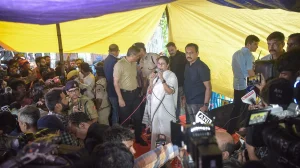
On Monday, the Chief Election Commissioner, Gyanesh Kumar, got a very clear protest when he went to the Kalighat Temple in south Kolkata. People there waved black flags and yelled ‘go back’. Police stepped in, got the situation under control, and let Kumar finish his visit, as worry rose before the state elections.
Protests at Kalighat Temple
When Kumar arrived to pray at the Kalighat Temple with West Bengal’s Chief Electoral Officer, a number of protesters had already collected outside. They showed black flags and called out ‘Gyanesh Kumar Go Back’, saying that the Election Commission had done things connected to the recent voter roll revision.
Police at the place quickly worked to keep Kumar’s group separate from the protesters and to give clear access to the temple. People in government said the problem had been dealt with and didn’t get worse, and Kumar said a few words asking for good luck for West Bengal after leaving the temple.
Demonstrations at Airport and VIP Road During Arrival
The protests had begun the night before, when Kumar got to Kolkata. As his cars left the airport, people working for the party in power shouted ‘go back’ and showed black flags along the road. Similar things happened in the Kaikhali area on VIP Road.
Also, people active in Left parties protested outside the airport, adding to the tension. Police said they’d acted strongly and on time, and that enough security was set up for the three-day visit by the Election Commission’s whole group.
What the Election Commission Visit Was For
Kumar came to the state with Election Commissioners S. S. Sandhu and Vivek Joshi to check on election readiness before likely dates for the state assembly election. The group is planning to talk to national and state parties officially recognised to hear what they are worried about and what they suggest about how the election should be run.
People in government said the check would include talks with people in charge of law enforcement, senior police and government people, and people working at the polling place level. Topics would be law and order, plans for where to put people, and how different agencies would work together as the election got closer.
The Problem of the Special Intensive Revision (SIR)]
The protests are very closely linked to the Special Intensive Revision, or SIR, which has been going on since November. Official numbers show that over half a million names were taken off the lists after requests using Form 7, and almost six million cases are still being looked at, making voters worried.
Leaders of the party in power have said the Election Commission had wrongly taken correct voters off the lists – something that has caused the public to protest. People in the Election Commission say the process follows the law and stress that many cases are still to be checked.
Security, Talks, and What’s Next
People in authority say the security for the CEC’s three-day visit is strong. The full group will have detailed talks with parties in politics, people in charge of law enforcement, and the state’s election structure to finish the law and order and deployment plans for the election.
On the last day, the group will talk to the state’s Chief Electoral Officer and the CAPF person in charge, talk with people working at the polling place, and have a press conference before leaving. Kumar has said people in a democracy have the right to protest, and that plans for the election will be decided in the talks planned.
Wider Effects for Running Elections
What happened shows the tension between the Election Commission and people in politics during a sensitive time of changing voter lists. Clear speaking, open checking of voter lists, and well-planned security will be key to making public worry calm and making sure people can vote in a way that can be trusted.
As the Commission goes on with its check and talks, people in authority face the double job of protecting people in government and keeping voters’ trust in election processes before one of the country’s most closely watched state elections.