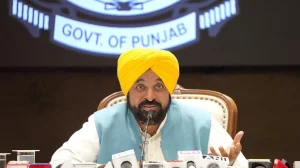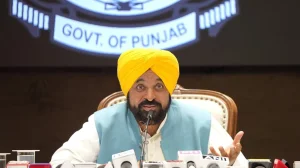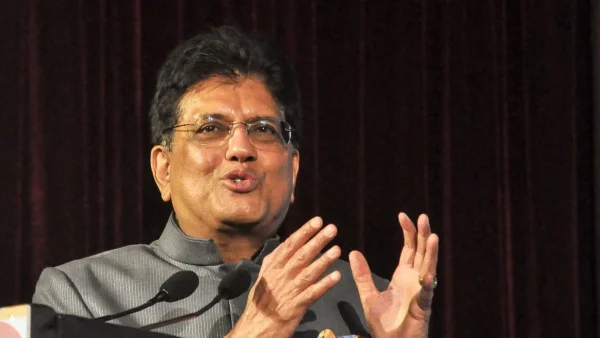
On April 10, 2026, Bhagwant Mann met with Pralhad Joshi, who is the Union Minister for Food and Public Distribution, in New Delhi. He urgently asked for help with Punjab's system for buying grain. He wanted the grain to be taken away from the farms more quickly, the 9,000 crore rupees from the Rural Development Fund to be given to Punjab, the interest rates on Cash Credit Limits (CCL) to be lowered, and farmers who lost money because of unexpected rain to be paid.
Grain Movement and Storage Dominate the Agenda
The main issue discussed was a lack of storage space which, according to Mann, could cause problems with the Rabi Marketing Season in 2026-27. Punjab already has 180.88 Lakh Metric Tonnes (LMT) of food grains in its covered storage buildings, which is almost the state’s total covered storage capacity of about 183 LMT.
There is almost no space left for new rice (0.50 LMT) and wheat (1.75 LMT) in covered areas. Punjab expects to buy 130-132 LMT of wheat this year, and if the old grain isn’t moved quickly, the markets and warehouses will be overwhelmed.
Mann warned that 8.71 LMT of wheat from last year is already being stored in the open, and if this isn’t moved soon, up to 40 LMT could end up in bad conditions. This would create problems with the quality of the grain, how it’s moved, and how much it costs, for both the state and the groups that need to store it properly.
Special Trains, Higher Off-Take Targets, and PMGKAY Levers
To solve the storage problem, the central government has said it will run extra trains to take 155 LMT of grain from Punjab. Mann also asked for the amount of grain moved from the state each month to be increased; recently, about 5 LMT of both wheat and rice have been moved each month.
Mann requested at least 12 LMT of wheat and 12 LMT of rice to be moved out of the state every month. He says that moving more grain would create space before the biggest harvest time, help the markets run smoothly, and stop farmers from being forced to sell quickly because they need money.
He also suggested another option for when moving the grain is difficult: giving out more food under the Pradhan Mantri Garib Kalyan Anna Yojana (like they did during the pandemic). This, he said, would move grain from the Food Corporation of India (FCI) more quickly and also help families struggling with rising prices because of problems around the world.
Moving the grain faster would also help milling businesses finish dealing with leftover paddy (unmilled rice) from the 2025-26 Kharif Marketing Season. All of this, Mann believes, would mean the state is in a much better position when the new wheat starts arriving in large amounts.
Rs 9,000 Crore Rural Development Fund: The Infrastructure Squeeze
Aside from the immediate problem of moving grain, the Chief Minister urged the Union Minister to give approximately 9,000 crore rupees that is still owed to the Rural Development Fund. He directly connected these funds to improvements to roads and other things in rural areas, and particularly to the roads leading to and inside the markets (mandis) and the final transport of the grain.
Mann said that the previous state government was accused of misusing these funds and that the Supreme Court is now looking into it. However, he said that waiting for the court case to finish is damaging the rural infrastructure that’s needed to get crops from the fields to the markets and then to be stored nationally.
He suggested a practical way to start the funding again: giving it in installments, carefully monitoring how it’s spent, and making sure the money is only used for improvements to the roads and markets. He argues this would quickly benefit the public without affecting the court case.
Secretary-Level Mechanism and Next Steps
Mann said Joshi was agreeable and suggested having a group of Secretaries get together to deal with the money that’s still owed and to make decisions more easily. If this group meets quickly, it could resolve concerns about audits, update the amounts things are expected to cost, and clearly state the requirements for getting the Rural Development Fund money.
This group could also work with the Union Finance Ministry and banks on the financial issues related to buying the crops, which have been causing cash flow problems in the state. Mann indicated that a fast response would be very important in the next few weeks as the harvest begins.
Procurement Finance: The Interest-Rate Mismatch
Mann also pointed out the difference in cost for the Cash Credit Limit (used to pay for buying crops). The group of banks led by the State Bank of India is charging an interest rate that is 0.5 percent higher than the rate the FCI pays when it gets its money back, and the interest is added to the amount owed each month. The central government’ and its initial cost estimates for reimbursing the state only allow for simple interest, at the Food Corporation of India’s rate. According to Mann, this difference is costing Punjab around 500 crore rupees each harvest time, putting a strain on the state’s funds and the agencies buying the grain. He wants the state to be treated the same as the banks (regarding interest) or to be able to calculate interest monthly (compounding) as the banks do with the cash credit limit. He believes if the costs of financing are in line with reimbursements, the state will manage its money better and it will be cheaper to hold onto the stock.
Arhtiyas and Mandi Labor: Commission, EPF Deductions, and Cash Flow
Mann also brought up problems with how the people and workers who run the markets (mandis) are structured. The commission for arhtiyas (commission agents) hasn’t changed much; it was 45.88 rupees per quintal of paddy in 2020-21 and 46.00 rupees per quintal of wheat in 2021-22. The central government has only just announced a small increase to 50.61 for paddy and 50.75 for wheat from 2026-27. Arhtiyas, however, are still asking for a commission of 2.5% of the Minimum Support Price as stated in Punjab’s Agricultural Produce Markets Act and related rules. Mann requested the central government reconsider the small increase, saying it isn’t enough to cover expenses. He said arhtiyas are crucial to the grain buying process, because they have the money to pay farmers quickly and keep the mandis running smoothly.
Regarding payments to laborers, the Food Corporation of India has been holding back 30% of the labor costs at the mandis each harvest because of problems with Employee Provident Fund issues. This is about 50 crore rupees that the arhtiyas say they are owed. Mann wants this money released immediately, with a written promise (affidavit) that the money will be covered if needed; he points out the state’s agencies already do this to make sure bills are paid, but without delaying the payments.
Farmer Compensation and Punjab’s National Role
The Chief Minister also asked for extra money for farmers whose crops were ruined by rain at the wrong time. He said when the weather destroys a harvest, quick financial help is vital to protect family incomes and to make sure farmers will plant crops next season.
Mann emphasized how much Punjab does for the country’s food supply, stating Punjab’s farmers reliably provide a huge amount of wheat and rice to the central government’s reserves. He said if anything goes wrong at any point in Punjab, it will affect the entire country’s system.
Mann shared details of the meeting on X (formerly Twitter), and said the Union Minister gave a good response to all of his points. He said these problems are all related: moving the grain faster makes it easier to store, lower interest costs ease the financial problems of the state, and getting people paid allows for the roads and mandis that make the whole system work to be funded.
What Timely Decisions Would Mean for RMS 2026-27
If special trains move grain quickly and the amount of grain moved each month gets closer to tthe goal of 12 lakh metric tonnes for each grain, Punjab’s storage buildings (godowns) will start to empty. This will create space for new grain, reduce how much is stored in the open, and help keep the quality of the grain good during the rainy season.
A definite plan for when the Rural Development Fund money will be released will allow for repairs and improvements to the roads leading to the mandis before the busiest time for transporting grain. Along with lower interest rates on the cash credit limit, the agencies buying the grain could pay farmers more quickly, reduce the cost of keeping the grain, and move it more efficiently to people who get benefits and to mills.
Fixing the arhtiyas’ commissions and the deductions for the Employee Provident Fund will also smooth out the payment process. Having money available for the agents and laborers isn’t a minor issue; it’s how quickly the grain is weighed, put on trucks, transported, and recorded in the accounts.
Outlook: Coordination, Speed, and Measurable Relief
The meeting showed a practical way forward, based on speeding up the movement of grain, aligning the financial side of things, and giving relief to those involved. Committing to the special trains is a start. A group of Secretaries to resolve outstanding payments and problems with the cost sheets could turn the positive attitude into real results.
Because wheat is now arriving in large quantities, time is short. How successful things are will be measured by how much grain is moved each month, how quickly money gets to road projects, how reliably farmers are paid, and if workers and agents get the money that has been held back.
All of these changes will build on each other to help the economy of rural Punjab. For the country’s food security, a Punjab system for buying grain that isn’t blocked up means less risk of the grain being damaged in storage, a more steady supply for welfare programs, and easier distribution when inflation or problems around the world put the system to the test.
Mann was direct but focused on solutions when he was in Delhi: pay what is owed, make the financial rules match what’s happening in reality, and move the grain as quickly as the season requires. Joshi, the Union Minister, said he would carefully look at the situation, and has already taken some concrete steps, like the special trains. This now opens the way for decisions that can make the mandis stable and help farmers when they need it most.