Russia’s primary gun manufacturer has revealed these new 5.45mm bullets are meant to help soldiers shoot down small drones in the air. The company says the bullets break into pieces during their flight to improve the chances of hitting these small, quick unmanned aerial vehicles. They plan to make a lot of these bullets for use in the standard rifles soldiers already have.
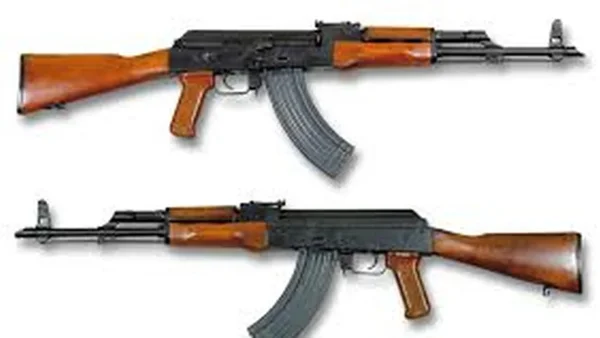
Kalashnikov Concern says the bullets fit into the 30-round magazine for the AK-12 assault rifle. Because the bullets are “multi-element”, they send out fragments over a bigger area. Tests included drones that were hovering and moving, and the bullets were fired one at a time, and in short bursts, to test in different situations.
This development is a part of a bigger move to provide better anti-drone tools to the small groups of soldiers in the field. Small, inexpensive, and even homemade drones are now very common in today’s wars, so soldiers quickly need ways to defend against them that are cheap to make, easy to carry, and can be used while under attack.
The new 5.45mm anti-drone rounds
Kalashnikov Concern is presenting these bullets as a realistic way to take down small drones that are difficult to hit. By splitting up in the air, a single bullet covers a larger space, so it’s more likely to hit the drone, and it doesn’t require perfectly aiming. They’re designed for normal fighting distances and can be used with the rifles and magazines soldiers already have.
However, this idea isn’t unique to Russia. Ukrainian soldiers are making 5.56mm anti-drone bullets nicknamed “Horoshok” (Little Pea) that split into pieces after travelling a certain distance. Ukrainian leaders have set very high goals for how many of these rounds they want to produce each month, so they can get a large number to the troops at the front lines.
Ballistics and fragmentation mechanism
These fragmenting anti-drone bullets use small, pre-made pellets or a single piece that separates at a specific point. When they break up is important. If they break up too soon, they lose speed and aren’t as accurate, and if they break up too late, the spread of the fragments is too small. The people who design them must find the right balance of distance, how far the pieces spread out, and how much force the pieces have when they hit, in order to best stop the drone.
These bullets are most effective against small drones with multiple rotors, and light, fixed-wing drones, which only need a few hits to stop working. They can be fired in quick bursts to make it more likely to hit moving targets. The downside is they don’t have as much power to penetrate a single target, and it can be hard to predict where the pieces will go in different weather conditions.
Parallel efforts in Ukraine and the West
The United States Navy research center has been looking into a “drone-killer cartridge” that also breaks into multiple pieces, and companies in Europe and North America are working on similar split-fragment rifle rounds and munitions that explode in the air, designed to destroy one-way attack drones.
Larger defenses are also showing up, such as rockets that explode in the air and are filled with steel pellets to destroy kamikaze drones. These systems show a need for a layered defense: soldiers can use handheld and rifle solutions for drones close by, and larger munitions for destroying many drones that are further away.
Field improvisations and tactics
In actual fighting, soldiers have come up with their own solutions, adding steel pellets to the ammunition they have, or using shotguns against drones that are flown as if someone is playing a video game. This happened in part because drones with a fiber-optic cable can’t be blocked with electronic jamming, so troops have to use physical defenses.
Fragmenting rifle rounds are an attempt to make and standardize this ability, giving an anti-drone option to a group of soldiers in the field. Whether or not they’re used will depend on how many are made, how much each round costs, and how well they work with the training soldiers already have and the rules about when they’re allowed to be used.
Strategic and policy implications
The development of specialized anti-drone bullets shows how drones are changing what’s most important in battle. Governments and companies are investing in quick, widespread defenses, which may change the cost relationship between drones used for attack and the munitions used to defend against them. This situation raises questions about what to buy, what is legal, and how safe it is for the military and those making the rules.
As more and more countries start using fragmenting anti-drone bullets, we can expect to see continuing improvements in bullet design, sensors, and tactics. These changes show how quickly people are adapting to this new kind of threat, and a more general move towards defenses that are available to individuals, can be carried easily, and are designed to work against small unmanned aerial systems.