The court said that when the goal is to offset inflation, the DA for people who are working and the DR for those who are retired must go up by the same amount. This was a very important ruling.
Supreme Court Bars Differential DA and DR Increases
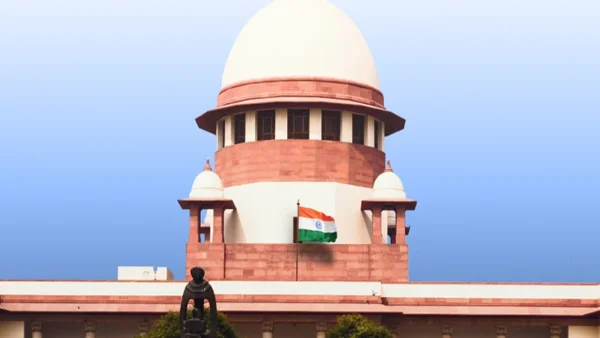
Justices Manoj Misra and Prasanna B Varale dismissed appeals from the State of Kerala and the Kerala State Road Transport Corporation (KSRTC). Essentially, the court agreed with a previous decision by a two-judge panel from the Kerala High Court, which had been in favor of the retired workers on the issue of adjusting for inflation.
This whole thing began with an order from Kerala in t 2021. They increased the DA for KSRTC employees by 14%, but only raised the DR for pensioners by 11%. Those who had retired complained that this difference was unfair and random.
Inflation Hits With Equal Force, Says Bench
The court said that inflation impacts both people who are still working and pensioners in the same way. And, because both DA and DR are meant to help with rising prices, they have the same goal and shouldn’t be adjusted by different amounts just because of whether or not someone is employed.
The court didn’t question whether pensioners were entitled to their pension and DR, and that these should be updated as inflation changes. The problem was the different rates being applied to the same inflation-related benefit.
Article 14 and the Twin Test for Classification
The court, using Article 14 of the Constitution as its basis, repeated that treating people equally is the opposite of being arbitrary. Justice Misra put it this way: “Equality is a constantly evolving idea… equality and arbitrariness are complete opposites; one is part of a system of laws… the other is based on the changeable desires of a king with complete power.”
The ruling also brought up the “two-part test” for making reasonable distinctions. First, any distinction must be understandable and have a real difference. Second, that difference must have a sensible connection to the goal of the law or policy. Kerala failed on both counts with the split between DA and DR.
When allowances are for the same thing and are tied to inflation, there’s no sensible reason to treat workers and pensioners differently. The court said the different increases were unfair, arbitrary and broke Article 14.
Financial Constraints Are Not a License for Discrimination
The Justices did say that if a government is having money problems, they can delay payments or have benefits start on different dates. However, once a state decides to give and increase inflation-related allowances, they can’t give current employees a higher increase than retired employees.
This detail is important for the government’s finances. The ruling doesn’t stop the government from managing when money is paid out. It does stop them from giving different inflation protection percentages to two groups of people who are both being hurt by rising prices.
What the Decision Means for States, PSUs, and Retirees
This ruling isn’t just for Kerala and KSRTC. States, PSUs and other organizations that set different DA and DR increase rates will probably have to change their policies to make them the same. When increases are linked to how much prices are going up, we’ll likely see a standard percentage increase for both DA and DR.
For pensioners, this ruling strengthens their right to be treated fairly in relation to wages and pensions. They can expect their inflation protection to be the same as workers whenever the government adjusts cost-of-living allowances.
Current workers also get a clearer understanding from this ruling. It clearly distinguishes between arguments about being entitled to something and deciding on the rate of inflation-related benefits. It limits the chance for unfair differences in how pay and pensions work.
DA vs DR: Purpose and Policy Linkages
Dearness Allowance (DA) is a cost-of-living adjustment for employees who are currently working. Dearness Relief (DR) adjusts pensions to keep up with inflation for people who have retired. Both are usually changed based on price indexes. Because they both aim to cancel out inflation, the courts look at them in the same way when considering the Constitution.
The Supreme Court highlighted this common purpose. When inflation doesn’t favor anyone, the government can’t either, or at least not by giving DA and DR different increase rates.
Compliance Checklist for Policymakers
Here are some things to do now:
Check recent DA and DR orders to make sure the percentage increases are the same when inflation justifies it.
If there aren’t enough funds, think about using different start dates for the increases instead of different amounts.
Write down the inflation index and how it was used for the changes to be more open about the process.
Key Takeaway
Have the legal department look over personnel and pension policies to make sure they follow Article 14.