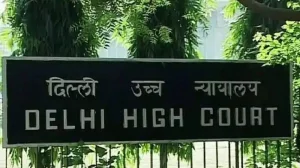
The High Court of Delhi on 8th April denied relief to accused-mediator Christian Michel James who was requesting bail in the concern of AgustaWestland VVIP chopper-scam case. Judgment was delivered by Justice Navin Chawla and Justice Ravinder Dudeja, who opined that no merit was found in the petitioner’s initial application. Full copy of the order is awaited by the Court.
Result of the Case and Immediate Implications
The high court dismissed James’ challenge to the refusal under Section 436A Cr. P. C. order of August 2015, and said it was devoid of any substance and rendered no relief Accordingly, although the petition lacked substance in view of the procedural safeguards afforded in those proceedings, dismissal did attribute to the expected inherent power under Section 482 Cr. P. C.
The bench said that the appellant wanted to guarantee the release of Mr. James, whose passport had expired, provided that he fulfills all other conditions. They said that the revised passport should be deposited with the trial court just as soon as it was renewed. Instructions were given to the Foreigners Regional Registration Office to ensure that Mr. James would not leave the territory.
Extradition and Treaty Objection Raised by James
James contended that Article 17 of the India-United Arab Emirates Extradition Treaty of 1999, which allows the prosecution of offences connected with the extradited offence, stands in violation of natural justice. He argued that an extradited person should only face trial for the specific matter that has been included in the request for his extradition and should not be tried for a number of related matters. The contents of the argument were dismissed by this court.
The petitioner contended that, by December 4, 2025, he completed seven years of remission in police custody and consequently exceeded the maximum sentence for the offences in the extradition. The court ruled out that line of reasoning for his immediate release, considering pending investigations and multiple charges filed by the enforcement agencies.
Bail franchise and coffin tying James’ custody
In February 2025, James was granted bail “by the Supreme Court” in the CBI case, whereas in March 2025, in the case by “Enforcement Directorate” by the High Court. James remains behind bars because he has not been able to fulfill the long list of assurances laid down by a learned court. A trial court put a personal bond of Rs 5 lakh and a surety deposit of Rs 5 lakh in the CBI matter.
In-matter Interim Order of the ED case, litigates of High court ordered the 5 lakh INR personal bond and 10 lakh INR surety in freshest cash deposit. His detention is visibly waging due to those onerous financial sureties and legal prerequisites despite the mere interim bail. His counsels grounded their claim on jurisdictional procedures under the law and extradition treaties, although the court, following in their respect due respect, did not look to hold substantial ground resembling any overture of expediency.
Allegations made by investigating agencies and other accused
On the charge sheet of the CBI, the conceptual loss stated by the investigating agency is INR 398.21 million in a deal of 556.26 million euro executed for chopper acquisition for the government in 2010. The ED stated, through a charge sheet of 2016, that Sarkozy was accused of taking 30 million euro in kickbacks from the company.
James, along with two other men named Guido Haschke and Carlo Gerosa, has been charged with “middlemen” and his hand is fully related to financial transactions. Continuing on the financial trail in the case is the ED and, besides this, retains “working of the middlemen along with the alleged kickbacks.”
Implications of decision on law and policy
The decision by the court not to regard the challenge to the treaty is a further vindication of the extraditability reached under such agreements for offenses that are inter-linked. It may enjoy the benefit of being the law of the land on future confirmation by higher courts or any agreement of the parties. Therefore, the hue and cry of future extraditions would make the group(s) attempting to evade extradition weaker.
The case brings into focus the clash between immigration legislation and international criminal matters, particularly in international high-value corruption cases. At the same time, bail conditions and pecuniary sureties are necessary arguments about freedoms. Bail conditions and guarantees serve in the positioning of an individual legally; however, this decision would hold that liberty, under court conditions, may represent a contained liberty.
The grant of his bail now will broadcast the legal proceeding on to be up for a long trial before the CBI and the ED. The argument concerning article 17 of the Constitution vis-a-vis the custody issue will reappear on appeal; currently James remains in custody as trial proceeds and until evidence is arranged and formal charges are pressed.