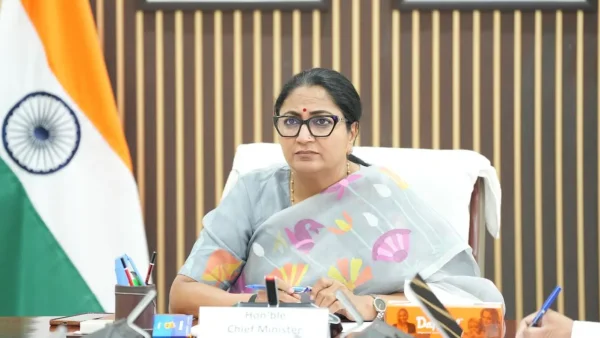
On June 12, 2026, Delhi CM Rekha Gupta put a point to it: the city’s quick turn-around is evidence of the 12-year model the prime minister has put in place. She was lauding a form of centre-state coordination that doesn’t just put up concrete but also delivers on the welfare front. Harsh Malhotra, president of the Delhi BJP, put it in historical terms, suggesting you have only to look at the past to see what is possible down the line.
Why the applause now: looking back 12 years
Gupta didn’t so much talk about milestones as she did about the kind of drive you need to make progress. “India hasn’t just grown in the last 12 years,” she put it. “We have had some changes in our course and our pace.” For her, it is all about following through with some discipline in areas like transport, health and sanitation.
The point was made plain: when the federal government has your back, you can move faster and put some programmes on a firm footing. “Twelve years will tell you,” said Gupta. “If you have the will and the focus, you can do some big things.” In Delhi’s case, you can see it in the way the city is connected and the services on offer.
A test run for how the centre and state can coordinate
Then there are the central initiatives like Amrit 2.0 and PM-Uday, which Gupta says have put a new face on the city and made for better living. The kind of give-and-take between the two sides of the table has modernised parts of town that were otherwise left to be.
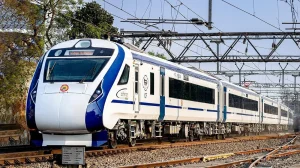
Transport is where you see it most. The metro has made getting around a lot less of a chore, and the R.K. Ashram Marg to Indraprastha line should take some of the pressure off in the middle of town. And you have places like Bharat Mandapam or the Pragati Maidan corridor, which are as much about putting on an event as they are about access.
Out in the field: where you can spot the difference
It is not just in the heart of the city. The Namo Bharat Corridor is making for easier commutes in the outer ring, and the expressways are tying up the residential areas with the rest of the region. Malhotra will tell you the Delhi-Mumbai, Dwarka and Eastern Peripheral Expressways are what you might call force multipliers for mobility.
Down in the colonies, PM-Uday is being seen as a way to bring some order to the unauthorised ones. Gupta also makes a connection between the federal effort and a cleaner environment – better air, more sensible waste disposal – which in turn means a higher quality of life even as you get where you’re going in less time.
In short, the leaders would have you note the following:
– You can deliver on a city scale when you coordinate
– New links close the distance between regions
– We have turned welfare into a way of life
– Public spaces are being made safer and more presentable
When a scheme becomes a livelihood
For Gupta, it is about how far the net is cast. She points to the millions in Delhi who have put their hands on some help via PM-Uday, PM SVANidhi or Ujjwala, while Ayushman Bharat and the skill training side of things have put a floor under them.
It is meant to be for those with limited means, but with an eye on independence. A street vendor gets some capital; a young person is given the tools to put in for a job. “We don’t want to be in the business of temporary fixes,” she says. “We want to put families in a position where they can make a go of it.”
Health and sanitation in the everyday
Healthcare is no longer something you have to make a special trip for. The Arogya Mandirs are there as proper clinics for when you need to be seen. With new facilities coming up, the gap between a problem and its solution is a lot shorter.
But you can’t have one without the other. The sewers, the waste, the clean energy, the buses – this is the underpinning of the city. Gupta says if you put it all together, you have something the rest of the country is starting to take note of.
Where we are headed, according to Malhotra
Malhotra sees the last 12 years as a time of governance with the public and the nation in mind. “It is a source of pride,” he says, and with good reason. “Modi is one of the few to have held the office for this long.” To him, that is a sign of the trust that will inform what comes next.
He is pointing to everything from digitalisation and defence to the arts, and the way India is standing up on the world stage. He puts a lot of stock in the security and modernisation efforts that have put us in a better light internationally.
Gupta makes the link to the local level, in manufacturing and in the push for self-reliance. What you have is a plan with some teeth to it – clear timelines, no stalling, and the ability to put a programme in place and let it run.
The message for the rest of urban India
This isn’t just a list of what has been built. It is a way of doing things: you take what the Centre can put on the table and you execute it on the ground. They would argue you can copy this, especially when you have to juggle transport and welfare at the same time.
To keep the ball rolling, Malhotra has put forward a campaign to put the 12-year record in front of the public. As for Gupta, she says the work with the Centre is ongoing, with an eye on development that is as steady as it is for everyone.