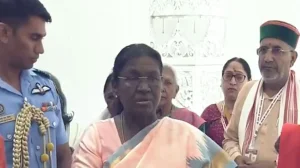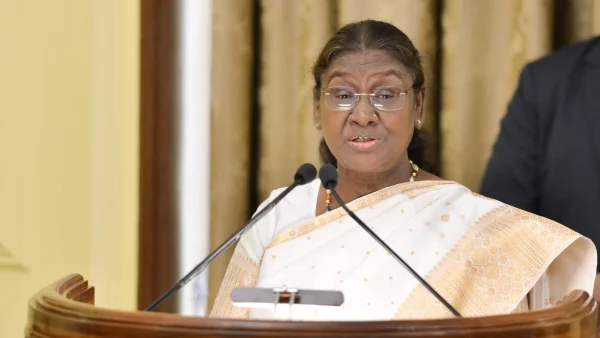
It was a no-nonsense appeal from Rashtrapati Bhavan in New Delhi on June 2, 2026. The President told young Indians to put their trust in education and tech if they are to put together an India that is strong and self-reliant, with a special eye on the students hailing from tribal areas.
She was speaking to those who have been given the Ministry of Tribal Affairs’ top-tier scholarships. To her, these aren’t just handouts; they are what you build your ambitions on. She left no room for doubt: it is up to mentors and the like to see that the opportunities on offer actually amount to something for those who haven’t had much in the way of resources.
Why the message matters for campuses
Murmu put it plainly: education is what makes you capable and aware. Citing her own path as proof of how it can turn things around, she suggested colleges should be doing more than just writing a check – they need to offer the kind of mentoring and tech access that really makes a difference.
Then there is the matter of progress. For the President, it only works when you are pulling others up with you. You see this in the form of peer groups, or in making sure you have a connection with the outlying communities a school is supposed to be serving.
What the President told scholarship recipients
The youth are where the nation’s hope and future lie, she said. If you take pride in where you come from and add in some modern skills, you have the makings of a very good India. It is about marrying your roots with what you can do today.
Especially for the tribal community, she made a point of them not to forget their people. We are on a course to become a Viksit Bharat by 2047, and the onus is on the younger generation to help us get there.
Scholarships as catalysts, not cheques
Don’t think of these schemes as simple financial aid, was the tenor of the President’s words. They are what let a talented kid with few options put some wings on his or her dreams and walk through a door that would otherwise be closed.
You won’t find a shortage of talent in this country. Put a student from a village or a remote part of the country on a proper platform and give them some support, and they will do the country proud. That is for the administrators to figure out: how to put the structure in place so that potential is not wasted.
Implications for tribal institutions
The Government is at it with one scheme or another to put tribal youth in a better position. What that means for an institution is to have a support system in place – the kind of wraparound care that goes with the tuition money, be it in the form of a mentor or some new digital tool.
There is also the cultural side to it. When you have programmes that put local traditions on display and keep in touch with old students, you are giving the current ones a bit of confidence to stand on their own once they leave.
What schools and students can do next
If you want to put some of what the President has said into practice, here is where to start:
– Make a link between the scholarship and a skill lab or an apprenticeship
– Have a faculty member on hand for a first-generation student
– See to it that those in the field have the devices and content they need
– Put some of the local colour into your events and work
– Keep an eye on results and do more of what is working
In front of the scholars, the President made a point: let your story be an example to a child who has to make do with less but still has big ideas. You can’t have real development unless you are bringing everyone along for the ride.
So for the schools and the rest of us, there is some work to be done. A student can make a mark in any line of work. All we have to do as an institution is to set the stage and give them the backing to be the ones who steer us to 2047.