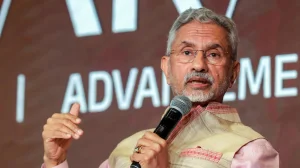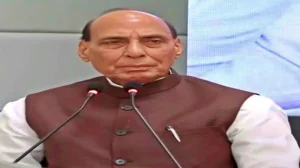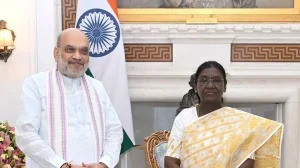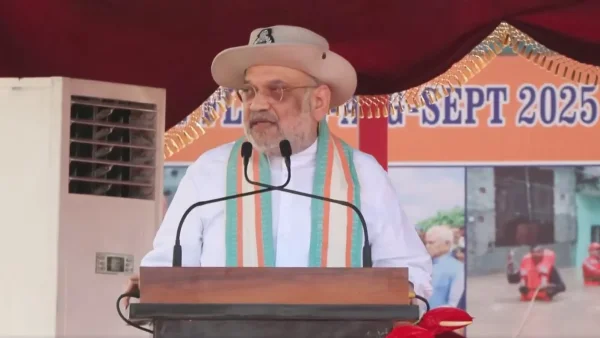
The home minister described the problem as one without borders. It’s not just a matter of policing, he said. “Narcotics do lasting damage to the body, they eat away at social order and they put money in the pockets of terrorists and the parallel economy,” he told the room. He wants countries to see this as a security issue we all have to face together, or else our children will be the ones to foot the bill.
What unified action would require
You can’t take on an integrated supply chain with a patchwork of policies, Shah contended. With 8 billion people and 250,000 kilometres of border to police, there is too much for traffickers to run with when rules don’t match up. He sees the way some substances are classified and the penalties handed down as open doors for cartels to work their way through. What we need is consistency, from the law books to the extradition process.
Here is how he said nations should move in lockstep:
– Establish uniform laws and definitions
– Standardise punishments for trafficking
– Enable extradition of drug kingpins
– Share intelligence in real time
– Conduct coordinated cross-border operations
Cross-border operations at the core
But statutes are only half of it; you also need the information to back them up. He made a play for real-time intelligence so you can spot a consignment on its way and put a kingpin in a cell before he can slip into some jurisdictional no-man’s-land. To the foreign envoys present, his message was that if you want to cut off the lifeline of organised crime, you have to work in concert.
India’s playbook and stated goals
India is in a position to make that happen, he said. We have a plan to break up the syndicates and we will show zero tolerance at our ports and airports. “Not a gram will be let in or used as a transit point,” he was firm. And he has the numbers to back it up: in two years, with some help from friendly nations, we’ve sent over 40 transnational criminals back where they came from. That, to him, is what happens when you share your intel and honour each other’s requests.
Key elements of India’s posture, as outlined by Shah:
– A roadmap to dismantle drug syndicates
– A zero-tolerance policy at every entry point
– Repatriation of more than 40 criminals
– A Drug Free India by 2047 goal
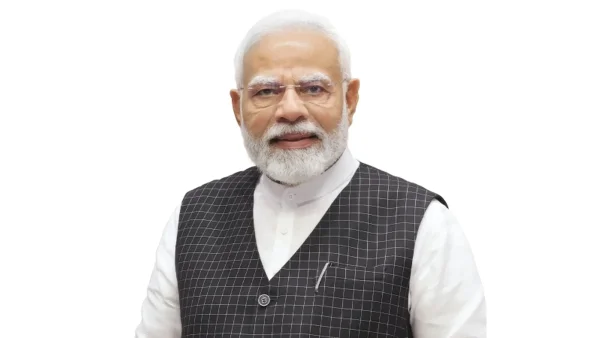
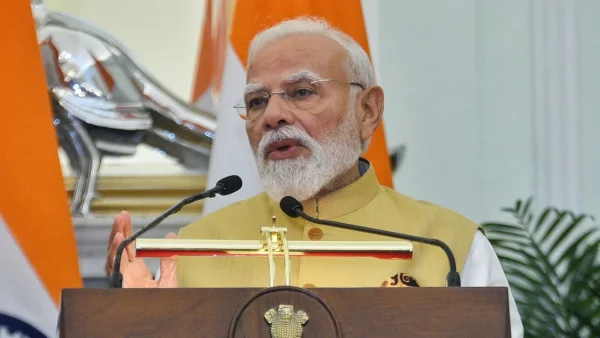
There is a bigger goal in view as well. Under Prime Minister Narendra Modi, we are working towards a Drug Free India by 2047. It’s a long game, but it gives us something to build on in terms of capacity and cooperation.
Venue, audience, and why the forum mattered
He was speaking at the RN Kao Memorial Lecture, put on by the R&AW, in front of ambassadors from more than 40 countries. The occasion, which also had the presence of the Kao family and some of the country’s top security brass, was aptly titled ‘Narcotics: A Borderless Threat, A Collective Responsibility‘.
What comes next
In the end, what the home minister is after is to turn a common risk into a set of common rules. If nations can get on the same page and close the safe havens, the cartels won’t have as much room to manoeuvre. We’ll see in the coming months if the rest of the world is willing to put aside some of their sovereignty for a problem that, as Shah puts it, is beyond any one of us to fix.